Euribatus and Catas
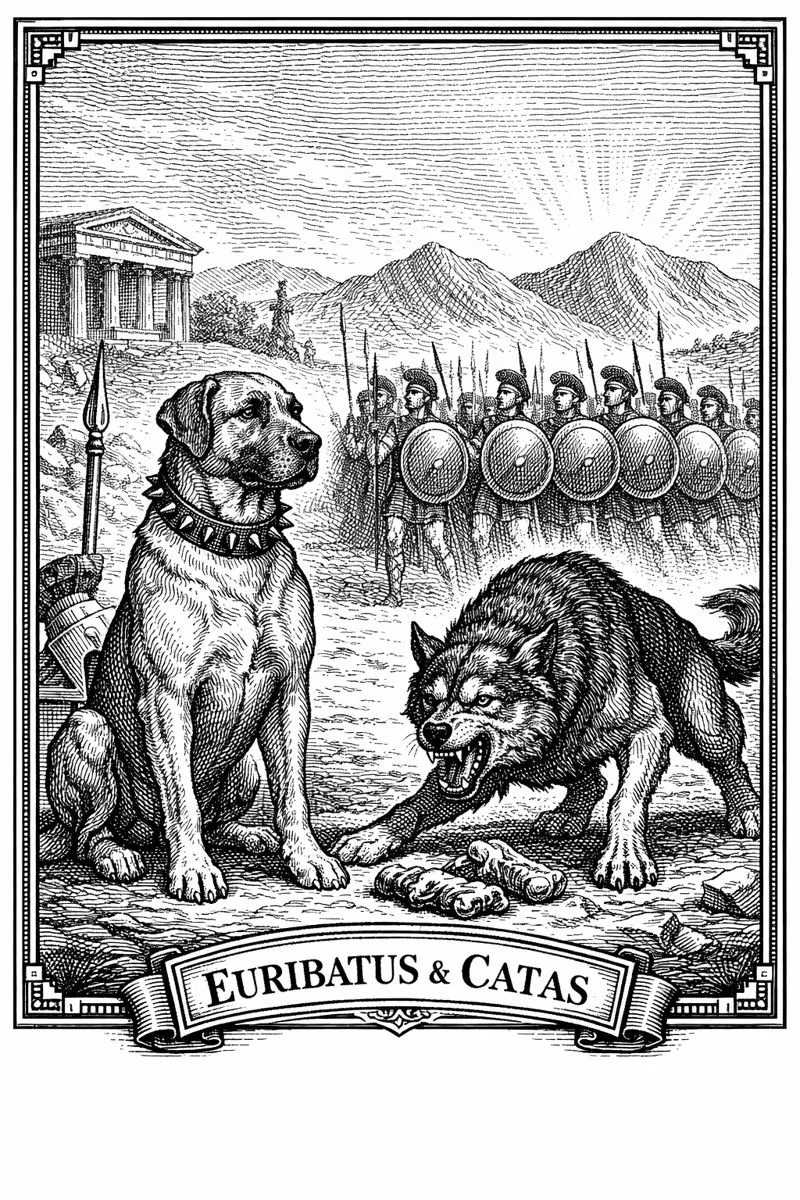
Sparta, 7th century BCE — dawn, cold as bronze, the clang of shields echoing from the hills. Two dogs waited outside the training grounds, eyes fixed on the line of hoplites drilling in the dust. Their master, Lycurgus or one of his blood, fed them raw meat between sessions — one gentle, one savage — the pair that Plutarch said defined the Spartan code. They were said to hunt together, fight beside men, sleep by their spears. In legend they embodied discipline and instinct: the tame and the wild yoked to the same cause. When war came, both went out with the phalanx and didn’t return. Centuries later, philosophers used their names to argue about nature and nurture. The dogs never meant to start a debate. They just followed orders until orders ran out.