Rascal
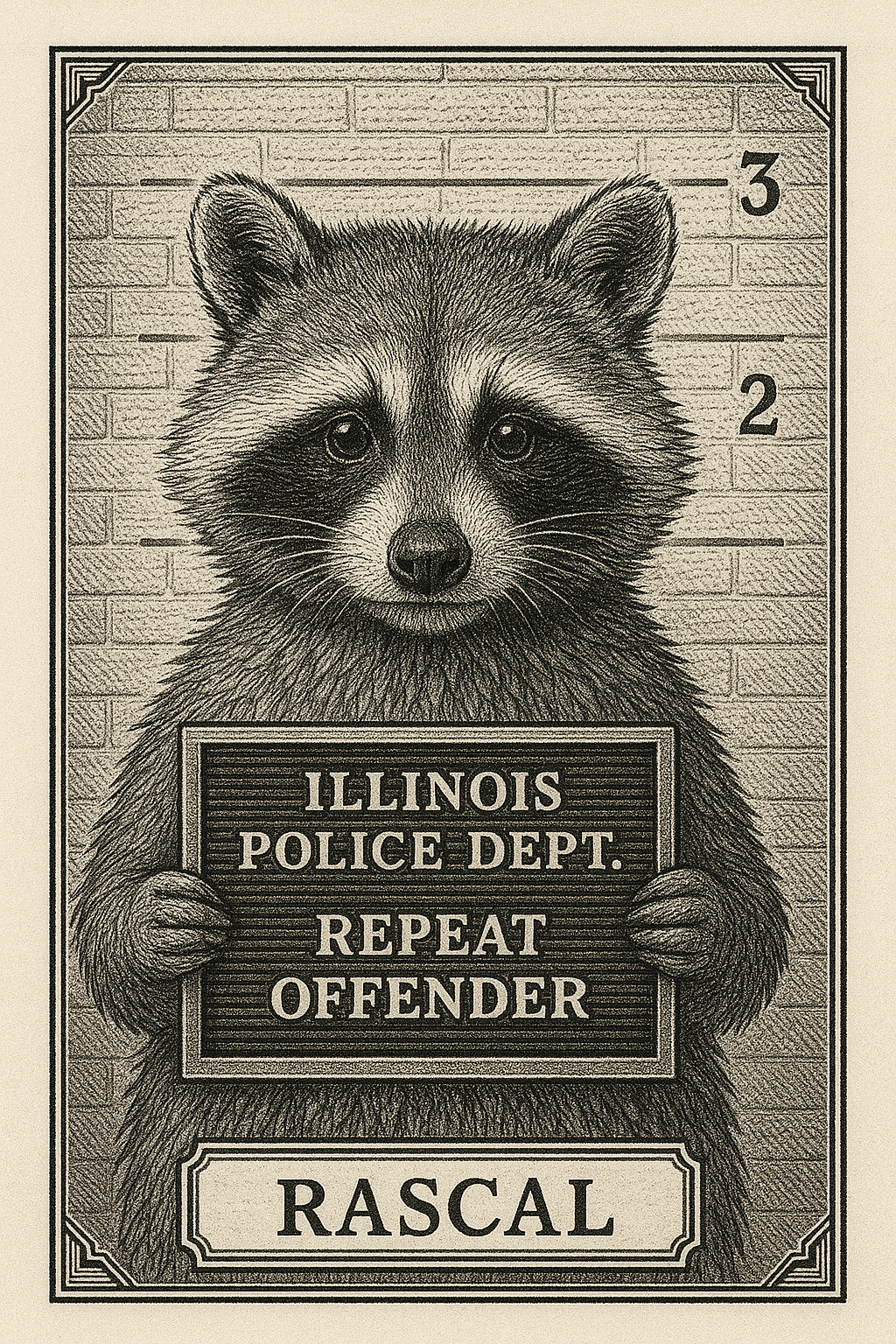
The doughnut bandit
Illinois, late 1970s — the police station reeked of stale coffee and floor wax. The night guard heard the evidence locker alarm again. By the time he got there, the latch was open, the doughnuts gone, and the raccoon halfway through the air duct.
Rascal had learned the pattern: night shifts, snack habits, the exact sound of a human nap. He broke into the station six times in one summer, eating confiscated food and once, embarrassingly, the chief’s lunch.
Many trash pandas have stolen food over the years, but Rascal makes the list because he dared to steal from the police, and that takes balls.
They finally caught him with a humane trap baited with powdered sugar. The report listed him as “Repeat Offender.” The officers framed the photo.
Our own digging turned up no verifiable record of a real raccoon named Rascal terrorizing an Illinois evidence locker in the 1970s. Like many tales of midnight “trash pandas,” this one seems to be a composite—part folklore, part small-town rumor, part wishful legend about a clever animal who outsmarted the humans on duty. And like a raccoon slipping through the dark, the truth leaves almost no trace behind… except, perhaps, a few suspicious doughnut crumbs on the floor.