
oh, the inhumanity
A macabre encyclopedia of humanity’s most creative cruelties
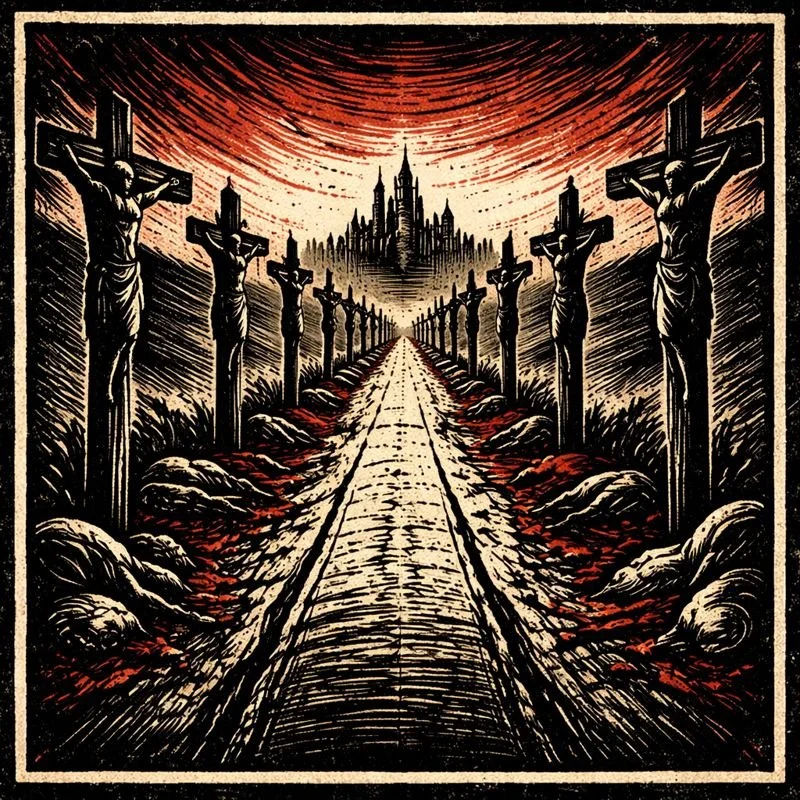
Crucifixtion
Crucifixion was not designed to kill quickly, but to instruct slowly, turning the human body into a prolonged public lesson in obedience. This article examines how empires used the cross to combine anatomy, law, and spectacle into one of history’s most efficient tools of terror. From anonymous roadside deaths to the execution of Jesus, crucifixion reveals how civilization teaches fear by making suffering visible.
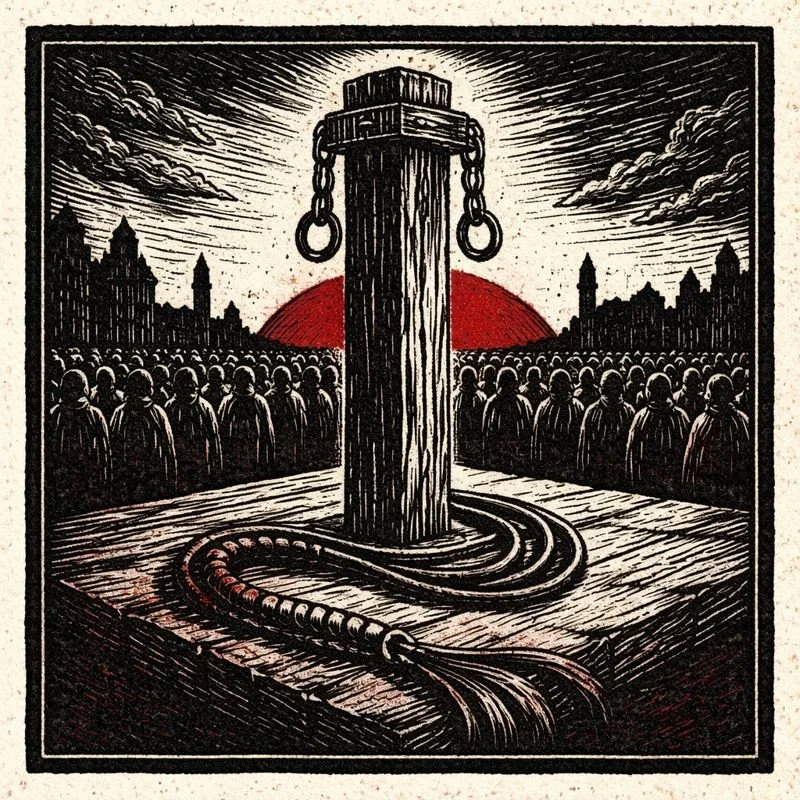
Public Flogging
Public flogging was never meant to kill. It was designed to instruct — a measured violence calibrated for survival, spectacle, and memory. Each counted lash turned the human body into a public document, teaching obedience not through death, but through endurance witnessed by all.

Public Hanging
They called it justice. It looked like carpentry elevated into theology. The rope creaked, the crowd murmured, and the scaffold waited with the patience of a tool that knew its work. In every civilization that raised a beam and tied a knot, hanging became less a method than a message — a lesson written on a human body at the highest point in town.

Mutilation & Amputation
Across empires and eras, mutilation turned the human body into a ledger of authority — a hand for defiance, an ear for disobedience, a tongue for truth spoken at the wrong moment. Justice claimed the blade was impartial; history shows otherwise.

Burning at the Stake
They called it purification, but the stake was really a sermon written in smoke.

Arrow or Spear Sacrifice
A bound figure stands as offering and target, pierced by faith itself—each arrow a prayer in flight.

Gladiatorial Sacrifice
A captive warrior, bound to the stone of the gods, raises his wooden sword against an empire that demands his blood for sunrise.

Flaying
Man has peeled man in the name of order, faith, and fear — to see what truth lies beneath the skin.