Abul-Abbas
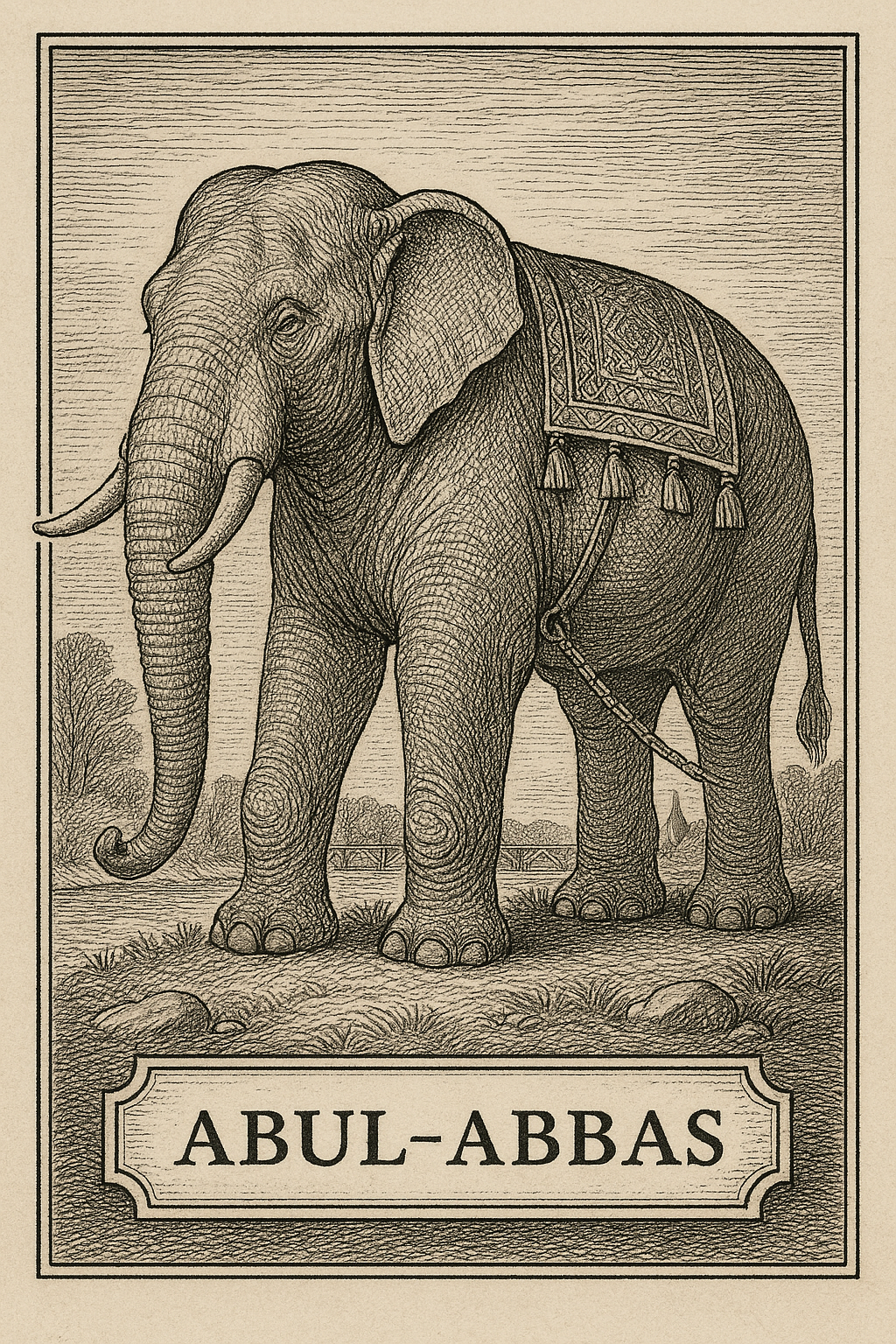
The elephant who died of cold
Spring, 802 CE — the Rhine still half-frozen, the air thick with wood smoke and wet wool. The elephant stood on the far bank, enormous and patient, while Charlemagne’s men argued about the bridge. They had walked him all the way from Baghdad, a gift from Caliph Harun al-Rashid, wrapped in diplomacy and straw. His handlers whispered Arabic prayers while the Franks measured timbers.
When he finally crossed, the villages emptied to watch. Children ran beside him, shouting names they’d never pronounce again. To them he was a miracle; to the emperor, an instrument of foreign friendship and spectacle. In Aachen, he ate apples from golden bowls and learned the taste of beer.
A few years later, fever came. No one knew what to do with a dying elephant in a European winter. They buried him by the river, built a small cairn, and forgot the words to the story that brought him there. The chronicle lists him neatly: Abul-Abbas, dead of cold, 810.