Treo
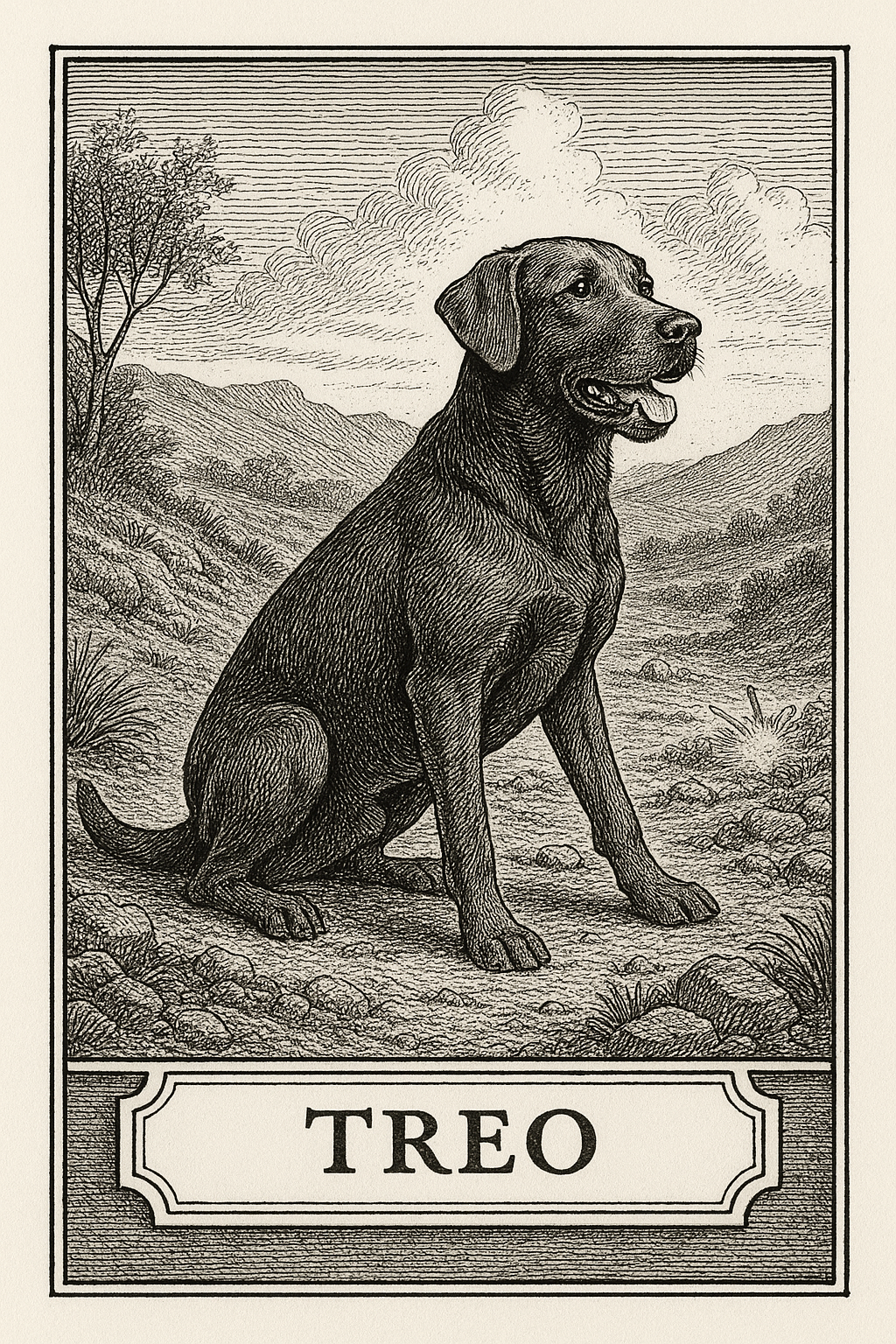
The Dog who sniffed out the invisible
August 15, 2008, Helmand Province, Afghanistan — The sun hadn’t risen yet, but the dust already tasted metallic. The British patrol was ghosting through the early light, every footstep a potential obituary. Somewhere ahead, buried in the hard-packed dirt of the road, was a sentence that began with “IED” and ended with “KIA.” The lead man froze, raised a fist, and looked down at the black Labrador weaving through the rocks. His name was Treo. His tail wagged like it hadn’t read the briefing.
The handler, Sergeant Dave Heyhoe, gave the signal — a small movement, two fingers, not enough to stir air. Treo stopped, nose twitching, ears forward. A moment’s stillness. Then the sit. That calm, perfect sit that meant: here. Beneath a few inches of Afghan soil was a daisy chain of explosives wired for the morning’s patrol. Treo didn’t flinch, didn’t bark, didn’t chase a phantom scent — just waited for the men to back away from death’s tripwire. The bomb disposal team marked it. Hours later, the explosion they triggered rattled through the valley like a god clearing its throat. The report called it a “successful find.” The patrol called it Tuesday.
Treo wasn’t born into heroics. He was born into chaos. A service-bred Labrador in Northern Ireland, smart but impatient — too restless for obedience competitions, too headstrong for pet life. The army got him as a last resort, a four-legged delinquent drafted into order. At the Defense Animal Centre in Melton Mowbray, trainers quickly learned that Treo didn’t fetch; he investigated. He didn’t heel; he led. When other dogs sought approval, Treo sought purpose. The instructors called him “full-on.” His handler, Sergeant Heyhoe, called him something ruder but stuck with him anyway.
By 2005, the two were inseparable — man and dog, tethered by leash, sweat, and mutual suspicion of authority. They were deployed to Afghanistan, assigned to the Royal Army Veterinary Corps as an Explosives Search Dog Team. Their task was simple in wording, impossible in practice: find what kills soldiers before it kills them. The army loved clean acronyms for messy jobs. Treo was designated an “EDD” — Explosive Detection Dog — which sounded clinical until you watched him walk point down a trail where the previous patrol hadn’t come back.
Each mission blurred into the next: Sangin, Musa Qala, Kajaki. The air was always too hot to breathe properly. The smell of diesel mixed with sweat and cordite. Treo’s black coat baked under the sun, his breath coming in rhythmic bursts as he quartered the path ahead. The soldiers learned to watch his body language more than the terrain. If his tail wagged loose and easy, they exhaled. If it stiffened, the entire patrol froze mid-step.
On one patrol, he found two separate devices — pressure-plate bombs buried along a narrow ridge meant to catch foot soldiers and vehicles in a single blast. Each discovery meant lives preserved, paperwork written, command satisfied, and another joke that the dog was “doing more intelligence work than half of Whitehall.” By 2008, his tally of finds was so high that even officers began remembering his name before his handler’s.
The British tabloids called him “the Labrador Who Saved an Army.” The soldiers just called him Treo.
What set him apart wasn’t just his nose — it was his judgment. Other dogs could detect explosive compounds; Treo seemed to anticipate them. He learned the patterns of the bombmakers, the signature of terror disguised in dust. Once, he refused to advance on a cleared trail, sitting down despite Heyhoe’s coaxing. The team rerouted. Later, engineers uncovered a fresh IED hidden beneath a fake “safe” mark — a trap designed for complacency. Treo wasn’t fooled.
The official commendation called it “unusual situational awareness.” The men who walked behind him called it instinct bordering on sorcery.
By the time Treo rotated home, he’d spent multiple tours in Helmand and logged hundreds of patrols. His record: countless finds, zero casualties under his watch. The ratio was unheard of. Heyhoe brought him back to the UK in 2009, where Treo swapped minefields for green lawns and sofa cushions. Civilians met him in parks and called him “the hero dog.” He tolerated the photos, the pats, the ceremonial biscuits. But for months, he slept with one ear cocked toward phantom detonations. Soldiers and dogs both bring the war home in fragments.
In 2010, the paperwork caught up with the myth. Treo received the Dickin Medal — the animal equivalent of the Victoria Cross — “for exceptional gallantry and devotion to duty while serving in Afghanistan.” The presentation took place at London’s Imperial War Museum. Cameras flashed. The citation was read aloud with British restraint: “For lifesaving detection of improvised explosive devices in Helmand Province.” Treo sat still, slightly bored, wearing his medal like it was another collar. The humans teared up. The dog yawned.
He retired with Heyhoe in Cheshire, where he was treated less like a soldier and more like an elderly statesman who still checked under flowerpots for explosives. He lived long enough to become legend — a veteran in fur, proof that loyalty has a better memory than trauma. When he died in 2015, Heyhoe wrote simply: “Sleep tight, my friend. You saved so many.”
The Ministry of Defence file ends there, clinical and complete. The medal still hangs in the museum, polished and context-free. But for the men who walked behind him, Treo was more than a nameplate on the wall. He was the line between walking home and being carried. He turned the abstract geometry of war — routes, targets, objectives — back into something primal: survival by trust.
He wasn’t bred for glory. He was trained for smell — but he found meaning instead. A creature of instinct serving in a theater of insanity, reminding everyone that the best soldiers often don’t know what medals are.
In the end, that’s what made him mythic. Treo didn’t just find bombs — he found a way for men to keep believing that intelligence and courage could still beat chaos, one scent at a time.
When asked years later what made Treo special, his handler didn’t hesitate.
“He just did the job,” Heyhoe said. “Better than any of us.”
And that’s the quiet miracle of it.
He walked the line between war and survival, tail wagging, nose down, making the invisible visible — and lived long enough to rest from it.