Burying Alive
The Earth as Witness
Across civilizations, antiquity to the early modern world
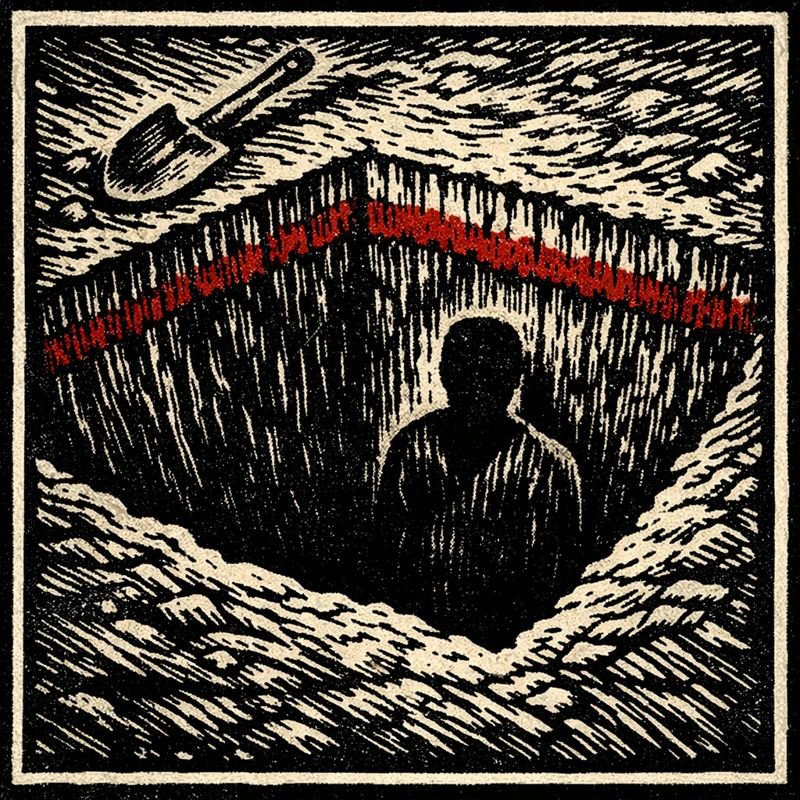
They begin with the hole. Earth first, not the body. The pit is measured in human units: shoulder width, standing depth, the minimum volume required to erase a person while technically keeping the hands clean. The soil smells alive. It always does. Damp loam, old roots, the mineral breath of a world that has been quietly digesting the dead for millennia without asking permission.
The condemned is lowered or placed. Sometimes bound. Sometimes upright. Sometimes allowed to kneel, as if prayer might still be part of the procedure. The earth comes last, shoveled with an efficiency that pretends this is logistics, not theater. They called it justice. It looked like gardening.
The Method — The Earth Sentence
Burying alive requires almost nothing. No blade to sharpen, no rope to test, no pyre to fuel. Just a pit, gravity, and time. That simplicity made it attractive to societies that prized ritual purity or wished to avoid bloodshed while still delivering death. The ground did the killing. Authority merely arranged the meeting.
Practices varied by region and era. In parts of ancient Persia, the punishment was reserved for crimes considered spiritually contaminating. In classical Rome, it was infamously imposed on the Vestal Virgins, whose vow-breaking was seen not as a personal failing but a cosmic breach. Medieval Europe employed it sporadically for women convicted of infanticide or sexual transgression, the logic being that the soil would reclaim what society rejected. In some regions, executioners ensured a slow death by leaving the head exposed; in others, the victim vanished completely beneath the surface, the earth tamped down until it looked undisturbed, innocent, even virtuous.
The method’s cruelty lies in its patience. Suffocation is not immediate. Oxygen pockets linger. The body struggles against an enemy it cannot strike, cannot plead with, cannot outrun. The earth does not hurry.
The Human View — Inside the Dark
For the victim, the experience is an assault on every sense. Darkness arrives first, not as absence but pressure. Sound dulls, then magnifies inward: heartbeat, breath, the frantic scrape of fingers against packed soil. The chest tightens as air thins, panic blooming into a physiological fact. The body fights with reflexes learned in infancy, clawing for space, for air, for the simple mercy of motion.
Executioners often stood close enough to hear the first sounds fade. Witnesses, when permitted, observed a choreography designed to educate. Silence was part of the lesson. No screaming meant no spectacle, which allowed participants to tell themselves this was restraint, not terror. The condemned became a problem quietly resolved.
Psychologically, burying alive weaponizes anticipation. Unlike the blade or the rope, it offers time to understand what is happening. Victims knew they were dying and knew exactly how long it might take. The earth did not announce the end. It waited.
The Society Behind It — Clean Hands, Dirty Logic
Cultures that favored burial alive often framed it as moral hygiene. Bloodless execution preserved ritual cleanliness. Fire risked spectacle. Beheading invited sympathy. Burial erased. It turned punishment into a private transaction between body and ground, allowing the community to maintain a posture of dignity.
The method also reinforced hierarchy. Only certain crimes warranted such a fate, and only certain bodies were eligible. Women, religious transgressors, and social outliers were frequent targets. The punishment communicated that some violations did not merely break laws but offended existence itself. Society did not kill these people; it returned them.
This logic reveals a recurring human impulse: outsourcing cruelty to natural forces while retaining the authority to decide who deserves them. The earth was conscripted into governance. Soil became policy.
Historical Record — Names in the Ground
The most cited cases belong to Rome. A Vestal Virgin found guilty of incestum was ceremonially led to an underground chamber stocked with minimal provisions, the entrance sealed behind her. Officially, the state did not execute a sacred woman; it merely withdrew support and let fate proceed. Tacitus and Plutarch describe the ritual with a detachment that feels rehearsed.
Earlier still, Greek tragedy preserves the moral logic in myth. Antigone, condemned to be sealed alive for defying royal edict, became the archetype of lawful cruelty dressed as order. Her punishment was framed as mercy: no blood spilled, no public execution. Just a cave and time.
In medieval Europe, records from Germany and Scandinavia note burial alive as a sentence for women accused of infanticide, often alongside men hanged for similar crimes. The division was deliberate. The gallows were public. The earth was private. (See also: The Gallows — from Oh, the Inhumanity.) Warriors, when subjected to such fates, were usually enemies meant to be erased rather than remembered, a reminder that the Warrior Index often begins where burial intended silence.
Myth & Memory — The Fear That Wouldn’t Stay Buried
Burying alive haunted later centuries less as law than as nightmare. Premature burial panics in the 18th and 19th centuries produced safety coffins, bells, and elaborate safeguards against being interred while still breathing. Literature seized the terror eagerly. Poe turned it into claustrophobic obsession. Gothic novels treated the grave as a place not of rest but suspense.
Modern myths exaggerate frequency and uniformity. Not every ancient culture practiced it widely, and many accounts blur legal execution with battlefield atrocity or legend. Yet the persistence of the fear speaks volumes. We are unsettled not just by death, but by death that takes its time, death that listens while we argue with it.
The endurance of the story reveals something unflattering: humans are deeply interested in punishments that allow distance. We prefer our cruelty mediated, disguised as process, delegated to elements that cannot testify.
The earth remembers anyway.
We buried people alive to prove our laws were clean, and discovered too late that silence is not the same thing as absolution.