Charles XII of Sweden
(1889-1952)
Warrior-king; reckless campaigns turned monarchy into legend.
“A king should be where the bullets are thickest — otherwise, what’s the point of being king?”
— Charles XII, allegedly, right before charging into hell for the 300th time
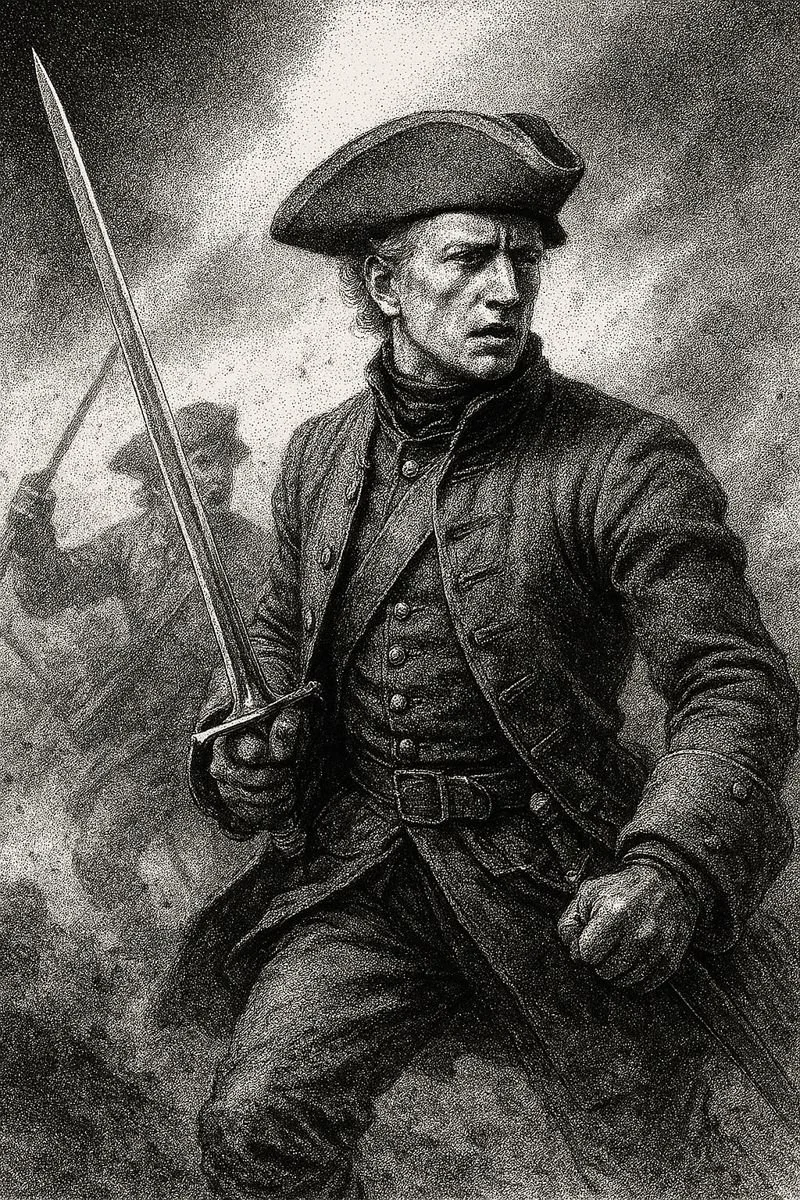
The snow was eating the men alive again. Sweden’s “Lion of the North” — the golden boy of God’s own artillery — was knee-deep in the Russian mud, pretending it was destiny and not delusion. Drums like dying hearts, boots like coffins, and every breath a slow betrayal of reason. The year was 1709, the place: Poltava. Charles XII, age twenty-seven, was about to find out the difference between divine right and frostbite.
The boy-king had been born for this kind of idiocy. Crowned at fifteen, invincible by seventeen, and mythological by twenty, Charles XII was the closest thing Europe had to a berserker with a bureaucrat’s wardrobe. When most teenagers were discovering girls or gout, he was conquering Denmark, smashing Russia at Narva, and making Louis XIV look like a tax clerk. He rode, he fought, he prayed — in that order. He ate on horseback, slept in armor, and treated peace like a contagious disease.
This was Sweden’s great moment — an empire stretching from Norway to the Baltic, a frozen Atlantis held together by discipline, Lutheran spite, and blond audacity. But Charles didn’t want borders. He wanted crusades. His soldiers called him “Carolus Rex,” but history would call him something closer to “the last man who didn’t read the weather report.”
At Narva in 1700, he’d faced Peter the Great’s Russians — forty thousand of them — with barely ten thousand Swedes. Blizzard blowing sideways, visibility zero, and God apparently siding with lunatics that day. Charles attacked through the snow, turning the blinding storm into a divine smokescreen. By nightfall, the Russians were running or dying; the Swedes were looting their camps and toasting their ice-bitten king. Narva made Charles immortal. It also made him stupid.
See, victory is a drug that tells you gravity doesn’t apply.
For the next decade, Charles treated Europe like a personal obstacle course. He invaded Poland, dethroned kings, humiliated Saxony, and marched his army like clockwork across half the continent. He never took a mistress, never touched wine, and never wrote treaties longer than his sword. His only real romance was with war — and war, the cruel mistress, always cheats in the end.
Then came Russia.
Peter the Great had learned from Narva. He rebuilt his army, his empire, his everything. Charles thought it would be cute to conquer him again, this time by marching 1,200 kilometers into the Russian interior with a quarter-million men and no supply line. By the time he reached Poltava, most of them had died of hunger, frostbite, or realism. Charles himself had taken a bullet to the foot, been carried on a litter through the snow, and was still insisting on leading the charge.
Picture it: July 1709. The sun finally out. Sweden’s army, skeletal but proud, drums beating like defiance in slow motion. Across the field, Peter’s cannons blink awake — 100 mouths of iron. The Swedes charge anyway. The Russians stand and reload. It’s not a battle; it’s a clinic.
Charles’s elite Caroleans, who’d spent a decade walking on water, drown in mud and grapeshot. Their precision volleys dissolve under massed fire; their famous discipline cracks like glass. Within hours, the Swedish Empire is bleeding out on Ukrainian soil. Charles flees south with a few survivors, crosses into Ottoman territory, and holes up in Bender — not as a conqueror, but as a weird royal houseguest who won’t leave.
He spends five years there. Five. Years. The Sultan calls him “Ironhead.” The locals call him “the Swedish Shadow.” He writes letters home ordering invasions that no one carries out, dreams of returning north, and occasionally duels his guards for fun. One eyewitness said he lived on coffee and vengeance.
When he finally escapes Ottoman hospitality in 1714, it’s by riding on horseback across Europe in fourteen days — through enemy lands, disguised, with frost in his beard and madness in his eyes. He returns to Sweden to find his empire bankrupt, his generals dead, and his people politely wondering whether he might consider retirement.
Naturally, he doesn’t.
In 1716, he invades Norway. Because of course he does. The campaigns are brutal, beautiful, pointless — the work of a man trying to wrestle his own legend. He leads from the front again, always in the blue coat, always into the smoke. No wife, no heir, no home, no brakes.
Then, December 1718. The siege of Fredriksten. The night is cold enough to stop a thought. Charles is inspecting trenches under fire, standing upright, looking over the parapet as if daring the universe to finish the joke.
One shot rings out.
A musket ball — maybe Norwegian, maybe Swedish (the debate still rages) — enters his skull by the left temple and exits the right. Instant. Clean. Silent collapse. The king who’d survived twenty years of war dies like a fool looking into the dark.
The soldiers don’t cheer. They just stand there, snow falling on the blue uniform, the long shadow finally broken. Sweden weeps, then exhales. The empire crumbles. Europe moves on.
Charles becomes a ghost. A romantic, tragic symbol for every nationalist who ever confused martyrdom with achievement. In the centuries after, poets called him “the Northern Alexander.” Historians called him “the Swedish Napoleon.” Psychiatrists might’ve called him “unmedicated.” His death mask was copied, his boots enshrined, his campaigns studied by everyone from Hitler to modern war nerds who see genius where others see obsession.
But the truth? Charles XII was the last king who lived like a soldier and died like one — not in a bed, not in exile, but upright, defiant, and thoroughly out of ammunition.
His reign turned Sweden from superpower to cautionary tale, but he never flinched. In the ledger of history, he wrote his name in blood and winter. And in the back of every lunatic general’s mind since, a little voice whispers: “Be like Carolus Rex.”
They usually don’t last long either.
In the end, Charles XII proved that courage without sense is still courage — just the kind that freezes faster.
Warrior Rank #125
Sources:
Voltaire, History of Charles XII, King of Sweden (1731)
Peter Englund, The Battle That Shook Europe: Poltava and the Birth of the Russian Empire (1992)
Ragnhild Hatton, Charles XII of Sweden (1968)
Memoirs of a Swedish Officer at Narva and Poltava (anonymous, early 18th century)
“Carolus Rex” — Sabaton (2012), for when you want your history with guitars and pyrotechnics

Alexander Nevsky was a 13th-century Russian prince famed for defeating invading forces at the Battle on the Ice in 1242. He became a national hero and later a saint, remembered as both warrior and shrewd diplomat.
Rank - 115