Shah Abbas I
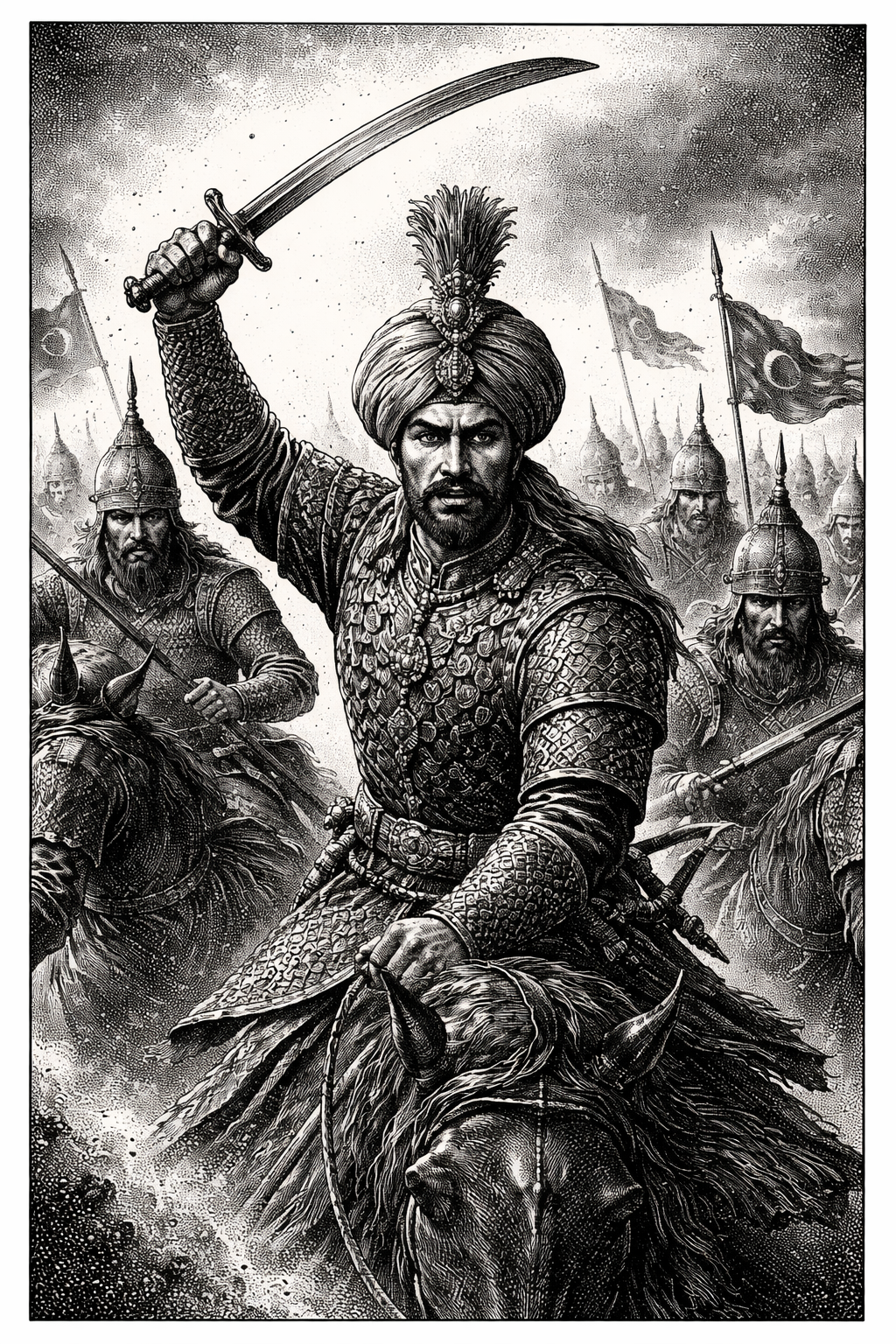
(1571-1629)
Safavid ruler who crushed tribal warlords, rebuilt Persia into a centralized gunpowder empire, seized Baghdad from the Ottomans, and turned Isfahan into a tiled masterpiece of absolute power.
“Mercy is for men who expect to retire.”
Attributed, probably unfairly and therefore perfectly, to Shah Abbas I.
The city is burning again, which in late sixteenth century Persia is less an emergency and more a calendar event.
Tabriz smolders under Ottoman boots. Uzbek horsemen rake the eastern provinces like men combing for loose coins. The Safavid Empire, once a proud theological thunderclap, now resembles a rug being tugged apart by enthusiastic neighbors. Into this civic bonfire steps Abbas, eighteen years old, newly crowned, and already measuring which relatives can be safely blinded.
He inherits the throne in 1588 from his father, Mohammad Khodabanda, a well meaning monarch with limited eyesight and even more limited authority. Real power rests with the Qizilbash tribal chiefs, kingmakers with swords and opinions. The Safavid state at this moment is not so much centralized as politely fragmented.
Abbas learns quickly that a king who depends on warlords is not a king but a mascot.
So he smiles. He nods. He accepts their help in seizing firm control of the throne. Then he begins quietly dismantling the very system that elevated him. Loyalty, he decides, should not come from tribes with their own banners and cousins. It should come from men who owe everything to him.
Enter the ghulams.
These are slave soldiers, many taken from the Caucasus, converted, trained, and elevated into a professional military corps. They are disciplined, drilled, and loyal to the crown rather than to tribal factions. It is brutal statecraft. It is also brilliant. Abbas builds a standing army that answers to one man, and that man is him.
He also embraces gunpowder like a convert discovering caffeine. Muskets and artillery, learned in part from Ottoman example, become the spine of a reformed military. Nothing spices up a rivalry like copying your enemy’s methods and then using them to take his cities.
At first, Abbas appears weak. In 1590 he signs a humiliating peace with the Ottomans, surrendering territory to buy time. Critics might have called it capitulation. Abbas calls it an investment.
While the Ottomans toast their gains, Abbas reorganizes. He trims the Qizilbash. He drills the ghulams. He consolidates revenue. He sharpens the state into something less decorative and more lethal.
Then he turns east.
The Uzbeks who had been raiding Persian lands discover that the new king does not negotiate from panic. In a series of campaigns culminating in 1598, Abbas drives them from Khorasan and retakes Herat. The eastern frontier stabilizes. The empire exhales.
Now the west.
From 1603 onward, Abbas unleashes a counteroffensive against the Ottomans that reads like a long delayed rebuttal. Tabriz is retaken. Key territories in the Caucasus are reclaimed. In 1623 he captures Baghdad, that perennial prize of imperial ego. The message is unmistakable. Persia is not merely surviving. It is asserting.
If one decisive act brands him immortal, it is that reclamation of Baghdad. Sacred shrines are restored. Shi’a prestige is amplified. The city becomes both strategic and symbolic trophy. Abbas does not just win territory. He wins narrative.
And because every conqueror needs a stage, he builds one.
He moves the capital to Isfahan and proceeds to turn it into an architectural flex so grand it feels like divine trolling. Vast squares, luminous mosques, palaces designed for spectacle. Naqsh e Jahan Square stretches like a declaration of confidence. The Shah Mosque blooms in blue tile that seems to have captured a piece of sky and nailed it down. Merchants arrive. Silk flows. Diplomats from Europe shuffle in, eager to counter Ottoman influence and eager for Persian trade.
Abbas understands optics. An empire is not only defended with cannons but curated with symmetry.
He fosters commerce, especially silk, and plays European powers against each other. In 1622, with English naval assistance, he expels the Portuguese from Hormuz, tightening Safavid control over Gulf trade. He is ruthless at home, pragmatic abroad, and fully aware that economics can be sharper than a scimitar.
Now the part where the applause goes quiet.
Abbas does not trust easily. In fact, he does not trust at all.
Potential rivals are imprisoned, executed, or blinded. This includes his own sons. One prince is killed on suspicion of conspiracy. Others are maimed to ensure they can never rule. The dynasty is secured by preemptively crippling it.
It is a solution that works spectacularly in the short term.
It is a time bomb in the long one.
When Abbas dies in 1629, likely after illness and exhaustion, he leaves behind a powerful, centralized state and a dangerously weakened succession. His chosen heir, Shah Safi, inherits the throne but not the temperament or strategic acumen. The machinery of empire hums on, but the operator has changed, and the calibration slips.
Abbas had strengthened the crown by crushing independent power bases, yet in blinding and eliminating capable heirs he also ensured that no successor would match him. It is a tragic irony wrapped in velvet and blood. He built a system that required someone like him and then made sure no one like him would follow.
Posterity smooths the edges.
In Iranian memory, he is Abbas the Great, defender of the faith, builder of Isfahan, the monarch who restored Safavid might after decades of weakness. His architectural legacy still glows. Tourists admire domes and colonnades. Few pause to count the eyes put out in the name of stability.
Western observers once painted him as an exotic despot with refined taste. Modern historians offer a steadier verdict. He was a state builder of rare competence. He professionalized the army, centralized authority, stimulated trade, and made Persia a serious rival to its neighbors. He also relied on forced migrations, coercion, and calculated cruelty.
He was not mad. He was methodical.
He did not revel in chaos. He reorganized it.
Abbas turned a faltering Safavid realm into a disciplined empire. He reclaimed cities, redirected trade, and made Isfahan a jewel of the early modern world. He also demonstrated that glory in his era required a tolerance for blood that would make saints reach for handkerchiefs.
In the end, he died in a palace rather than on a battlefield, surrounded by the empire he had reforged and the ghosts he had manufactured. The domes remained. The army marched. The silk caravans rolled. The sons he crippled did not.
He built paradise with one hand and dismantled his own future with the other.
And that is the joke history tells about men who think they can outwit time.
He conquered his enemies, blinded his heirs, and left the bill for both to the next generation.
warrior rank #121
Selected Sources
Roger Savory, Iran under the Safavids
Andrew J. Newman, Safavid Iran: Rebirth of a Persian Empire
Rudi Matthee, Persia in Crisis
Willem Floor, studies on Safavid administration and military reform
Encyclopaedia Iranica, entries on Abbas I and Safavid governance
The Imperial Department of Decorative Grandeur and Preventative Blinding, archived minutes allegedly misfiled forever

Alexander Nevsky was a 13th-century Russian prince famed for defeating invading forces at the Battle on the Ice in 1242. He became a national hero and later a saint, remembered as both warrior and shrewd diplomat.
Rank - 115