Gustavus Adolphus
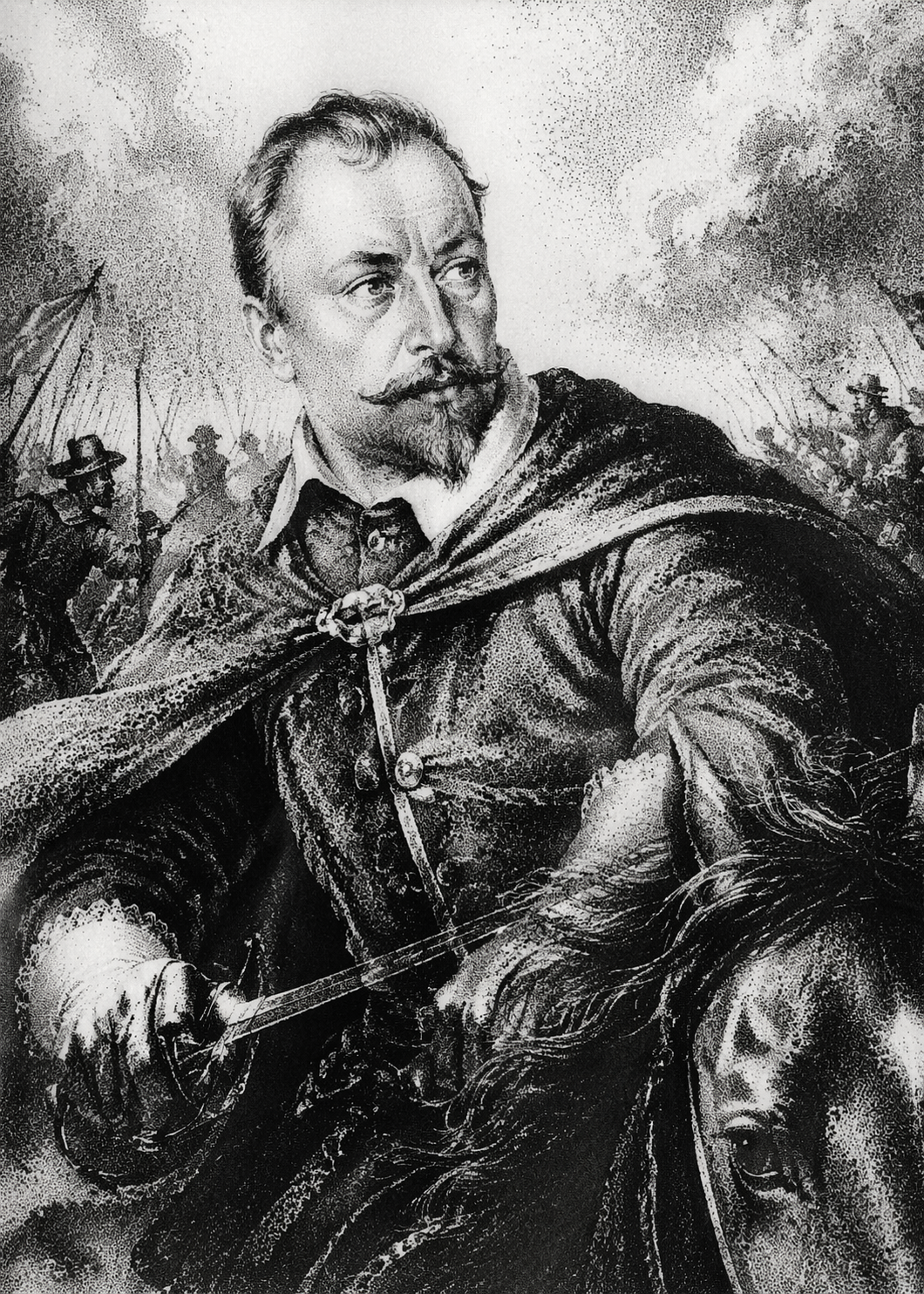
(1594–1632)
The cannon-loving snow king who taught Europe faster slaughter.
“God is with the big battalions, but He occasionally tips His hat to the lunatics.”
— attributed to nobody reliable, which makes it perfectThe fog at Lützen, 1632, had the manners of wet wool and the morals of a pickpocket. It lay thick over the Saxon fields while men coughed, cursed, prayed, and accidentally stabbed friends. Somewhere in that white soup rode a stocky king in buff coat and plain clothes, half-blind without his spectacles, refusing armor because an old wound made metal pinch like a tax collector’s handshake. Around him the Swedish guns barked, Imperial muskets cracked, horses screamed like doors torn off hinges, and Europe continued its favorite hobby: turning theology into butcher’s work.
That king was Gustavus Adolphus, called the Lion of the North, though lions usually have better eyesight and a healthier suspicion of bullets.
He charged into the mist anyway.
There are many ways to become famous. You can compose symphonies, discover gravity, invent sandwiches. Gustavus chose the more theatrical route: reorganize warfare so thoroughly that every army in Europe steals your homework, then die face-first in mud while your men win the battle without you.
Born in 1594 to the Swedish Vasa dynasty, Gustavus inherited a kingdom that looked less like an empire and more like an ambitious snowbank. Sweden was poor by continental standards, sparsely populated, cold enough to freeze bad ideas solid, and surrounded by neighbors who regarded it as prey with forests attached. His father, Charles IX, had been busy wrestling crowns and enemies with the delicacy of a bear opening a cupboard. Gustavus inherited not peace, but invoices.
He took the throne at seventeen, an age when most young men are proud to shave badly. Immediately he faced Denmark, Russia, Poland-Lithuania, domestic headaches, and the general European custom of trying to kill Scandinavian monarchs before lunch.
But Gustavus possessed that dangerous blend of traits history mistakes for destiny: intelligence, stamina, vanity, and the inability to leave things alone.
He learned administration. He reformed taxation. He worked closely with the brilliant chancellor Axel Oxenstierna, who did the paperwork while Gustavus did the shouting. Most of all, he rebuilt the army.
Before Gustavus, many European armies still fought like traveling furniture: heavy tercios, slow maneuver, endless pikes, musketeers arranged with the urgency of a cathedral renovation. Gustavus preferred speed, flexibility, and concentrated violence. He lightened artillery so guns could move with troops. He integrated musketeers and pikemen in more nimble formations. He emphasized disciplined volleys, aggressive cavalry charges with cold steel, and coordinated arms that hit like a fist instead of five separate fingers arguing.
In simpler terms: he took war’s old wagon and bolted wheels to it.
His first great schooling came against the Polish-Lithuanian Commonwealth, where he faced the terrifying winged hussars, cavalry so glamorous they looked sponsored by mythology. Gustavus learned hard lessons there. Some men sulk after defeat. He updated the operating system.
Then came the main stage: the Thirty Years’ War, Europe’s grand masterpiece of stupidity. It began as a religious conflict and matured into a continental brawl involving dynastic greed, mercenaries, famine, plague, atrocity, and enough hypocrisy to dam a river. Germany became a carcass over which princes argued theology while peasants starved in the cellar.
Into this charnel carnival marched Gustavus in 1630, landing in Pomerania with a relatively small Swedish army and an enormous sense of purpose. Protestant states hesitated. Catholic commanders sneered. The Holy Roman Empire had seen many northern adventurers before, usually on the way to being buried.
Then came Breitenfeld, 1631.
There the Imperial commander Tilly, veteran butcher and patron saint of hard faces, expected another routine crushing. Instead Gustavus outmaneuvered him, used mobile artillery to savage enemy lines, and exploited flexibility against the cumbersome Imperial system. Tilly’s army came apart like cheap luggage on cobblestones. The myth of Imperial invincibility bled out in public.
Europe noticed.
Suddenly Gustavus was not merely a king from the cold margins. He was the Protestant champion, military innovator, deliverer, avenging angel, subscription upgrade. Cities opened gates. Allies multiplied. Pamphleteers polished halos by candlelight. Every success attracts believers, opportunists, and men eager to stand near greatness in case it splashes.
He drove deep into Germany, took Mainz, threatened the Habsburg position, and forced the Emperor to recall the one commander dangerous enough to counter him: Albrecht von Wallenstein, entrepreneur of apocalypse. Wallenstein raised armies the way mold grows, expensive and unstoppable.
The collision was inevitable.
At Lützen, Gustavus chose personal leadership over prudent kingship. He always led close to the front, a habit beloved by soldiers and coroners. Visibility was dreadful. Commands dissolved in fog. Units blundered into each other and discovered too late they spoke the wrong language.
Gustavus, near-sighted and separated from escort, rode into enemy cavalry. A shot smashed his arm. Another hit his back. He asked to be led away. Instead confusion swallowed him. Imperial horsemen recognized a richly mounted wounded officer and did what battle often does to celebrity: reduced him to meat.
He was shot again, stabbed, stripped, and left in the mud.
When his body was found, the Lion of the North looked less leonine and more like laundry after a tavern riot.
His army, enraged and half-mad, rallied. The Swedes held the field. Wallenstein withdrew. So Gustavus achieved one of history’s classic ironies: winning a battle by dying in it.
He was thirty-seven.
Afterward, myth got to work immediately, that busiest scavenger of all. Protestants made him martyr and savior. Swedes made him father of greatness. Military historians made him “father of modern warfare,” which is flattering but ignores many other fathers and the fact that modern warfare remains an ugly child. Romantics painted him heroic beneath banners and sunbeams, tactfully omitting the mud, screams, amputations, and men searching corpses for boots.
In Sweden, he became foundational legend. His reign helped launch the Swedish Empire, that brief astonishing period when a relatively small northern kingdom punched far above its demographic weight and made Europe take off its hat. Streets, statues, anniversaries, and schoolbooks followed. Dead kings are easier to govern than living ones.
The truth is sharper and less tidy.
Gustavus Adolphus was brilliant, brave, administratively gifted, and tactically transformative. He was also a monarch pursuing power through industrialized killing in a war that consumed civilians by the hundreds of thousands. He modernized battlefields the way a clever engineer improves a slaughterhouse conveyor belt. Genius and carnage often share a tailor.
Still, he mattered. Armies copied him. States studied him. Europe changed because he rode south through smoke with ideas sharper than swords.
And then, like so many men who believe history needs them personally, he mistook courage for invincibility and vanished into weather.
The Lion of the North died the way empires are born: confused, expensive, and knee-deep in mud.
Warrior Rank #117
Sources
Peter H. Wilson, Europe’s Tragedy: A History of the Thirty Years War
Richard Brzezinski, Lützen 1632
Michael Roberts, Gustavus Adolphus: A History of Sweden
Geoffrey Parker, The Military Revolution
Anonymous cavalryman, I Told Him to Wear Armor (sadly lost)

Alexander Nevsky was a 13th-century Russian prince famed for defeating invading forces at the Battle on the Ice in 1242. He became a national hero and later a saint, remembered as both warrior and shrewd diplomat.
Rank - 115