Kusunoki Masashige
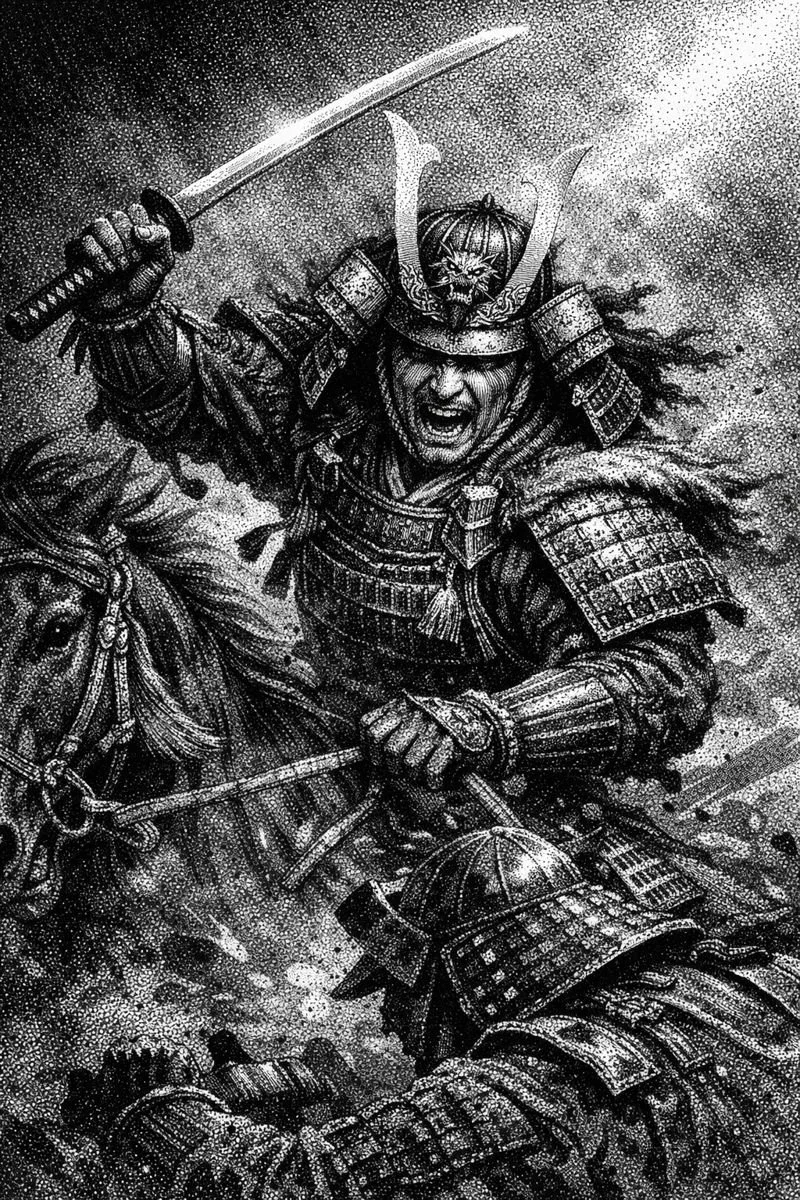
(1294–1336)
Brilliant samurai tactician who chose death over disobedience, becoming loyalty incarnate.
“If loyalty were a disease, it would still be less fatal than wisdom.”
Attributed to nobody who survived.
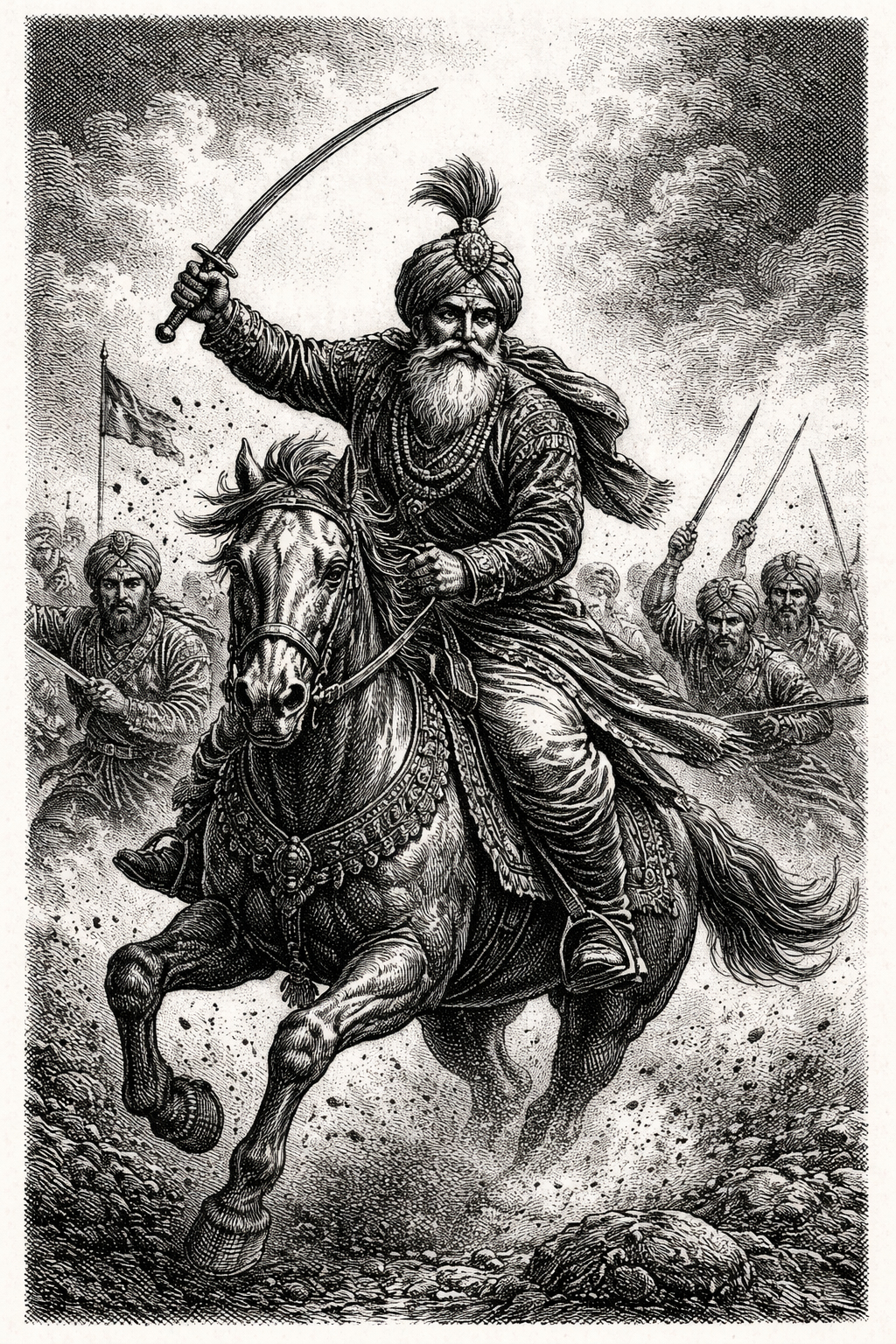
Smoke first. Always smoke. The battlefield at Minatogawa wakes up coughing, as if the earth itself regrets the night before. The river runs low and ashamed, the wind carries ash and bad decisions, and somewhere inside the chaos a man has already decided to die beautifully. Not wisely. Beautifully. This is 1336, and Japan is about to canonize a man by grinding him into paste.
Kusunoki Masashige stands with a few hundred men against an ocean of enemies and an even bigger ocean of expectations. He knows the numbers. He is not stupid. He is loyal. Which in feudal Japan is a polite synonym for terminal.
Origin Story, With Mud on It
Masashige is born into the lower ranks of the samurai class, which is to say he grows up with a sword, a debt, and a short list of people who will never invite him to the good parties. He learns the land. Hills. Forests. Rivers. Places where armies trip over themselves and bleed quietly. While other warriors practice being statues, Masashige practices being smoke.
His early fame comes not from grand charges but from humiliation. He ambushes. He burns supply lines. He uses fake camps, false retreats, night raids, traps, disguises. He treats warfare like theater performed by arsonists. The Kamakura shogunate, bloated and confident, keeps sending bigger armies to stomp him flat. He keeps not being there. It is infuriating. It is effective. It is deeply unchivalrous. Which makes it work.
Masashige becomes a problem. Problems attract emperors.
Rise of the Emperor’s Favorite Headache
Emperor Go-Daigo wants to smash the shogunate and return imperial rule. He needs fighters who think sideways. Masashige shows up with a grin, a map, and a willingness to set things on fire. Together with other loyalists, he helps crack the old regime. For a brief, dangerous moment, it looks like cunning might actually win.
This is where history reaches for the bottle.
Go-Daigo restores the throne and immediately proves that ruling is harder than rebelling. Old allies want rewards. New enemies want blood. Former generals now need to be politicians, which is like asking wolves to do accounting. Enter Ashikaga Takauji, the most ambitious man in the room and therefore the most dangerous.
Civil war returns like a hangover with a sword.
The Decision That Kills Him
Masashige advises caution. Delay. Avoid decisive battle. Let Takauji overextend. Bleed him. Starve him. Make him chase ghosts. The Emperor listens carefully, nods, and then orders Masashige to do the exact opposite.
March to Minatogawa. Fight. Die.
Masashige bows. Loyalty accepted. Brain discarded.
There is a story that he advises retreat and is overruled. Another that he requests permission to withdraw and is denied. All versions end the same way. He chooses obedience over survival, strategy overruled by theater. The order is stupid. He obeys anyway.
This is the hinge of the myth. This is where Masashige stops being a man and becomes a lesson with teeth.
Minatogawa, or How to Die Correctly
The enemy arrives in waves. Thousands. Tens of thousands. Banners blot out the sun. Masashige positions his few hundred like punctuation in a sentence written by someone else. The fight begins.
It is not heroic. It is not fair. It is a controlled demolition of human bodies.
Masashige’s men fight like people who already wrote their wills. They know how this ends. They fight anyway. Spears break. Horses scream. The river fills with armor and mistakes. Somewhere, an enemy general realizes this is less a battle than a public execution with choreography.
Masashige’s brother dies. His son dies. The ground drinks family. When it becomes clear that resistance is now just a performance, Masashige withdraws to a farmhouse with his remaining men.
There is no escape plan. There is only etiquette.
The Most Polite Suicide in History
Seppuku is not quiet. It is not clean. It is a ritualized negotiation with agony. Masashige prepares himself with the same care he once used to plan ambushes. He composes a death poem, because Japan has always understood branding.
Then he cuts.
He dies the way he lived, deliberately, theatrically, and in service to someone else’s bad judgment.
The farmhouse burns. The battle ends. Ashikaga Takauji wins and becomes shogun. Emperor Go-Daigo flees. History exhales and keeps moving.
Masashige does not.
Resurrection Through Propaganda
Death is just the beginning of a good Japanese career.
Centuries later, Masashige is resurrected as the patron saint of loyalty. Statues rise. Shrines are built. Schoolchildren are taught that obedience is beautiful, that questioning orders is vulgar, that dying on command is the highest form of virtue. The man who once used guerrilla tactics and deception is flattened into a marble sermon.
The irony could fuel a furnace.
His face becomes a symbol. His name becomes a command. In the modern era, his ghost is dragged into war propaganda, his story simplified until it squeaks. He is held up as proof that the best Japanese subject is one who dies when told.
Convenient.
The real Masashige was clever, adaptable, inventive, and brutally pragmatic. The myth Masashige is a sword-shaped guilt trip.
Pop Culture and the Sanitized Blade
Kabuki plays polish his death. Textbooks bleach the blood. Anime and manga nod respectfully. Video games give him stats and a tragic theme song. Everyone wants the loyalty. No one wants the complexity.
Because complexity asks uncomfortable questions. Like whether obedience is noble when it feeds a meat grinder. Like whether loyalty to a person outweighs loyalty to reality. Like whether dying beautifully is still dying stupidly.
Masashige never got to answer those questions. Others answered them for him, usually with banners.
What He Actually Did, Under the Paint
Strip away the incense and Masashige remains impressive. He pioneered irregular warfare in a culture that worshiped frontal collision. He outthought larger forces repeatedly. He understood terrain like a co-conspirator. He forced empires to trip over their own arrogance.
Then he obeyed an order that erased all of that.
Which is why he matters. Not because he was loyal, but because he was brilliant and still died for loyalty. He is not a model. He is a warning carved in stone.
The Bitter Moral Nobody Likes
Kusunoki Masashige is remembered as the man who died correctly. He should be remembered as the man who fought brilliantly and then trusted the wrong person with the ending.
History loves martyrs because martyrs do not argue.
Warrior Rank #133
Sources and Further Reading
• George Sansom, A History of Japan, 1334–1615
• Stephen Turnbull, Samurai Warfare
• Karl Friday, Samurai, Warfare and the State in Early Medieval Japan
• Anonymous court chroniclers who definitely had an agenda
• The ghosts at Minatogawa, who remain unavailable for comment
He won every fight that mattered and lost the one that wrote his name.

Alexander Nevsky was a 13th-century Russian prince famed for defeating invading forces at the Battle on the Ice in 1242. He became a national hero and later a saint, remembered as both warrior and shrewd diplomat.
Rank - 115