Ariel Sharon

(1928 – 2014 ce)
The Bulldozer of Israel
— Soldier, Strategist, and Scourge of the Middle East
“History isn’t written by the victors. It’s written by whoever’s still bleeding loudest.”
— Israeli saying, allegedly muttered by Ariel Sharon himself, probably with food in his mouth
They called him the Bulldozer, and not because he was subtle. When Ariel Sharon came roaring out of the dust of Palestine in the 1940s, he wasn’t there to negotiate borders—he was there to redraw them with the treads of an armored column. By the time most men were figuring out how to pay rent, he was already carving his name into the desert with artillery fire and unapologetic body counts.
It’s 1956. Sinai. The sky looks like it’s on fire and the sand smells like blood and diesel. Sharon—stocky, sunburned, perpetually chewing something—is screaming orders through a storm of bullets, trying to herd his paratroopers through the Mitla Pass. Radios are dead, maps are lies, and every Egyptian machine gunner within ten miles has decided that killing Ariel Sharon is their personal calling from Allah. He’s supposed to hold back, wait for clearance. He doesn’t. He goes in anyway, because waiting has never been his religion. The result is a slaughter—thirty-eight dead, hundreds wounded—but the Egyptians are the ones retreating. Sharon calls it “initiative.” His superiors call it “insubordination.” The future calls it foreshadowing.
Origins: Born in Barbed Wire
Sharon was born in 1928 in British Mandate Palestine—a land perpetually in the middle of someone else’s holy war. His parents were Zionist farmers who planted oranges and paranoia in equal measure. He grew up herding sheep, reading history, and quietly resolving to be the kind of man who would never take orders from anyone who hadn’t personally survived an ambush.
By his twenties, he’d joined the Haganah, then the Palmach, then the IDF—alphabet soup for one long apprenticeship in state-building by gunfire. His face was a bulldog’s snarl carved from sandstone, his belly increasingly an act of defiance against military fitness, and his tactics pure feral improvisation. Where other commanders saw “rules of engagement,” Sharon saw “suggestions written by people who hadn’t been shot at enough.”
Unit 101: The Wolves Are Loose
In 1953, Israel decided to create a small, deniable strike force to teach its hostile neighbors a lesson. Sharon got the job because he looked like someone who already enjoyed teaching lessons. Unit 101 was born—an elite commando outfit tasked with reprisal raids against infiltrators and fedayeen across the borders. The result: precision terrorism disguised as counterterrorism.
Kibya, 1953: Sharon’s men hit the Jordanian village after an Israeli mother and two children were killed in a raid. They blow up houses. Lots of houses. Sixty-nine civilians die—mostly women and kids. Sharon claims he thought the buildings were empty. The UN calls it a massacre. Israel disbands the unit. Sharon shrugs. The world learns what “plausible deniability” looks like in Hebrew.
The legend, however, sticks. The bulldozer commander. The man who gets results. The kind of leader soldiers would follow straight into hell, and occasionally did.
Six Days of Fury
Israel’s surrounded, the Arab armies are sharpening their knives, and Sharon’s commanding a division in the Sinai again. This time, he’s not the rogue; he’s the hammer. Operation Kadesh redux. His tanks slice through Egyptian defenses like a hot knife through overconfidence. The Battle of Abu-Ageila becomes a case study in audacious combined arms warfare—artillery, paratroopers, flanking armor—all orchestrated by a man who once said, “If you can’t go through the wall, go over it. If you can’t go over it, go through it anyway.”
He turns what should’ve been a meat grinder into a masterpiece. Egypt’s Third Division disintegrates. Sharon’s name becomes synonymous with victory. His photo—sweaty, grim, hands gesturing mid-yell—graces front pages. Inside Israel, he’s a hero. Outside, he’s a warning label.
The Yom Kippur Shove
Yom Kippur War. Israel’s caught napping. Egyptian and Syrian forces smash across the lines. Chaos, panic, disbelief. Sharon—retired, sidelined, politically radioactive—is called back. He shows up wearing his trademark bandaged head from a recent wound, looking like a biblical revenant risen from a tank graveyard.
The government tells him to hold the line. Sharon doesn’t do lines; he does crossings. So he pulls off one of the most audacious maneuvers in modern warfare—crossing the Suez Canal, encircling the Egyptian Third Army, and effectively turning Israel’s near-defeat into strategic triumph.
It’s messy. It’s reckless. It’s Sharon. His critics call him insubordinate again. His men call him unstoppable. Egypt calls him something unprintable in Arabic.
The Political Beast
After the war, Sharon trades his tank for a suit, but not his appetite for combat. He founds the Likud Party’s militant wing and starts bulldozing through politics the way he bulldozed through battlefields. In the 1980s, as Defense Minister, he finally gets to play empire-builder for real. His plan: crush the PLO in Lebanon, create a puppet Christian government, and make the northern frontier safe for kibbutzim and moral ambiguity.
Instead, Lebanon becomes Sharon’s Vietnam with better hummus. The 1982 invasion spirals into a nightmare. Beirut burns. The IDF surrounds Palestinian refugee camps. Sharon’s allies—the Lebanese Phalangists—march in and massacre civilians in Sabra and Shatila. Sharon doesn’t order it, but he doesn’t stop it either. The world watches the footage, and suddenly the Bulldozer looks less like a hero and more like a war criminal with a press pass.
He’s forced to resign as Defense Minister, found “indirectly responsible.” His reputation? Radioactive. His political career? Buried under twenty thousand tons of bad press. But Sharon, like a horror movie villain, refuses to die in Act Two.
Resurrection and Ruin
Fast-forward to the 1990s and early 2000s. Sharon is older, heavier, slower—but still radiating that bear-in-a-bar-fight energy. He becomes Prime Minister in 2001, the same year the world rediscovers what terrorism looks like on live television. Suddenly, the old warhorse looks like exactly the kind of bastard you want running the fortress.
He builds the West Bank barrier—half security measure, half geopolitical middle finger. He orders targeted assassinations. He provokes riots by visiting the Temple Mount with a platoon of armed police, lighting the fuse for the Second Intifada. Palestinians call him “the Butcher of Beirut.” Israelis call him “our bastard.” Washington calls him at all hours.
And then, in a final act of irony so on-brand it hurts, Sharon—the hardliner’s hardliner—orders Israel’s unilateral withdrawal from Gaza. Bulldozers again, but this time to tear down Israeli settlements. His own right-wing base howls betrayal. Sharon doesn’t care. He’s too busy rewriting the script: the man who created the occupation now dismantling part of it, not out of mercy but strategy. “We will make peace,” he said, “as if there were no terror, and fight terror as if there were no peace.”
It’s vintage Sharon—contradictory, defiant, and darkly brilliant.
The Long Sleep
In 2006, Sharon suffers a massive stroke and slips into a coma. For eight years, he lies silent—a living monument to Israel’s contradictions. Neither dead nor alive, neither condemned nor redeemed. When he finally dies in 2014, the obituaries write themselves: “controversial,” “polarizing,” “larger than life.” Every euphemism in the diplomatic lexicon gets deployed.
He’s buried in the Negev, overlooking his ranch—the land he loved, fought for, and bulldozed half the Middle East to protect. The wind there never stops. It just howls.
Myth, Propaganda, and the Bulldozer’s Shadow
In Israel, he’s the warrior-statesman who saved the nation more than once. In the Arab world, he’s the butcher who personified occupation. In the West, he’s the complicated “strongman” journalists love to write about because he makes everyone else look indecisive.
His myth swings between Samson and Macbeth—strength so absolute it collapses under its own weight. The man who could never stop attacking finally ran out of enemies and turned his guns inward, demolishing the very settlements he’d built.
History loves its monsters articulate, and Sharon—God help him—was fluent in chaos.
He spent his life bulldozing through wars, borders, and ethics—until the only thing left standing was the myth that he’d ever given a damn what anyone thought.
Warrior Rank #187
Sources:
Martin Gilbert, Israel: A History (HarperCollins, 1998)
Avi Shlaim, The Iron Wall: Israel and the Arab World (Norton, 2000)
David Landau, Arik: The Life of Ariel Sharon (Knopf, 2014)
Time Magazine archives, “The Bulldozer Rolls On,” July 1982
BBC Documentary, Ariel Sharon: Warrior, Politician, Survivor
Haaretz obituary, 2014 — “The General Who Couldn’t Stop Winning”
IDF veterans’ forum, “Stories We’re Still Not Allowed to Tell” (probably half true)
Unverified IDF field rations manual, “Courage is 80% Stubbornness”
A bar in Tel Aviv, three soldiers, and a bottle of Arak (oral history, 1997)

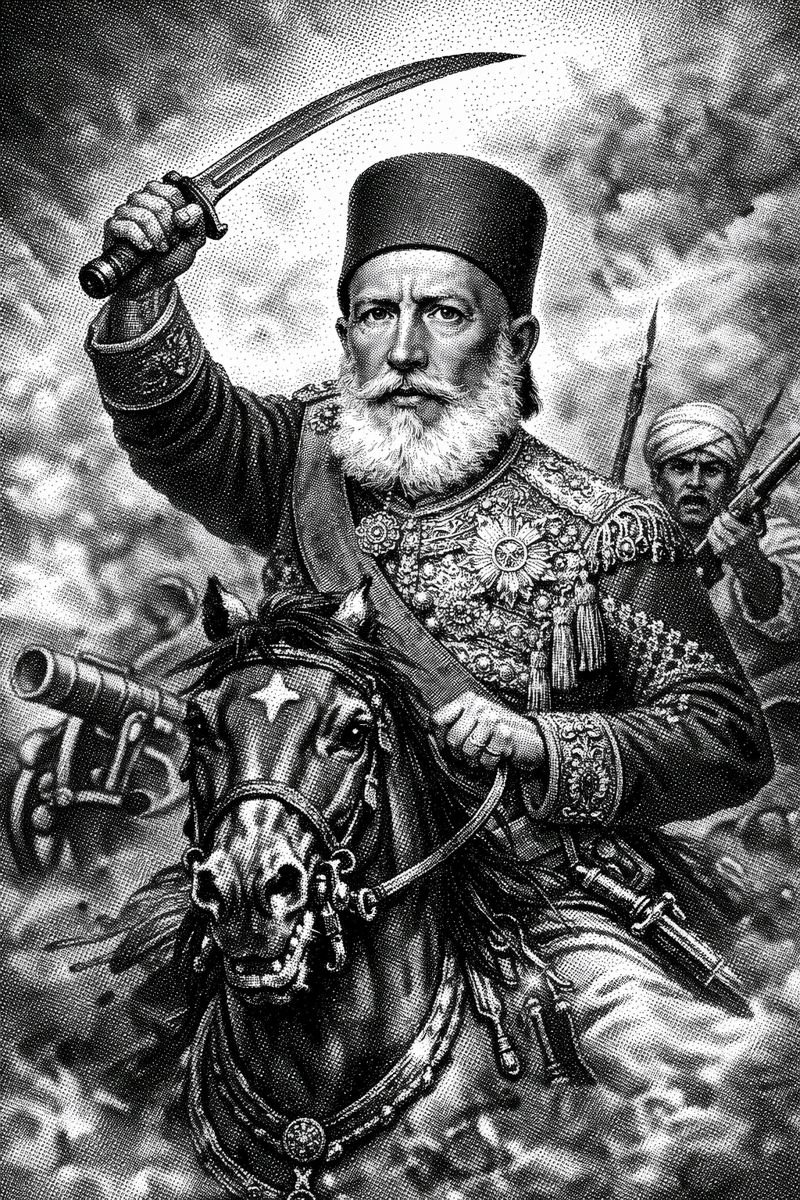
Alexander Nevsky was a 13th-century Russian prince famed for defeating invading forces at the Battle on the Ice in 1242. He became a national hero and later a saint, remembered as both warrior and shrewd diplomat.
Rank - 115