Pachacuti Inca Yupanqui
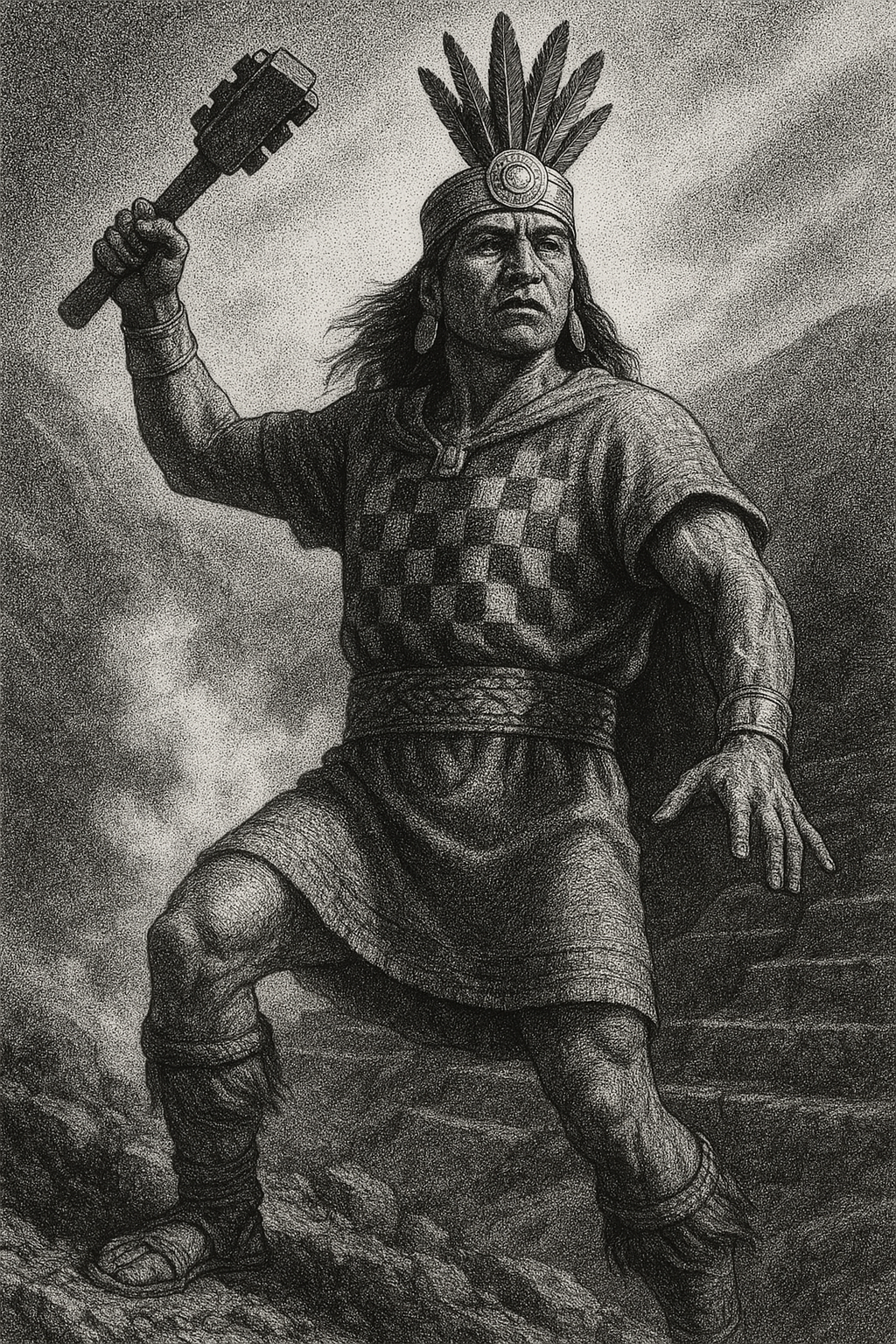
(c. 1418 – c.1471 CE)
Andean builder-conqueror; systematized empire atop mountains and myth.
“The gods build mountains so men can climb them and die trying.”
— Old Quechua proverb, probably invented by a drunk chronicler with altitude sickness
The air was thin, the sun was cruel, and the mountains looked like the ribs of a dead god.
Somewhere up there, on a ridge that scraped the sky, Pachacuti Inca Yupanqui was busy rewriting how empires are made—one skull, one terrace, one tax record at a time.
Picture this: the 1400s, high in the Andes. The world is stone, sky, and paranoia. The Kingdom of Cuzco is barely more than a family feud with llamas. The Chanka tribe is marching on the capital, ready to make Inca civilization a short experiment in incest and masonry. The old emperor, Viracocha Inca, looks at the advancing enemy and decides—heroically—to pack his bags and run like hell.
But his son, Pachacuti, looks out over the battlefield and thinks, No. Not today. Not my llama pasture.
They say the gods favored him that day. They also say he tricked the gods, out-planned them, or maybe became one by sheer force of ego. Either way, he rallied what remained of Cuzco’s defenders—farmers, masons, and accountants—and met the Chanka invaders head-on. Legend claims the mummified ancestors themselves rose to fight beside him, wrapped in gold and rage, flinging stones and curses at the enemy. Realistically, it was probably just locals in masks and wine, but hey—if you’re going to start an empire, start with a good story.
When the dust settled, the field was stacked with Chanka corpses and Pachacuti had earned his name: “Earth-Shaker.”Not a nickname you get for your dance moves. He’d taken a doomed tribe and turned it into a death machine with terraces.
Pachacuti wasn’t just a conqueror—he was an architect of inevitability. The man organized victory like it was paperwork. He rebuilt Cuzco in the shape of a puma, because subtlety was for coastal people. He invented roads that climbed where even birds got nosebleeds, stitched together mountain valleys with suspension bridges, and set up a bureaucracy so tight it could find your llama and tax it twice before breakfast.
Where others saw tribes, he saw provinces. Where others saw chaos, he saw spreadsheets written in stone. He conquered with soldiers, yes, but also with engineers, farmers, and—most terrifying of all—accountants with quipus (those knotted-string records that make abacuses look lazy).
He told conquered peoples: “The Sun favors us. Join or burn.” Most joined. The rest discovered how flammable a thatch roof is at 12,000 feet.
By the time Pachacuti was done “reorganizing,” the Inca realm stretched across modern Peru, Ecuador, Bolivia, Chile, and parts of Argentina. And this wasn’t just a drunken land grab—it was a planned civilization, a divine spreadsheet running on solar worship and human labor. Roads converged on Cuzco like veins toward a golden heart. Storehouses were full, temples gleamed, and the empire hummed with the terrifying efficiency of belief.
He didn’t call it tyranny. He called it order.
And maybe he wasn’t wrong.
But glory doesn’t come cheap at altitude. Pachacuti was as ruthless as he was visionary. His empire ran on mita—mandatory labor drafted from conquered people, rotated like cogs in a celestial machine. If your crops failed, he’d ship grain from another province; if your rebellion failed, he’d ship your family somewhere they couldn’t remember their own language.
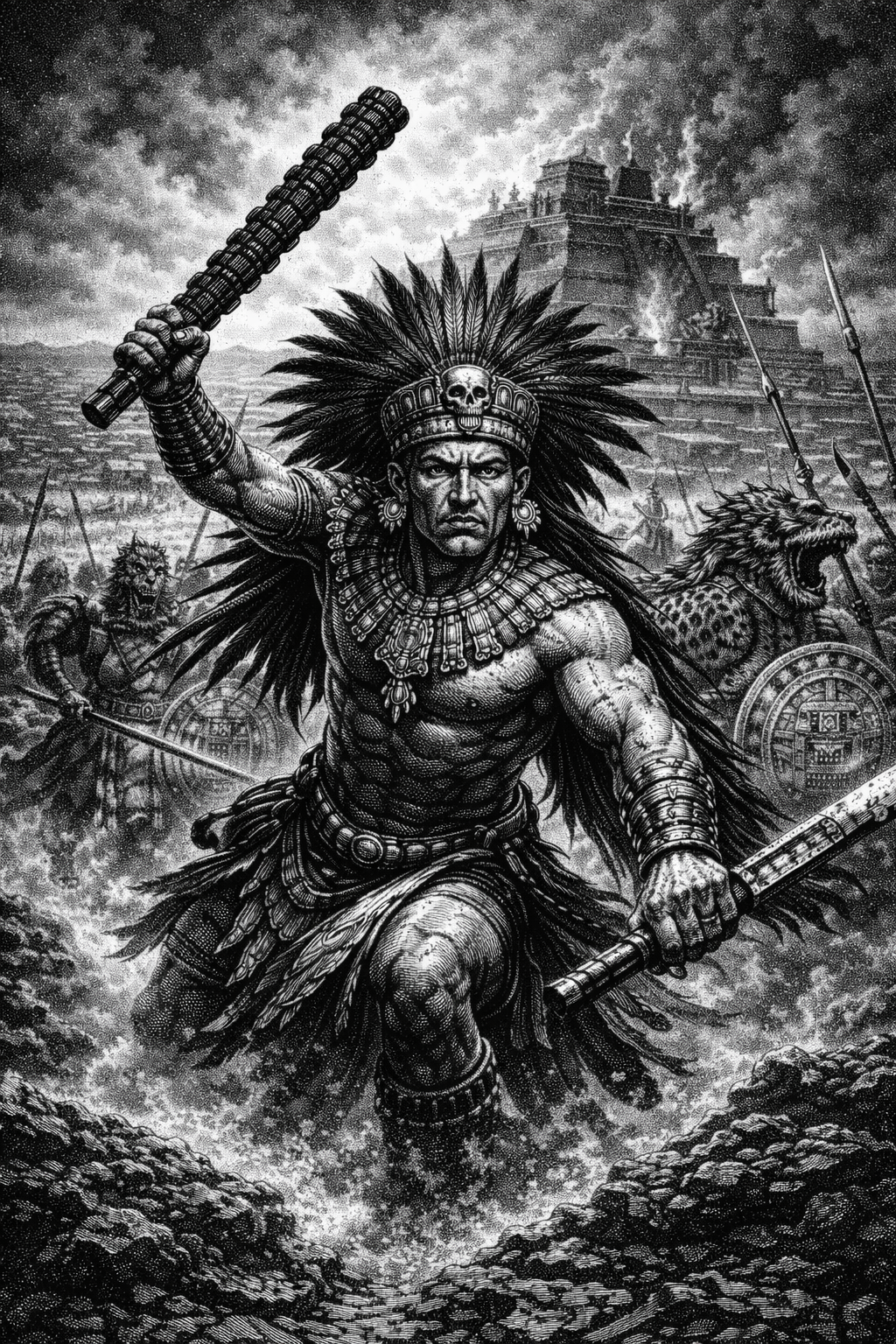
His soldiers carried macanas (stone-headed clubs), spears tipped with bronze, and an unholy amount of stamina. They fought at heights that would make most invaders vomit blood. When you command an army that lives on potatoes and coca leaves, you don’t need horses. You are the horse.
He didn’t just kill enemies; he absorbed them. Like the mountains themselves, he was patient. You could fight Pachacuti, or you could build for him. Either way, your grandchildren would end up speaking Quechua and praising the Sun God.
And yet, the real beauty of Pachacuti wasn’t his brutality—it was his symmetry. He designed his empire the way a stonemason designs a wall: every block locked to another, no mortar, no gaps, just pressure and precision. You can still see it in Machu Picchu—the city he built for gods who never RSVP’d. Stones so perfect you can’t fit a knife blade between them. A mountaintop city in the clouds, equal parts fortress, temple, and ego trip.
Some say he built it as a royal estate. Others whisper it was a cosmic observatory or a doomsday shelter. The truth is simpler and more magnificent: Pachacuti built Machu Picchu because he could. Because he looked at the spine of the Andes and thought, I want that to have stairs.
Time, however, is the one empire no one conquers. Pachacuti died sometime around 1471, probably of old age—which, for a man who fought gods and gravity, is downright anticlimactic. His body was mummified, paraded, and worshipped for centuries until the Spanish arrived and—predictably—ruined everything.
The conquistadors didn’t find Pachacuti’s mummy. Maybe it was hidden, maybe destroyed. Maybe it’s still out there, sitting upright in a stone chamber, glaring at the modern world and wondering how the hell Wi-Fi still sucks at high altitude.
His empire, of course, didn’t survive long after him. His successors kept expanding until they ran out of map and luck. Then Pizarro and his merry band of smallpoxes showed up, and the Inca Empire collapsed like a roof in the rainy season. But even in ruin, Pachacuti’s shadow lingered—an empire built not on gold or blood, but on granite and faith.
To this day, Andean people still speak Quechua, still farm terraces he carved, still walk the roads he ordered laid. The Spanish tried to erase him, but you can’t erase a man who literally built the mountain you’re standing on.
The myth came later, of course. Chroniclers couldn’t decide if he was a man, a god, or a geological event. Some painted him as the enlightened ruler who brought civilization to the Andes; others saw him as the tyrant who enslaved half of South America. Both are right. Pachacuti was the kind of man who could build paradise out of stone—and charge rent.
History calls him the architect of the Inca Empire. His people called him Son of the Sun. But somewhere, maybe in that thin oxygen above Cuzco, his spirit probably chuckled and said, I was just trying not to lose to the Chankas.
In the end, Pachacuti’s greatest monument isn’t Machu Picchu, or Cuzco, or even the empire itself. It’s the idea that you can look at an impossible landscape—a place where the air hurts to breathe—and decide it’s home. That you can build cities in the sky, feed nations from vertical farms, and turn the bones of mountains into staircases.
He didn’t just reshape the Andes. He taught them discipline.
And somewhere, buried in that impossible geometry of stone and sky, there’s a simple truth carved into the rock:
You don’t move mountains. You make them work for you.
Warrior rank #159
Sources (dubious and otherwise):
Garcilaso de la Vega, Comentarios Reales de los Incas (1609)
Pedro Cieza de León, Crónicas del Perú (1553)
Terence D’Altroy, The Incas, Wiley-Blackwell, 2003
“The Last Empire Without a Wheel,” Journal of Archaeological Absurdities, vol. 12, 1998
Oral histories recorded from Quechua elders, who still think Spaniards were just very rude mountain guests

Alexander Nevsky was a 13th-century Russian prince famed for defeating invading forces at the Battle on the Ice in 1242. He became a national hero and later a saint, remembered as both warrior and shrewd diplomat.
Rank - 115