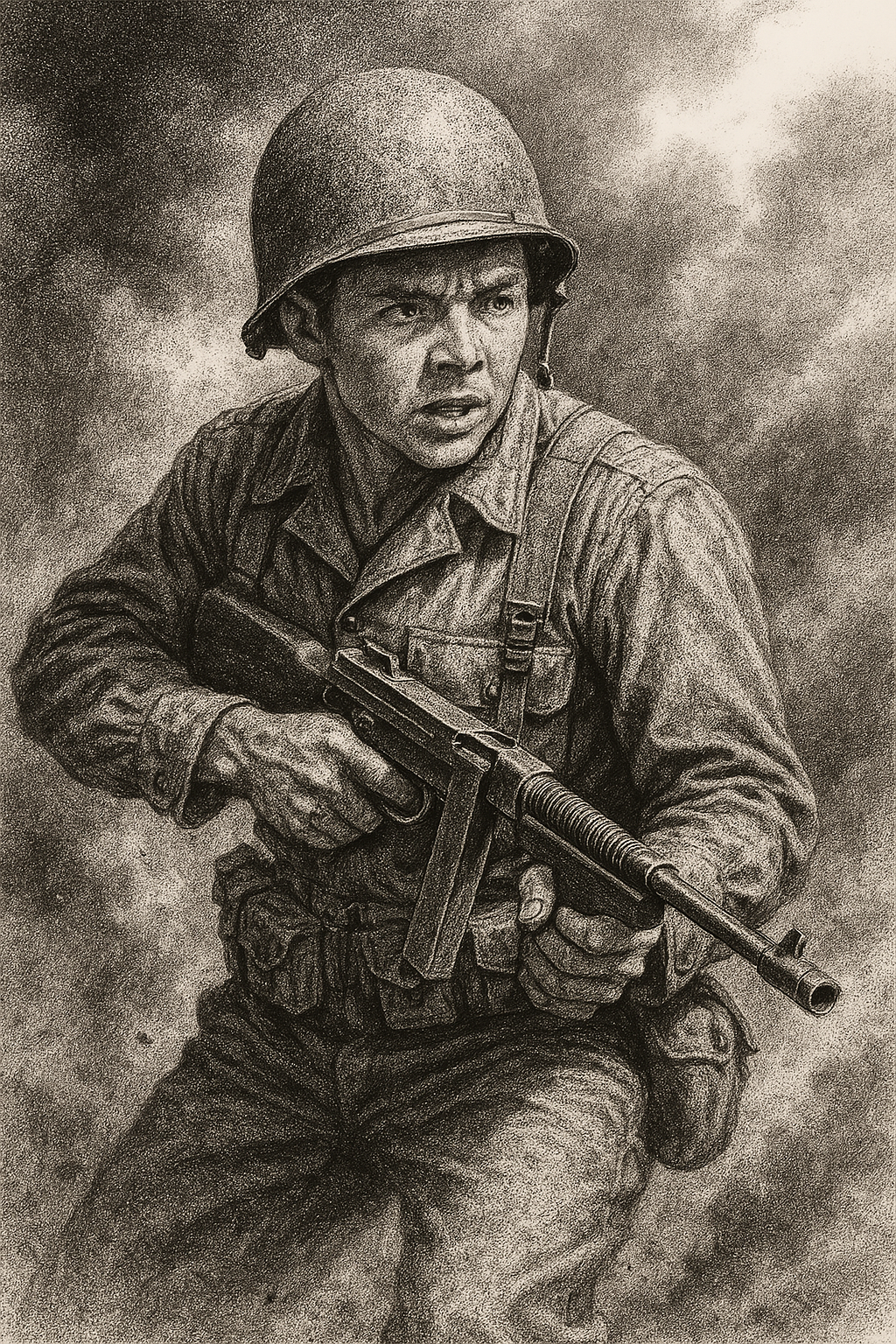
(1925-1971)
The legend born in fire, smoke, and a
.50-cal that wouldn’t quit.
“Some men pray for miracles. Others reload.”
Attributed to someone with sense, probably not Audie Murphy.
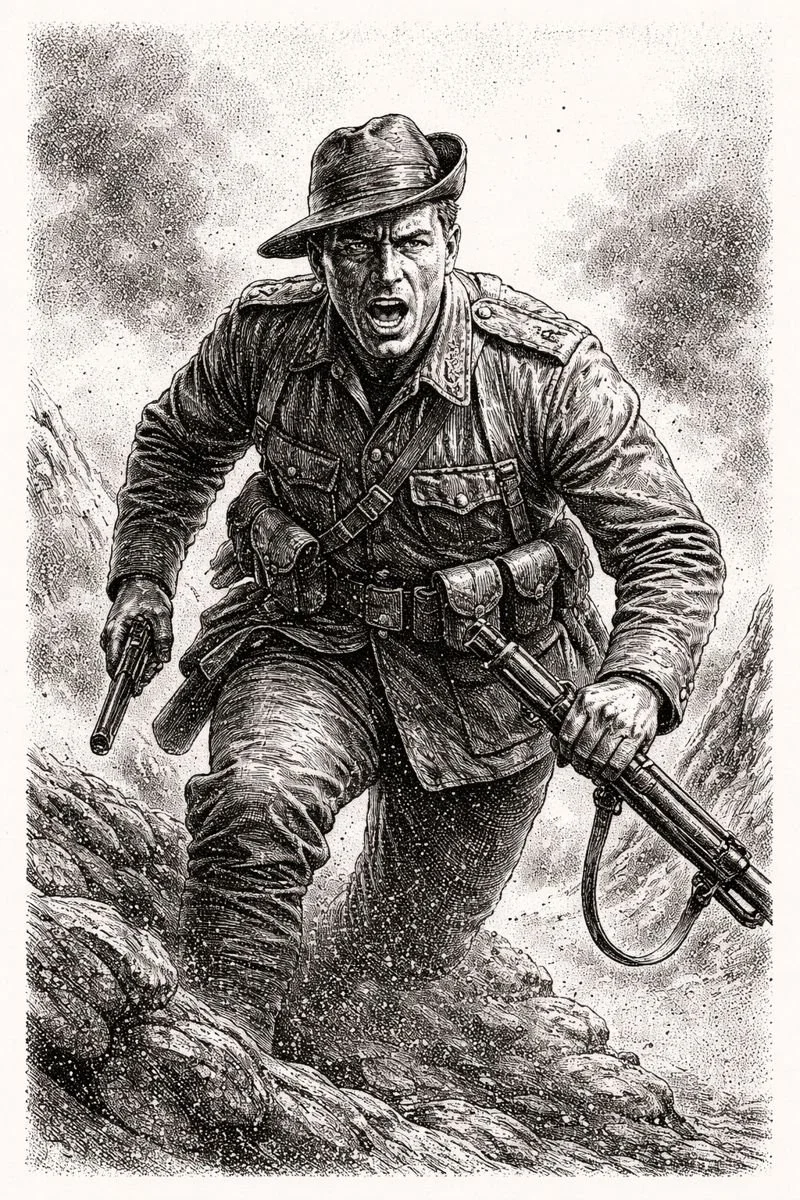
Smoke slouched across the French hedgerows like a bored stagehand waiting for the next explosion to cue him. The field was a churn of mud, brass, and half-forgotten limbs, and in the center of it all stood a man who barely cleared five and a half feet but carried himself like the patron saint of ‘try me.’ Audie Leon Murphy, 19 years old, Texas-forged, Depression-starved, and apparently allergic to the concept of staying down, had wedged himself into the machinery of war like a splinter you can’t tweeze out. And the universe, annoyed, kept trying.
January 26, 1945. Near Holtzwihr, eastern France. The place looked like a cemetery still waiting for the bodies. German armor rolled out of the treeline, their treads cracking frozen earth, their crews eager for something that wasn’t losing. Most men would look at that ugly approach and start filling out imaginary wills. Murphy climbed on top of a burning M10 tank destroyer, stared down the gathering storm, and thought: This seems like a reasonable place to take a stand.
To understand how we got here—a single Texan improvising a one-man remake of The Alamo but with better aim—you have to wind back to rural Texas, 1925. He was born small, poor, and furious in a way only children who become legends are allowed to be. His father evaporated into the horizon when the mood struck him. His mother broke herself trying to keep the family alive. Young Audie took to hunting because bullets were cheaper than hunger, and the rabbits weren’t unionized. He dropped out in the fifth grade, wrung adulthood from adolescence, and tracked misfortune like it owed him rent.
When Pearl Harbor happened, Murphy sprinted toward the nearest recruiter like he’d heard they were giving out food. The Marines and paratroopers looked at him, counted his ribs, and tactfully suggested he grow several inches or perhaps reincarnate. The Army, eternally desperate, said yes. Soon they discovered that the wiry kid who looked like he’d been carved from leftover piano wire was a natural killer with the emotional range of a stunned hornet. Sicily. Salerno. Anzio. He collected wounds like trading cards and decorations like overdue apologies. Men followed him because he kept surviving, and they figured proximity to whatever pact he had with death might help.
Which brings us back to Holtzwihr, a place whose only tourist attraction was incoming artillery. His company had been mauled. The Germans brought tanks, infantry, and enough firepower to politely request the Americans stop existing. Murphy ordered his men to fall back to a better defensive line. Then he stayed behind, alone. Because of course he did.
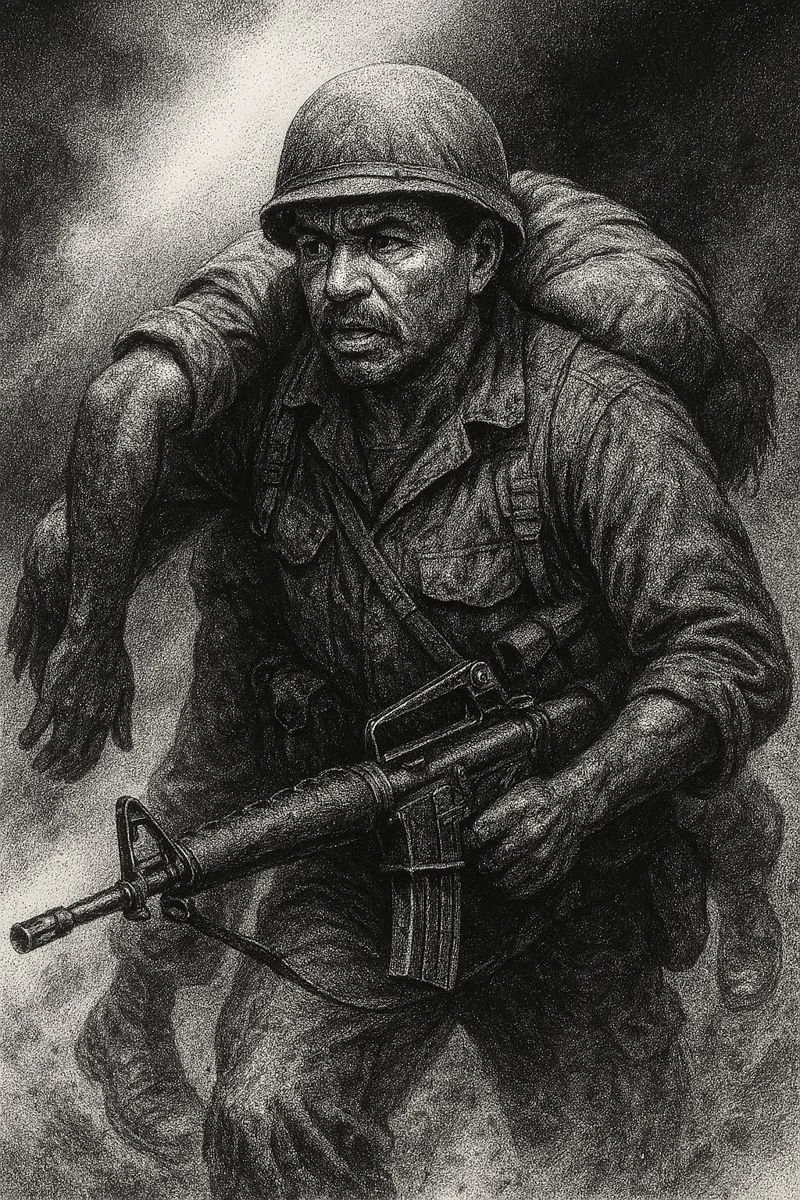
He climbed onto the burning M10 tank destroyer. Flames licked the hull. Ammunition cooked off inside, spitting sparks and small explosions like an angry carnival ride. He grabbed the .50-caliber machine gun, swung it toward the advancing Germans, and opened fire. Not steady, disciplined fire. More like a man possessed, sweeping the field with the kind of grim enthusiasm usually reserved for exorcists and very tired teachers.
One man. One flaming metal coffin. One fifty-cal singing the national anthem in bullets. He cut down infantry. He forced tanks to rethink their life choices. He directed artillery by radio, shouting corrections while the world around him tried to murder him with shrapnel, heat, and physics. The Germans probably thought he was some kind of trench demon America had cooked up in a basement. Eventually, out of ammo and sheer contempt for mortality, he abandoned his scorched chariot and rejoined his men, limping, bleeding, incandescent with rage at the universe’s failure to kill him.
For this, the Medal of Honor. For everything else, a metal orchard’s worth of silver and bronze. By war’s end, he was the most decorated American soldier of World War II: a small, soft-spoken storm front wrapped in an Army uniform.
And then the war ended, as wars occasionally do when they run out of young men to steal from mothers. Murphy came home to ticker-tape parades, Hollywood agents, and a nation crowded with people who had not personally punched the Wehrmacht in the throat. He drifted west, bewildered, and let moviemakers turn him into a myth. They cast him in westerns, war films, melodramas, and the cinematic equivalent of heavily buttered toast. He even played himself in To Hell and Back, a movie that toned down his actual combat record because audiences wouldn’t believe it. Imagine being so intense reality has to be sanded for mass consumption.
But the medals didn’t stop the nightmares. The applause didn’t drown out the gunfire in his skull. Murphy slept with a loaded pistol under his pillow. He spoke openly about what we now call PTSD, back when it was filed under ‘shut up and drink.’ He carved a living from Hollywood, wrote songs, raised horses, and battled the war long after the war was done with him. The man who could withstand tanks and machine-gun fire found his match in memory.
January 28, 1971. A private plane. Bad weather. A crash in the Virginia mountains. The cruel irony of surviving battlefields only to be claimed by civilian aviation was not lost on anyone. Murphy died at 45, leaving behind a nation that had turned him into a poster, a legend, and—eventually—a cautionary tale. The Army buried him in Arlington with honors fit for a myth, and Hollywood kept rerunning his ghost until the edges blurred.
Today, Audie Murphy exists in that strange American pantheon where real men become larger-than-life action figures sculpted by nostalgia. Military recruiting stations whisper his name like a dare. Country songs borrow his grit like a flask. War buffs heap reverence on him while sidestepping the parts where he woke in the night drenched in sweat he couldn’t outrun.
If the gods of war ever kept score, his line would read: undersized Texan, oversized fury, undefeated until peace finally caught him.
And somewhere in France, an abandoned field still gossips about the day one angry kid from Texas set hell on fire and dared it to blink.
He left the world the same way he lived in it: too hard, too fast, and impossible to explain without swearing.
Warrior Rank #156
Sources
Audie Murphy, To Hell and Back (Henry Holt, 1949).
David A. Smith, Audie Murphy, American Soldier (University of Nebraska Press, 2016).
Harold B. Simpson, Audie Murphy: American Soldier (Orion, 1974).
U.S. Army Center of Military History archives.
The Extremely Confidential Field Manual on How to Terrify Panzers with Pure Spite, ed. Definitely Not Approved by the War Department.

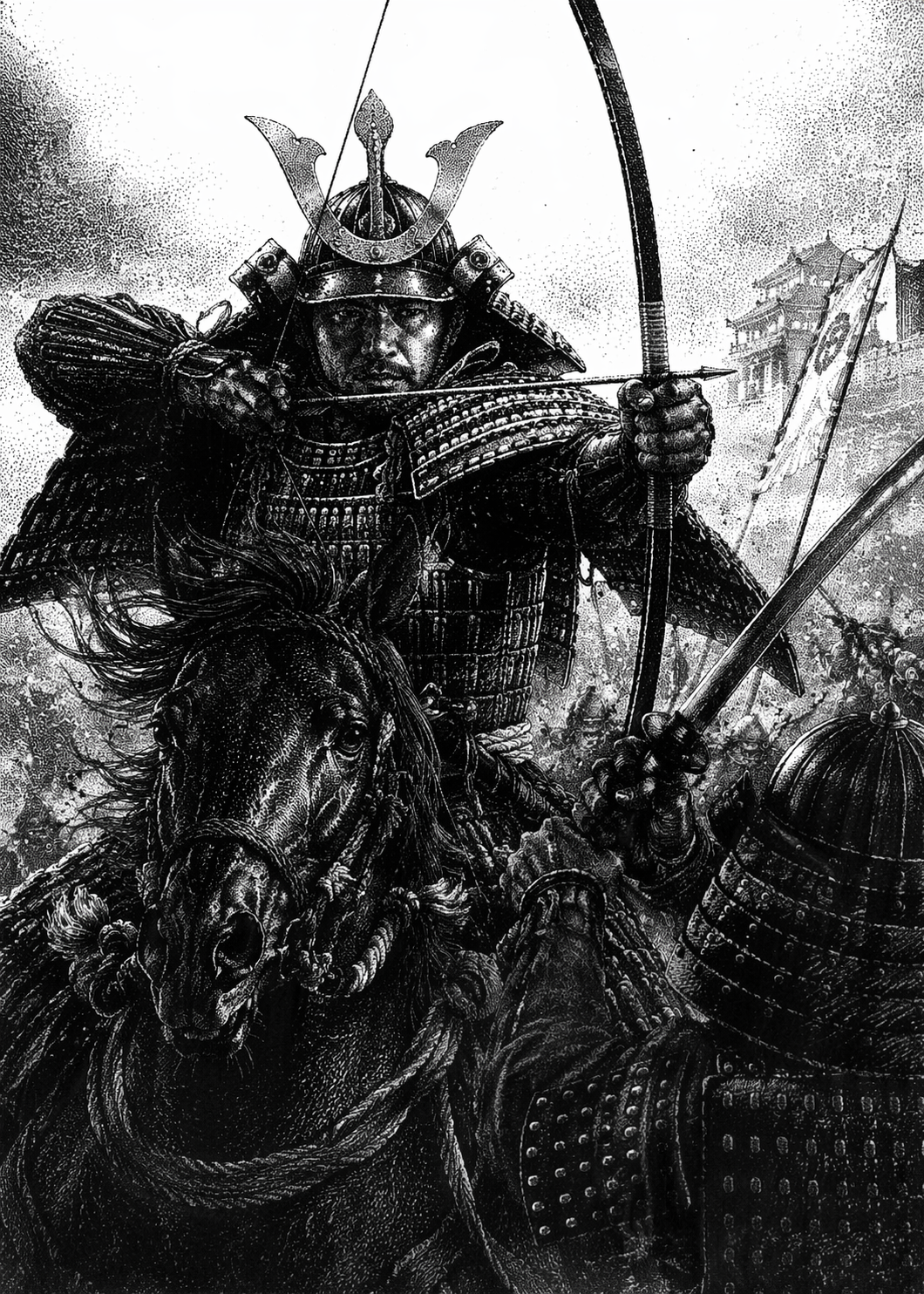
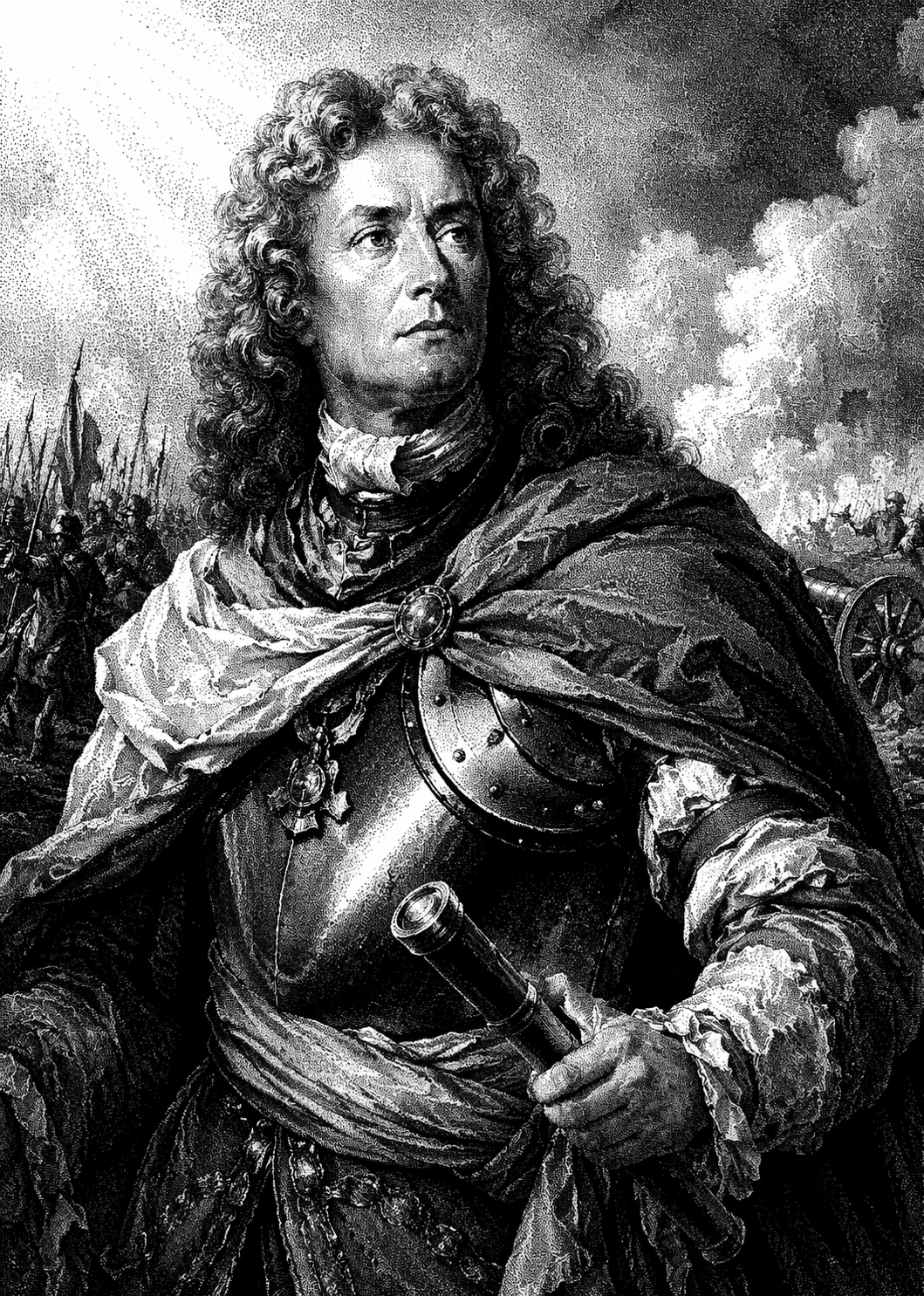
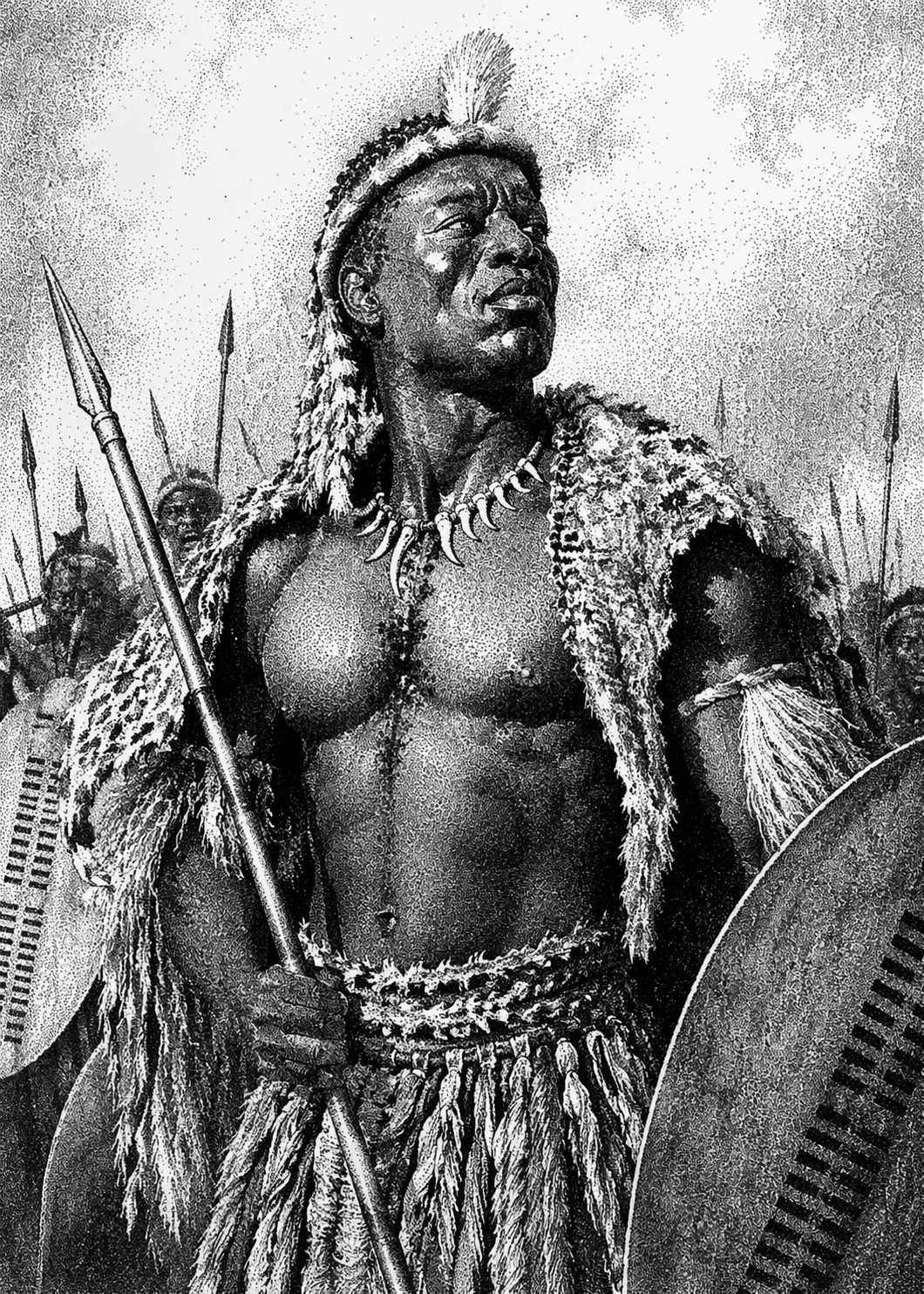
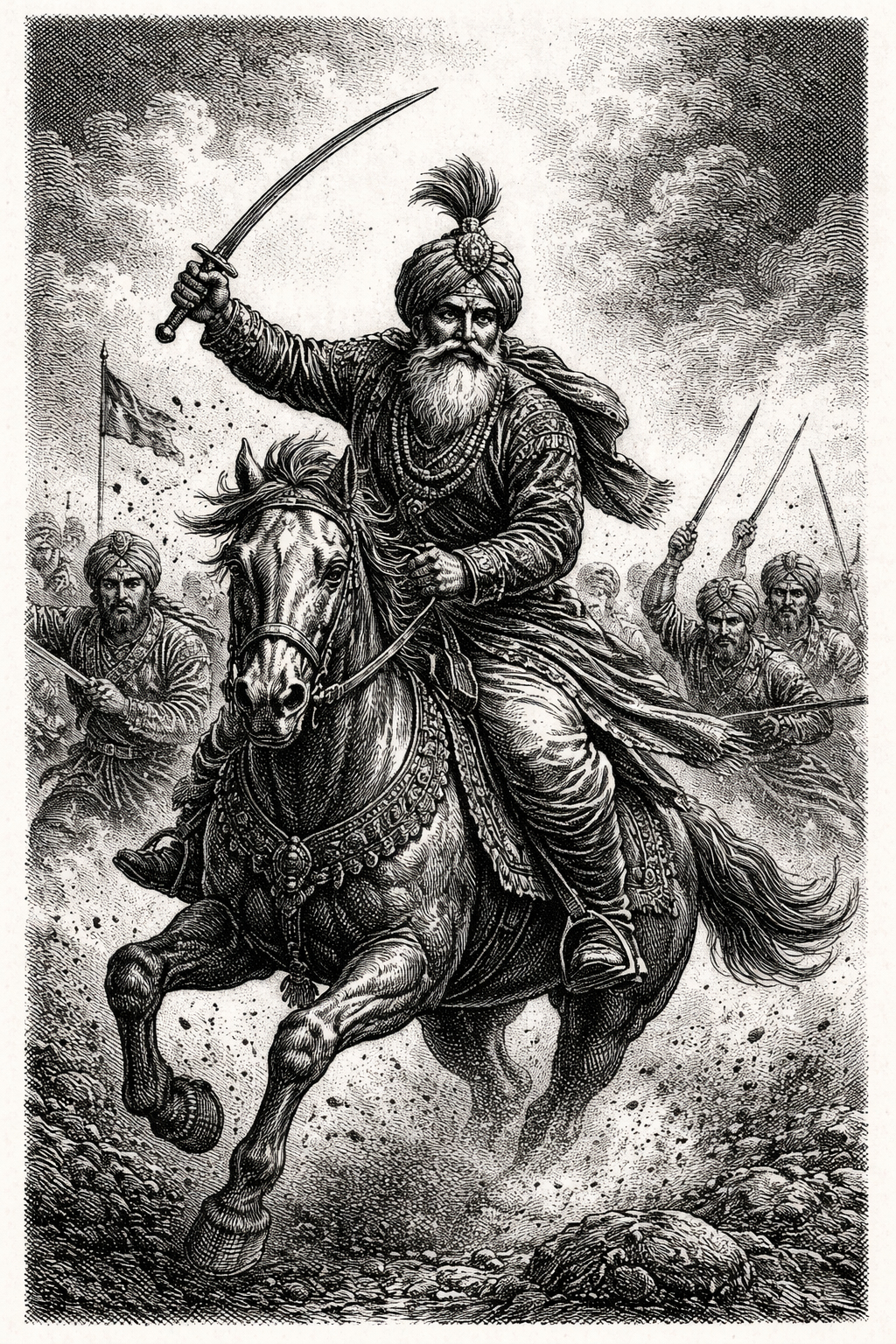
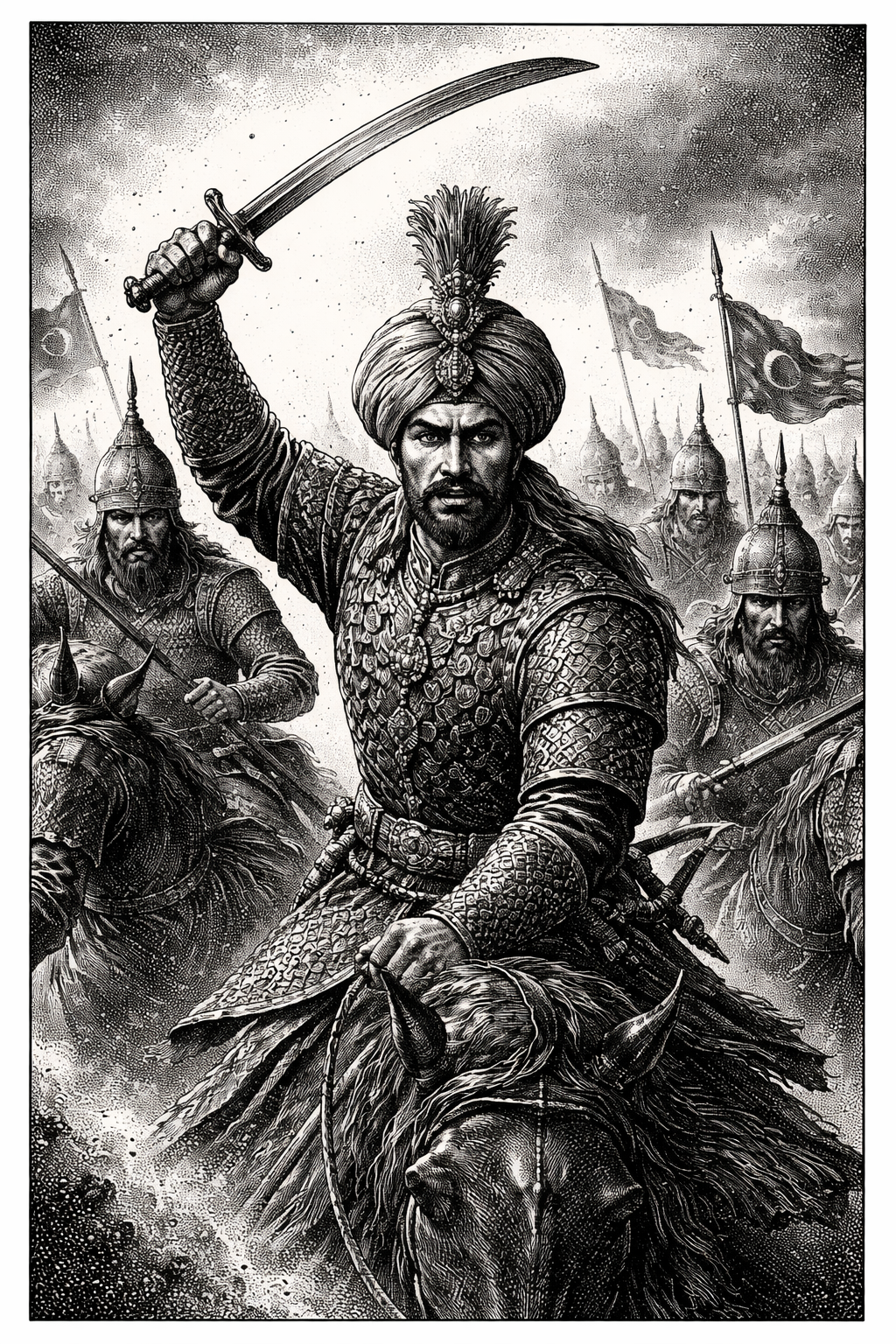
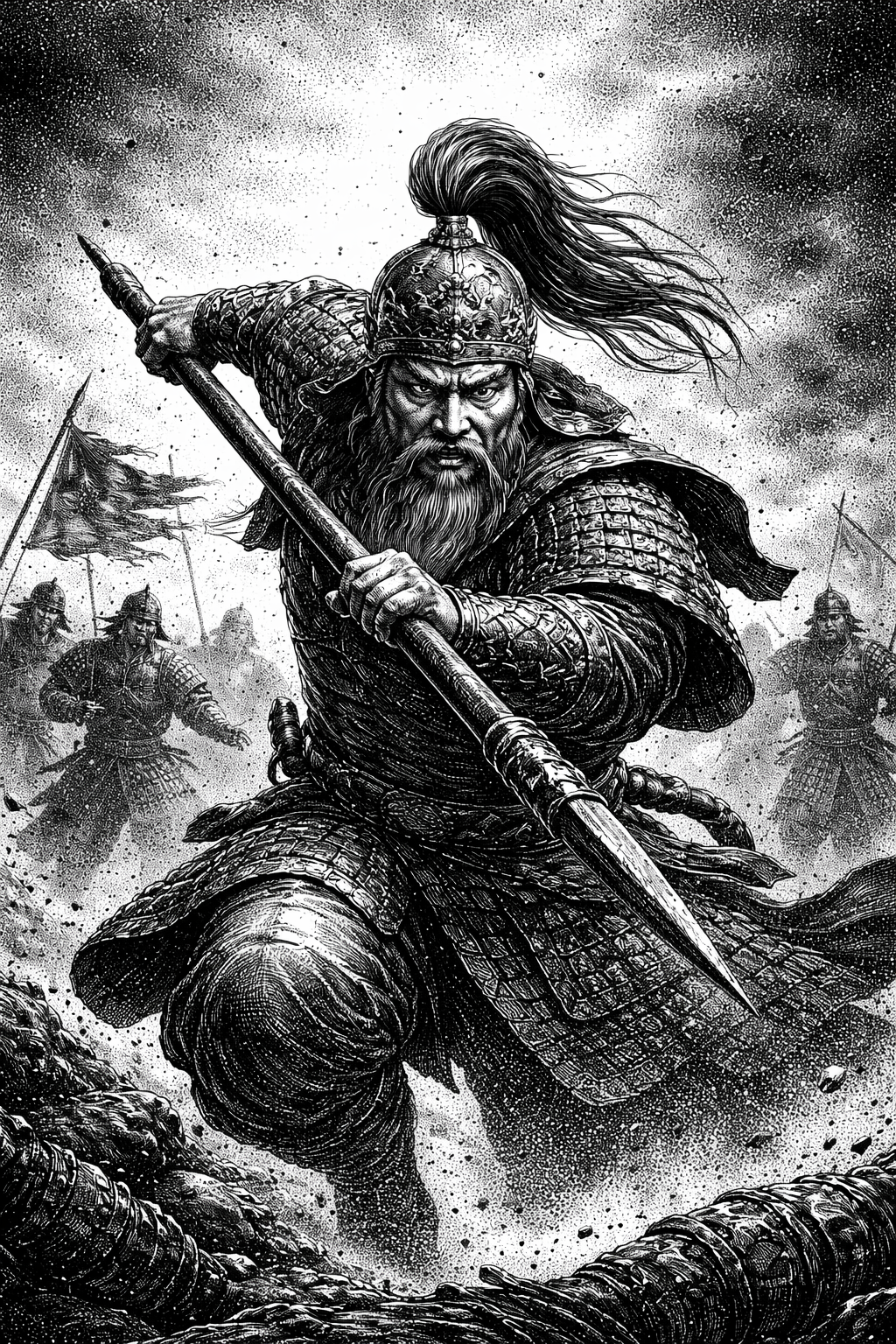
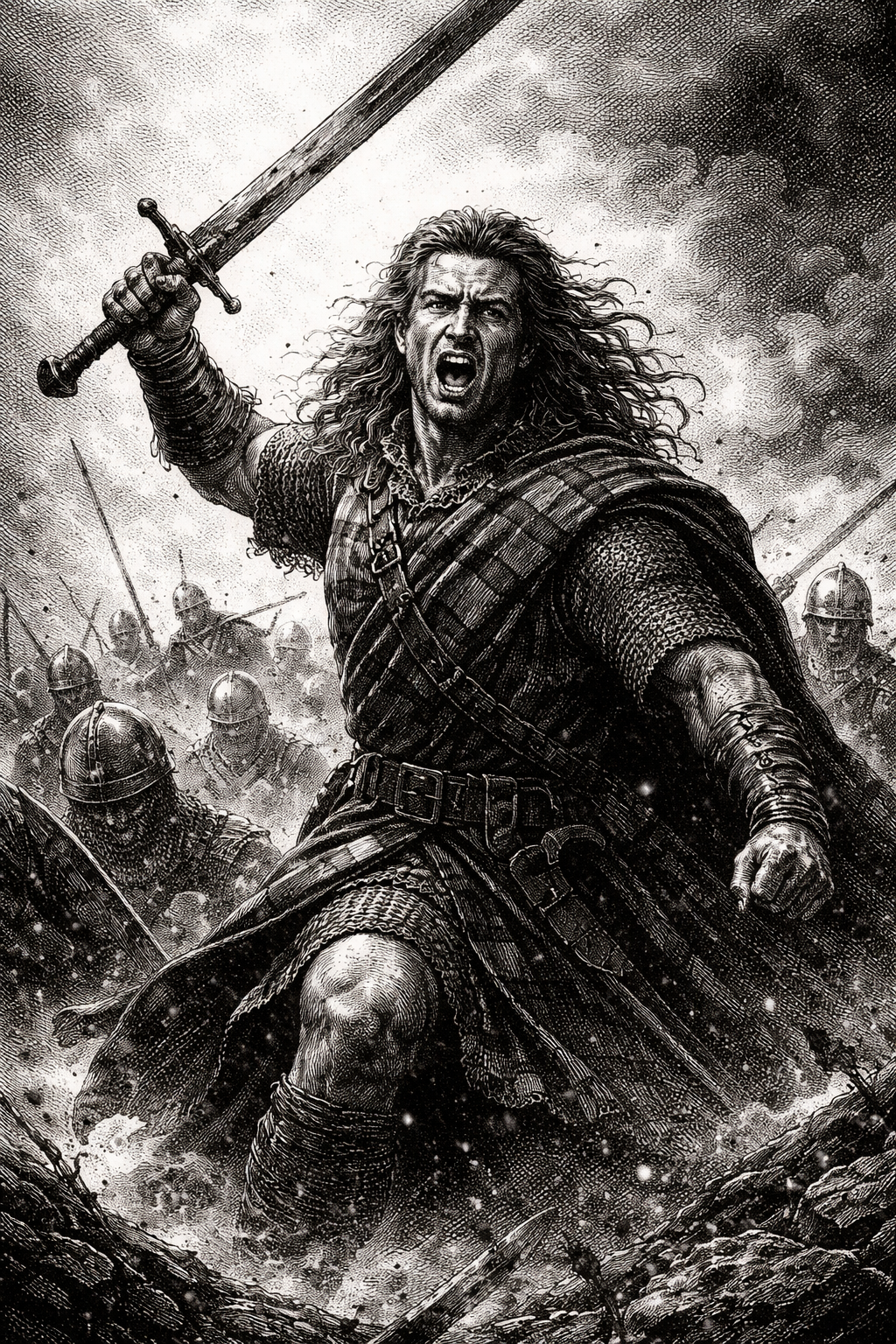
Alexander Nevsky was a 13th-century Russian prince famed for defeating invading forces at the Battle on the Ice in 1242. He became a national hero and later a saint, remembered as both warrior and shrewd diplomat.
Rank - 115