Baldwin I of Jerusalem
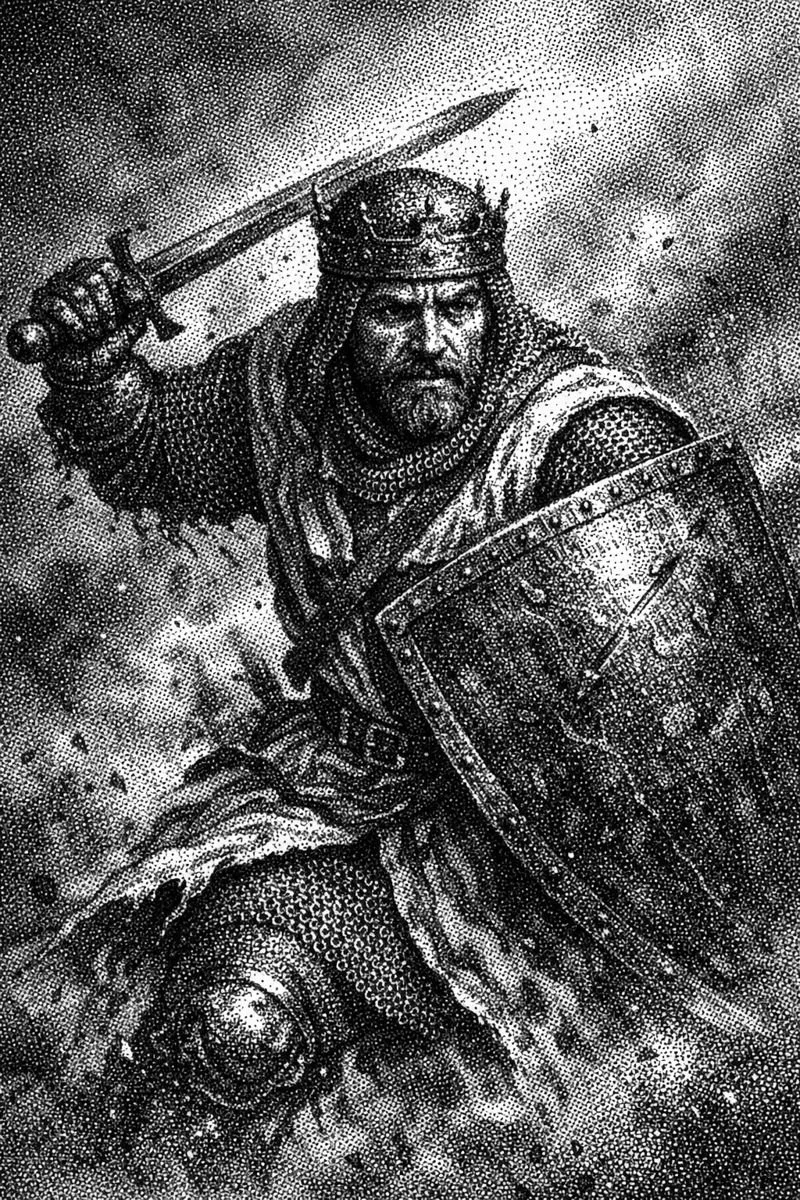
(1058-1118 CE)
Ruthless crusader king and founder of Jerusalem’s fragile realm
“God wills it,” they said, which is history’s favorite way of saying,
“Stand back and watch this get ugly.”
The dust outside Acre tasted like rust and old prayers. Siege engines groaned. Men screamed. Somewhere between the surf and the walls, Baldwin of Boulogne adjusted his grip on a sword already slick with other people’s biographies. The city was almost his. Again. The Crusades were not a war so much as a long, theological bar fight, and Baldwin was the kind of man who kept ordering another round.
This is Baldwin I of Jerusalem. First king. Frankish upstart. Pilgrim turned predator. A man who learned very quickly that holiness and homicide are not mutually exclusive. If God wanted a landlord in the Levant, Baldwin was happy to collect the rent in blood.
He didn’t start as a king. He started as a younger son, which in medieval Europe meant ambition with no inheritance. Born around 1058 to the counts of Boulogne, Baldwin grew up with the familiar cocktail of piety, violence, and a deep resentment of older siblings. His brother Godfrey would become the respectable one. Baldwin would become the one who actually liked the work.
When the First Crusade staggered out of Europe in 1096 like a plague with banners, Baldwin went along as muscle, not royalty. The crusading army was a traveling apocalypse. Famine followed them. Corpses marked their routes. Baldwin watched and learned. Then he peeled off eastward, toward Edessa, where opportunity smelled better than sanctity.
Edessa fell to him in 1098, not by divine thunderbolt but by the ancient art of stabbing the right people and smiling at the survivors. Baldwin declared himself count, converting pilgrimage miles into a sovereign paycheck. It was the first Crusader state, and it ran on extortion, alliances, and a permanent state of siege. Baldwin ruled it like a man renting a house he planned to burn down later.
Then Jerusalem happened.
In July 1099, the Crusaders took the city in a massacre so efficient that later chroniclers tried to soften it with poetry. Blood ran in the streets. Heads rolled. Godfrey of Bouillon refused a crown, calling himself “Advocate of the Holy Sepulchre,” which is medieval for “I want power without paperwork.” Baldwin watched this with interest.
Godfrey died the next year. Conveniently.
In 1100, Baldwin rode into Jerusalem and crowned himself king. No euphemisms. No monkish humility. No pretend reluctance. He wore the crown because crowns exist to be worn, and holy cities need administrators who don’t flinch.
The Kingdom of Jerusalem was a fantasy written in steel. Surrounded by enemies, dependent on supply lines that stretched back to Europe like a fraying rope, it survived on aggression and luck. Baldwin specialized in both. He raided constantly. He made treaties and broke them. He married Armenian royalty for leverage and then discarded the marriage when it bored him. He taxed pilgrims and cities alike, monetizing salvation with admirable efficiency.
Acre fell in 1104 after a siege that mixed crusading fervor with naked economics. Ports meant ships. Ships meant money. Baldwin understood that God might forgive sins, but bankers forgave nothing. Tyre, Sidon, Beirut fell in sequence. The kingdom spread like a stain along the coast, stitched together by castles and threats.
Baldwin fought at Ramla. He lost men by the thousands. He won battles he shouldn’t have. At the second Battle of Ramla in 1102, his army was obliterated, and Baldwin escaped by pretending to be dead under a pile of corpses. Resurrection narratives usually omit that detail.
He learned from defeat. He leaned harder into fortifications, alliances, and the emerging military orders. Knights Templar, Hospitallers, the alphabet soup of armed piety. Baldwin didn’t invent holy war bureaucracy, but he certainly beta-tested it.
What made him immortal was not a single battle but a single idea: that Jerusalem could be ruled like a state instead of a shrine. Baldwin turned crusading zeal into a government. He issued laws. He stabilized borders. He treated warfare like an occupation, not a pilgrimage. The kingdom didn’t collapse immediately, which in the medieval Levant counted as a roaring success.
But kings made of iron don’t rust gracefully.
In 1118, Baldwin marched south into Egypt, chasing another campaign, another payday, another chance to expand the map and his legend. The desert does not care about legends. Near El-Arish, Baldwin fell ill. Some say food poisoning. Some say wounds. Some say God finally checked the receipts.
He died on the road, far from Jerusalem, far from a throne, attended by men who would immediately start calculating succession. His body was boiled so the bones could be transported back. Kings die. Logistics continue.
They buried him in the Church of the Holy Sepulchre, surrounded by the holy geography he’d monetized so efficiently. The kingdom staggered on under successors who inherited his crown but not his instincts. Within a century, Jerusalem would be lost, reclaimed, lost again, a revolving door of sacred real estate.
Afterward, Baldwin became a statue in chronicles. A founder. A crusader king. A necessary monster. Propaganda polished him into a hero, sanding off the extortion, the massacres, the political marriages, the opportunism. Pop culture, when it remembers him at all, confuses him with every other armored zealot who thought God wanted land deeds.
The truth is uglier and more interesting. Baldwin I wasn’t a fanatic blinded by faith. He was worse. He was lucid. He understood exactly what he was doing and why it worked. He didn’t scream “God wills it” because he believed it. He used it because other people did.
He built a kingdom on borrowed time, financed by violence, insured by castles, and staffed by men who mistook survival for righteousness. And for a while, it worked. Which is the most damning miracle of all.
Warrior Rank #150
Sources
Fulcher of Chartres, A History of the Expedition to Jerusalem
Thomas Asbridge, The First Crusade
Steven Runciman, A History of the Crusades
William of Tyre, Historia rerum in partibus transmarinis gestarum
One very tired desert, still unimpressed
Baldwin didn’t die a saint or a martyr; he died like a landlord in a bad neighborhood, rich in enemies and buried under the property taxes of history.

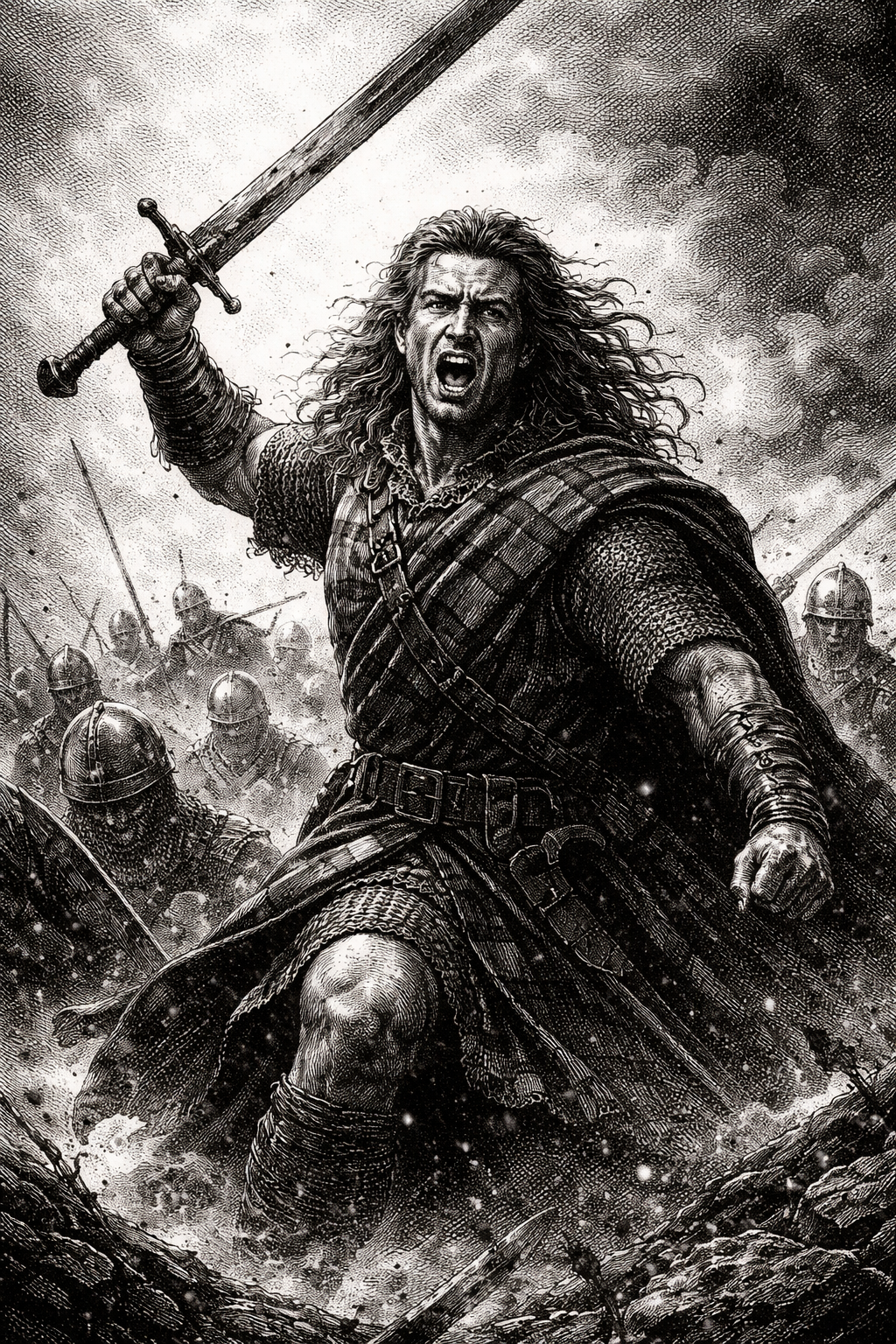
Alexander Nevsky was a 13th-century Russian prince famed for defeating invading forces at the Battle on the Ice in 1242. He became a national hero and later a saint, remembered as both warrior and shrewd diplomat.
Rank - 115