John Hunyadi
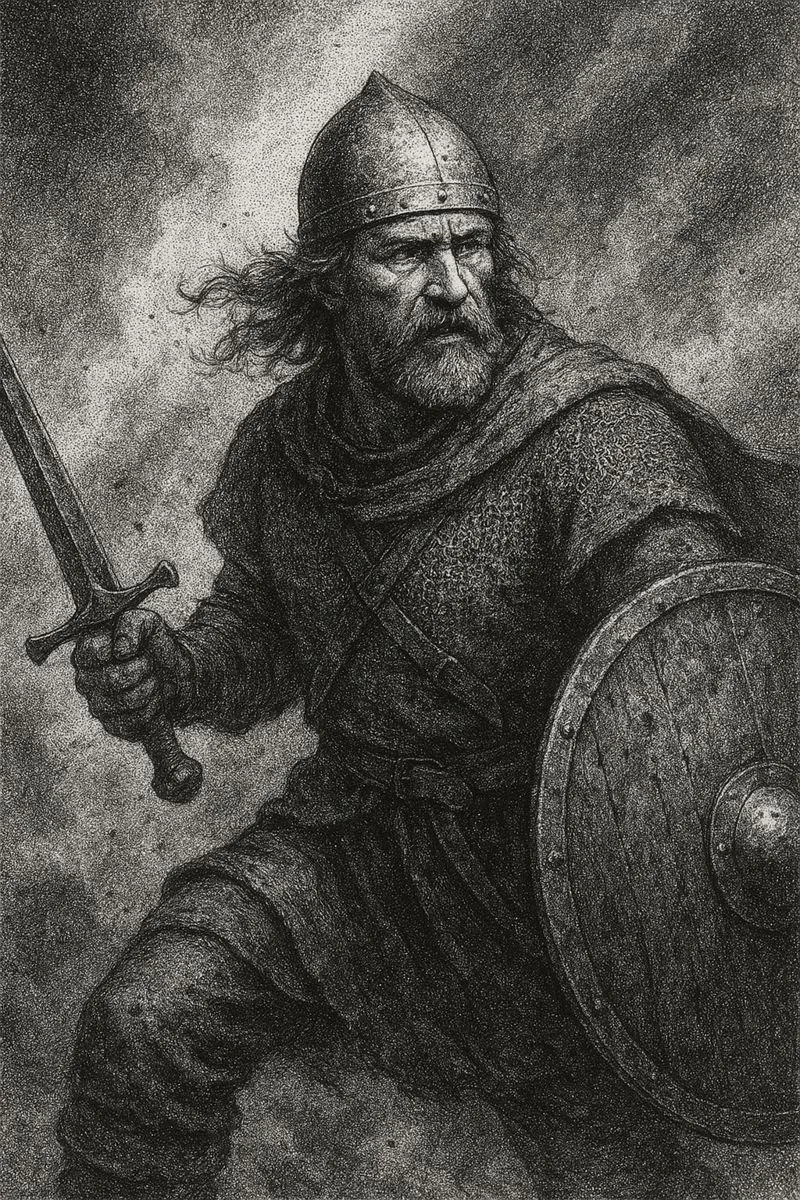
(1407 – 1456CE)
Hungary’s iron shield, relentless crusader, broke Ottoman momentum at Belgrade.
“The Turks have the numbers. We have the walls. And absolutely no goddamn choice.”
— Attributed to John Hunyadi, before Belgrade, 1456
The air above Belgrade smelled like boiled iron and old prayers. Cannons hammered the ramparts until the limestone bled dust, and every time one went off, the Danube rippled with bodies — Ottoman janissaries and Christian crusaders floating together like grim confetti. It was July 1456, the hottest, most apocalyptic summer Central Europe had yet sweated through, and John Hunyadi — the Wall of the Balkans, the White Knight of Hungary, the man who’d spent his life fencing with empires — stood in the ruins of his last stand, grinning like a wolf who’d just realized he might actually eat the hunter.
Nobody’s really sure where Hunyadi came from. Some said Wallachian nobility, others whispered he was the bastard son of King Sigismund himself — a nice little rumor for tavern singers and genealogists who preferred their heroes extra spicy. What’s certain is that by the early 1400s, while Europe was busy eating itself with crusades, plagues, and theological backhanding, Hunyadi was already hacking his way through the ranks.
He fought under Sigismund against the Ottomans, then under the next few kings after that, because Hungary kept changing monarchs like a drunk gambler swapping hats. Through it all, Hunyadi rose the old-fashioned way: by stabbing more efficiently than the man next to him. He was smart, brutal, and allergic to losing. By 1441, he was the voivode of Transylvania, which basically meant “Chief Mean Bastard of the Mountains.”
And the timing couldn’t have been worse or better — depending on how you feel about impending apocalypse.
The Ottoman Empire was swelling like a thunderhead, spilling over the Balkans, and chewing its way north. They had gunpowder, discipline, and sultans who didn’t do mercy. Europe, by contrast, had feuding nobles, overworked priests, and a lot of banners proclaiming God’s Will — which, as usual, translated to “Good luck, peasants.”
Enter Hunyadi: part crusader, part warlord, all headache. He turned Transylvania into a militarized anthill and decided someone had to keep the Turks from kicking in Europe’s southern door. If Christendom was a crumbling castle, he was the guy stacking the bodies at the drawbridge.
He earned his legend the way all medieval icons did — by losing horribly, regrouping furiously, and then winning so hard it almost looked deliberate. His early campaigns in the 1440s were textbook Hunyadi: sneak raids, ambushes, forced marches through snow, and total disregard for whether the Church or the crown had technically said “Go.”
At Varna in 1444, a crusading army under the Polish-Hungarian King Władysław III got obliterated by Sultan Murad II. Hunyadi was there — leading the cavalry, watching as the king charged straight into the janissaries like an idiot with divine insurance. When the king’s head went up on a Turkish pike, Hunyadi had to slash his way out through a carpet of corpses, armor cracked, horse bleeding, screaming his men back to life.
That was his baptism by fire: Europe’s biggest “Oh, shit” moment of the century, and he somehow lived through it.
He didn’t stop there. Over the next decade, he beat back multiple Ottoman invasions, scored tactical miracles at Sibiu and Niš, and earned the nickname “The Hammer of the Turks.” He became Hungary’s regent, which is medieval for “the guy running everything because the actual king is too young or too stupid.”
Hunyadi spent most of that regency broke, exhausted, and constantly betrayed by the same nobles he was saving. Imagine being Europe’s firewall and still getting passive-aggressive notes from your boss about “fiscal responsibility.”
Then came 1453. Constantinople fell. The great Christian capital of the East went up in smoke under Mehmed II’s cannons, and everyone in Europe collectively shat themselves. The Ottoman Empire had officially gone from “persistent nuisance” to “existential doom.”
Mehmed didn’t stop to savor it. Two years later, he was pushing up the Danube with a force of maybe 60,000 men — an industrial-sized invasion — and the next stop on the way to Vienna was Belgrade.
Hunyadi, of course, was ready. He’d fortified the city years before, because paranoid geniuses tend to be good at long-term planning. He cobbled together an army of mercenaries, peasants, and Franciscan friars, led by the fire-breathing preacher John of Capistrano — a holy man who somehow managed to turn peasant mobs into something resembling a military.
The Ottoman siege began in July 1456, and for three straight weeks, Belgrade was an open-air slaughterhouse. Cannonballs turned towers into dust, arrows turned daylight into weather, and the air was so thick with burning pitch you could taste metal.
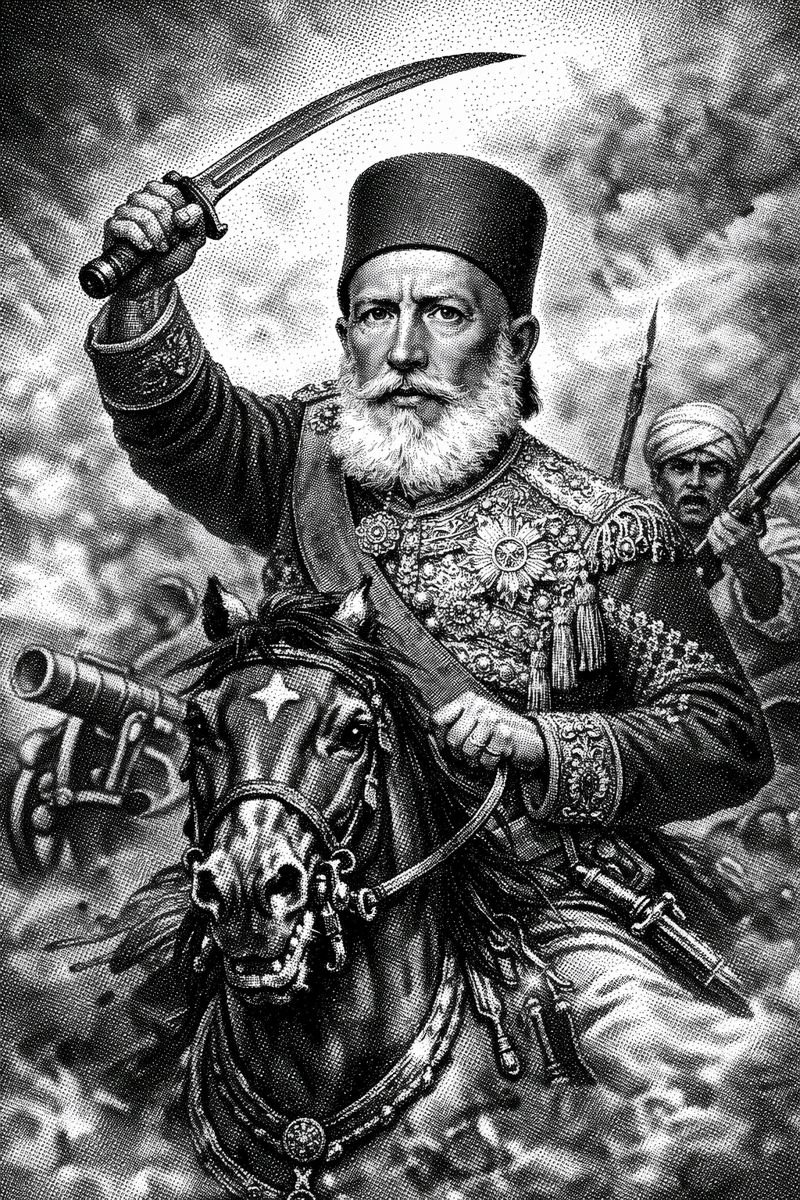
Hunyadi’s men fought like feral saints. When the walls were breached, they counterattacked by boat across the Danube, setting fire to the Ottoman fleet. When the sultan’s janissaries finally swarmed the walls, the defenders met them with axes, boiling oil, and whatever sharp furniture they could find. Capistrano led barefoot peasants through the flames, screaming psalms. Hunyadi rode along the parapets, sword flashing, voice hoarse, daring the Turks to come closer.
The turning point came on July 22, when the Christian forces launched a suicidal counterattack that turned out to be too insane to fail. The Ottomans, stunned that anyone would charge out of a burning fortress, panicked. By sunset, Mehmed’s army was in full retreat, leaving 20,000 dead on the field and the rest scrambling back toward Constantinople.
It was one of the most improbable victories in European history — the kind that smells suspiciously like divine intervention or really good logistics.
When the smoke cleared, Hunyadi had saved the continent. The Pope declared a celebratory bell-ringing at noon in every Christian city — a custom that still survives as the “Angelus.”
Then, of course, he died like a man who’d given too much blood to too many wars.
A few weeks after Belgrade, the plague rolled through the camp. Hunyadi — who’d survived decades of arrows, sieges, politics, and Ottoman steel — coughed once, turned pale, and was dead within days. Europe’s shield had melted in its own sweat.
His body was buried in Alba Iulia, his tomb carved with Latin boasting about how he “repelled the Turks by force of arms.” The Ottoman chroniclers, to their credit, also remembered him: “The accursed Hunyadi,” one wrote, “a dog of war who bit like a lion.”
They meant it as an insult. History took it as applause.
After his death, his legend mutated. His son, Matthias Corvinus, grew up to become Hungary’s greatest Renaissance king — a humanist with libraries and cannons both. The Church beatified his memory as a crusader. Nationalists centuries later recast him as proto-Hungarian messiah. Even modern history books treat him with the awkward respect reserved for people who kill a lot but do it in defense of civilization.
But the truth is simpler: Hunyadi was the man who stood on the line between empire and extinction and refused to blink. He was tired, broke, and probably sick of hearing the word “crusade.” But when the walls shook, he stayed.
If the medieval world had a firewall, his name was the password.
He bought Europe another seventy years of breathing room with one fortress, one army of lunatics, and the kind of courage that smells like smoke and madness.
When the noon bells ring today, they still echo the sound of Belgrade — the roar of cannon, the scream of steel, and somewhere under it all, a hoarse old knight laughing at the odds.
Because John Hunyadi didn’t save Christendom. He just refused to let it die politely.
Warrior Rank #144
Sources:
Setton, Kenneth M., The Papacy and the Levant, 1204–1571 (1984)
Norwich, John Julius, Byzantium: The Decline and Fall (1996)
Babinger, Franz, Mehmed the Conqueror and His Time (1978)
“The Accursed Hunyadi,” Ottoman court chronicle (1456), translated.
Hungarian Drinking Songs and Other Reliable Histories, pub. somewhere east of reason.

Alexander Nevsky was a 13th-century Russian prince famed for defeating invading forces at the Battle on the Ice in 1242. He became a national hero and later a saint, remembered as both warrior and shrewd diplomat.
Rank - 115