John III Sobieski
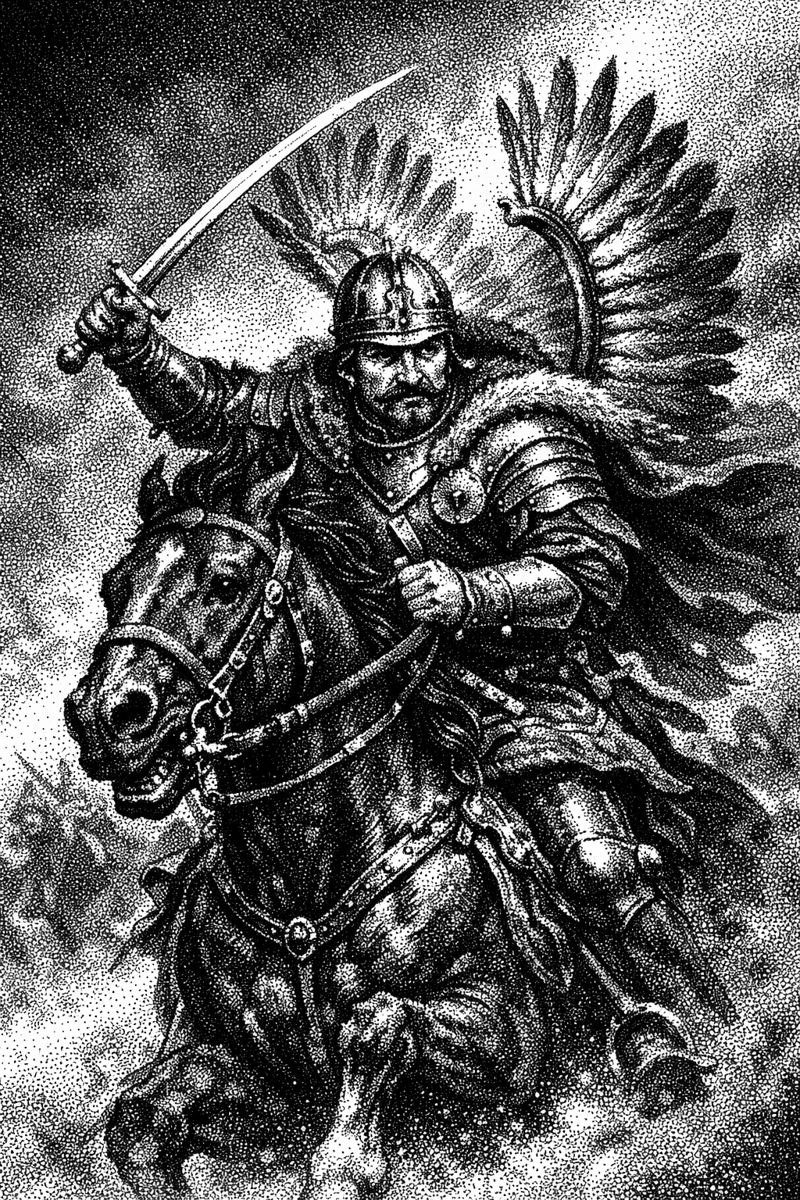
(1629-1696 CE)
Saved Vienna by leading history’s largest cavalry charge downhill into legend.
“I came, I saw, God conquered.”
— John III Sobieski, allegedly, because when you save Christendom before dinner you’re allowed to freelance the Latin.
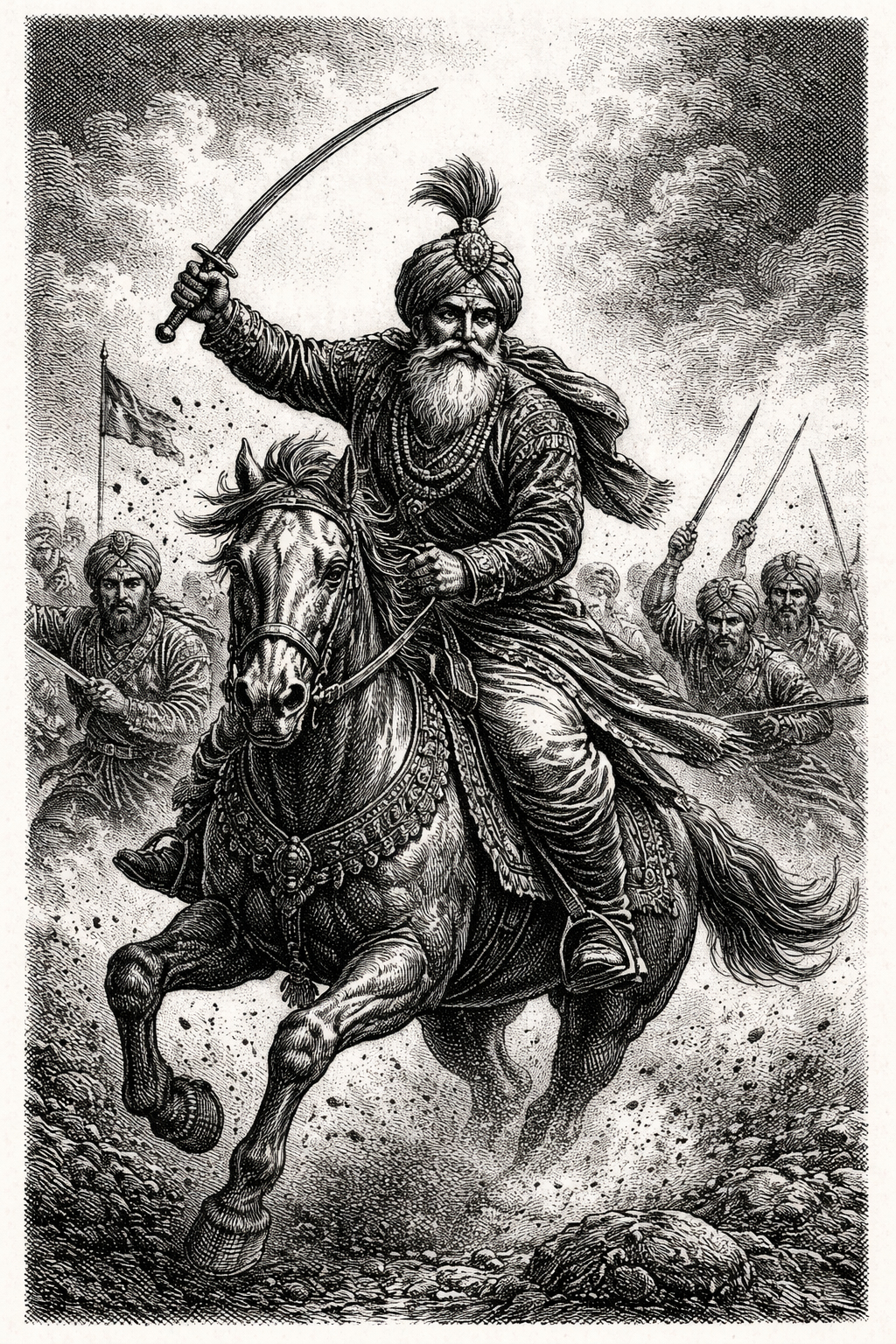
The smoke was already choking Vienna when John III Sobieski crested the Kahlenberg. Below him, the city bled politely, like an aristocrat pretending not to notice the knife. Ottoman cannon had been pounding the walls for weeks. Corpses fermented in trenches. Priests prayed. Bureaucrats debated. Somewhere inside the city, people were boiling rats and calling it cuisine. And then the Poles arrived, late as always, like the punchline to a very long joke about Europe’s incompetence.
Sobieski did not pause for speeches. He did not negotiate. He did not check the weather. He looked downhill at the largest Ottoman army ever assembled in Europe and did the most Polish thing imaginable: he ordered a cavalry charge so large it technically qualified as a moving natural disaster.
This is where history stops being subtle.
John III Sobieski was born in 1629 into the Polish–Lithuanian Commonwealth, a state so vast and chaotic it made Rome look like a homeowners’ association. He was noble by birth, educated in Kraków and Paris, fluent in languages, trained in war, and allergic to tyranny. Poland specialized in producing men like this: brilliant, stubborn, and permanently irritated by the rest of Europe. Sobieski learned warfare the hard way, fighting Cossacks, Swedes, Russians, and anyone else who wandered into the Commonwealth with bad intentions and worse logistics.
By the time he became king in 1674, Poland was exhausted, betrayed, and leaking territory like a stabbed wineskin. Sobieski inherited a throne with a cracked crown and a parliament that couldn’t agree on whether the sky was blue. What he did have was an army that still knew how to kill people professionally, and the most terrifying cavalry on Earth: the winged hussars.
The hussars were not subtle men. They wore armor polished to insult the sun. They rode massive horses bred for war, speed, and trampling human hope. They strapped wooden frames of feathers to their backs, not for aerodynamics but psychological warfare, because nothing unsettles an enemy quite like being charged by armored angels who sound like a screaming forest. Historians argue about the exact effect of the wings. Enemies did not. They ran.
Sobieski used them like a scalpel made of lightning.
In September 1683, Vienna was the cork in the Ottoman bottle. If it fell, Central Europe followed. The Holy Roman Emperor had fled. German princes squabbled. The Pope panicked. Poland answered the call, because when Europe was on fire, Poland had a long tradition of showing up with cavalry and unresolved grudges.
Sobieski marched fast, through mountains, with an army stitched together from Poles, Austrians, Bavarians, Saxons, and anyone else who could hold a weapon without crying. On September 12, he stood above the Ottoman camp, surveyed their tents, artillery, and confidence, and decided to bet everything on shock.
The plan was elegant in the way bar fights are elegant: infantry pinned the Ottomans while Sobieski waited. All day, the battle churned. Smoke smeared the hills. Blood greased the grass. The Ottomans fought well, as they always did. They had numbers, guns, and momentum. What they did not have was Sobieski’s patience.
Late in the afternoon, he unleashed the charge.
Eighteen thousand cavalry thundered downhill. Hussars in the center, allies on the flanks. The earth shook. The air screamed. Horses collided with infantry formations like falling buildings. Lances punched through armor, flesh, and the idea of survival. The Ottoman lines buckled, then snapped, then dissolved into running men and abandoned cannon.
It was the largest cavalry charge in recorded history, and it worked.
The siege collapsed in hours. Vienna was saved. Europe exhaled. Sobieski rode into the city like a man who knew history owed him a footnote at minimum. He wrote to the Pope. He accepted cheers. He prayed. And then, because this is how these stories go, everyone immediately began arguing about who deserved credit.
Sobieski returned to Poland a hero and a problem. He had proven too competent for a political system addicted to dysfunction. He tried to strengthen the monarchy, reform the army, and stabilize borders. The nobility blocked him at every turn, terrified that efficiency might become authority. Foreign powers bribed, meddled, and smiled politely while sharpening knives.
The great king who had broken the Ottoman siege could not break his own parliament.
His later campaigns were less glorious. Victories came slower. His health failed. His dreams of a strong, secure Poland curdled into frustration. He died in 1696, not on a battlefield but in a bed, worn down by illness and the uniquely Polish experience of being right too early.
History embalmed him carefully. In Poland, he became a national saint with a sword. In Austria, a savior. In the Vatican, a divine instrument. In Ottoman memory, a catastrophic interruption. In pop culture, he occasionally reappears as a bearded cavalry god galloping out of the fog to metal soundtracks and patriotic murals.
What gets sanded down is the bitterness. Sobieski saved Europe, and Europe immediately went back to ignoring Poland. The Commonwealth would be partitioned less than a century later, carved up by neighbors who had once cheered his name. The winged hussars became museum exhibits. The charge became legend. The country he fought for vanished from maps.
This is the joke history tells best.
John III Sobieski did everything right. He fought bravely, ruled intelligently, believed in his country, and won one of the most decisive battles in European history. His reward was applause, arguments, and a slow-motion national funeral that lasted a hundred years.
He came, he saw, God conquered — and Europe promptly forgot to return the favor.
Warrior Rank #152
Sources & Further Ammunition
John Stoye, The Siege of Vienna
Adam Zamoyski, Poland: A History
Radosław Sikora, Hussars of the Polish Crown
Contemporary letters of John III Sobieski (translated, occasionally dramatic)
One extremely loud cavalry charge echoing through history, still waiting for a thank-you note
Europe was saved at a gallop, then lost at a committee meeting.

Alexander Nevsky was a 13th-century Russian prince famed for defeating invading forces at the Battle on the Ice in 1242. He became a national hero and later a saint, remembered as both warrior and shrewd diplomat.
Rank - 115