Smedley D. Butler
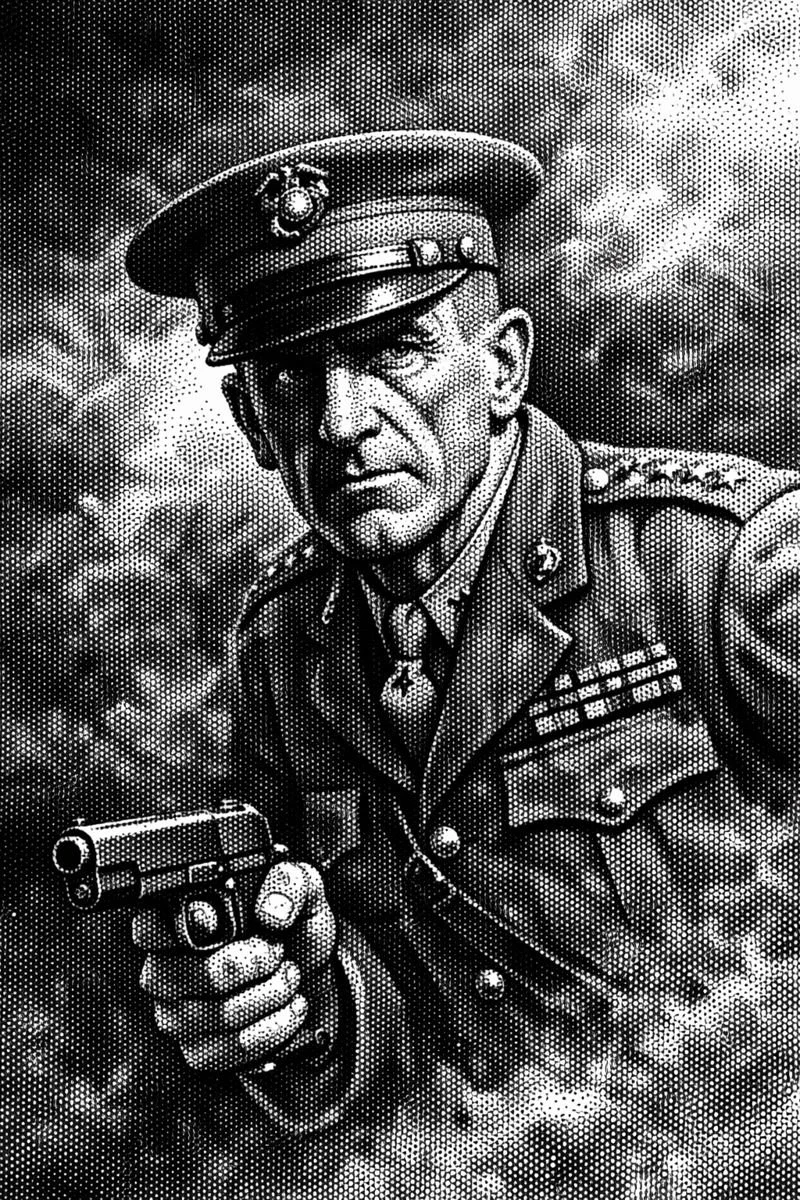
(1881 - 1940 CE)
Highly decorated U.S. Marine officer and two-time Medal of Honor recipient
“War is a racket. It always has been.”
— Smedley D. Butler, after he finished winning it twice
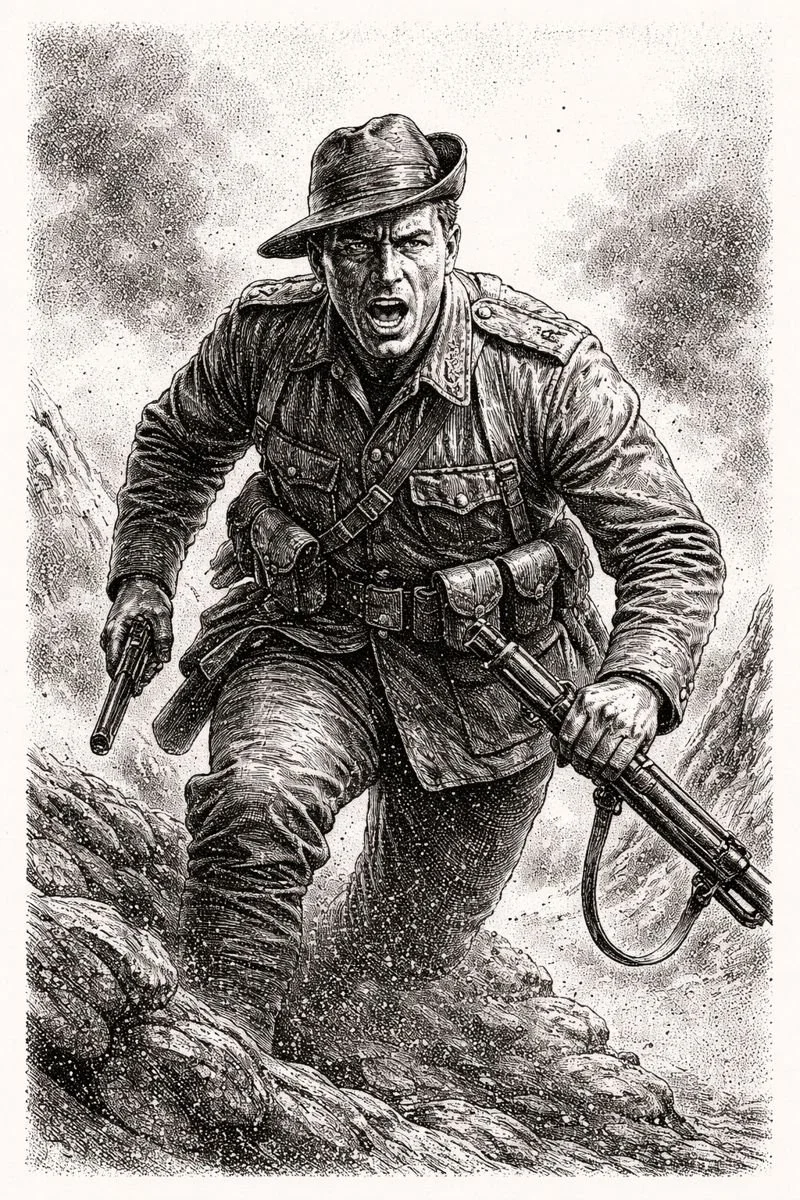
The air in Veracruz tastes like cordite and bad decisions. It is 1914, and the docks are a mess of smoke, panicked civilians, and Marines doing what Marines have always done when the flag says jump. Bullets chew splinters out of crates. A machine gun stutters like it is trying to apologize. Somewhere in the chaos, a short, barrel-chested officer with a jaw carved out of granite and anger kicks a door open and charges inside because standing still feels like cowardice and cowardice feels like death.
This is Smedley Darlington Butler, United States Marine Corps. He is about to earn his first Medal of Honor. He will later earn another one, because the universe sometimes rewards stubbornness with brass.
Butler was born in 1881 into a Quaker family that believed violence was wrong and public service was right. He chose to split the difference by becoming a Marine at sixteen. America at the turn of the century was a young empire with itchy fingers and a new toy called overseas intervention. Butler fit perfectly. He was all forward momentum and clenched teeth, a human battering ram with a vocabulary of orders and profanity.
His rise is not elegant. It is loud. He fights in China during the Boxer Rebellion, learns how to punch through walls and cultures alike, and picks up the lesson the empire keeps teaching itself. You are either the hammer or the thing that gets hit until it stops moving. He takes that lesson to Central America and the Caribbean, the so-called Banana Wars, where the United States learned to wear business suits over bayonets.
Haiti. Nicaragua. Honduras. Panama. Names that taste like humidity and blood. Butler storms towns, trains constabularies, and enforces stability at the muzzle of a rifle. He becomes a legend to his men and a nightmare to anyone standing on the wrong side of a map drawn in Washington boardrooms. He is efficient. He is relentless. He is promoted.
In 1915, he lands in Haiti and proceeds to wage a personal war against the Cacos rebels. He leads patrols into jungles that sweat and bite back. In one fight, he charges a fortified position and takes it under fire that should have killed him. It does not. Instead, the Corps pins a second Medal of Honor to his chest. Two medals. One man. It looks like glory. It smells like rot.
Between wars, Butler serves as commandant of the Marine Barracks at Quantico and later as Director of Public Safety in Philadelphia, where he tries to run a city like a platoon. He raids speakeasies, fires corrupt cops, and generally terrifies polite society. The politicians hate him. The people love him. He resigns because America is better at celebrating violence than cleaning up after it.
Then the Great War ends, the flags come down, and Butler starts to think. This is the dangerous part.
The decisive act that makes him immortal does not involve a bayonet. It involves a microphone.
By the early 1930s, Butler has retired as a Major General, the youngest in Marine history. He has also grown a conscience the size of a grenade. He tours the country giving speeches that sound like confessions and indictments had a child and taught it to swear. He tells anyone who will listen that he spent thirty-three years being a high-class muscleman for Wall Street. He lists the receipts. He names the places. He says war is not about freedom. It is about profit.
America blinks. Some people applaud. Others sharpen knives.
In 1934, Butler drops the bomb. He testifies before Congress that a group of wealthy businessmen approached him to lead a fascist coup against President Franklin D. Roosevelt. The plan, which later gets labeled the Business Plot, reads like a bad pulp novel. March veterans on Washington. Install a friendly strongman. Protect capital. Butler listens, nods, and then rats them out.
The press laughs it off. The committee confirms enough to make everyone uncomfortable and then politely changes the subject. No one goes to jail. Butler becomes a punchline and a prophet at the same time.
His downfall is not a fall from grace. It is a long, quiet bleed-out. The establishment never forgives him for telling the truth with jokes sharp enough to cut steel. He is denied further advancement, mocked as a crank, and slowly pushed to the margins. He keeps talking anyway. He writes War Is a Racket, a slim book that hits like a brick wrapped in statistics. He stands in front of crowds and says the quiet part out loud until the quiet part screams back.
He dies in 1940 of stomach cancer, fifty-eight years old, his body finally doing what bullets and politics could not. There is no battlefield. No last charge. Just a bed, pain, and the knowledge that the wars he warned against are already lining up like drunks at a bar.
The myth-making begins immediately. The Marine Corps remembers the medals and forgets the speeches. Pop culture turns him into a cartoon tough guy, a cigar and a scowl, the man who kicked down doors and never looked back. Radicals adopt him as a saint. Conspiracy theorists inflate the Business Plot into operatic villainy. Everyone takes a piece. No one takes the whole man.
The whole man is uncomfortable. He is both executioner and whistleblower, imperial enforcer and anti-war icon. He is proof that you can be very good at something very wrong and still live long enough to regret it. He does not repent quietly. He repents at full volume.
Smedley Butler’s legacy is not clean. It is smeared with mud, blood, and inconvenient honesty. He won America’s highest military honor twice and then tried to talk America out of using it again. He knew where the bodies were buried because he helped dig the holes. When he finally pointed, people laughed because laughter is cheaper than guilt.
The smoke clears. The docks empty. The medals tarnish. The speeches echo. Somewhere in the distance, another war revs its engine, already looking for a young man with a strong back and a weak sense of irony.
Smedley Butler told us how it worked. We called him crazy and kept the receipt.
Warrior Rank #148
Sources and dubious accomplices
• Butler, Smedley D. War Is a Racket. 1935.
• Schmidt, Hans. Maverick Marine: General Smedley D. Butler and the Contradictions of American Military History.
• U.S. Congress, McCormack-Dickstein Committee hearings, 1934.
• The United States Marine Corps, official histories and selective amnesia.
• Several bartenders who swear they heard him say it louder.
He fought like hell for the machine and spent the rest of his life trying to unplug it, which is how you end up remembered by everyone and forgiven by no one.

Alexander Nevsky was a 13th-century Russian prince famed for defeating invading forces at the Battle on the Ice in 1242. He became a national hero and later a saint, remembered as both warrior and shrewd diplomat.
Rank - 115