Stefan Dušan 'the Mighty'
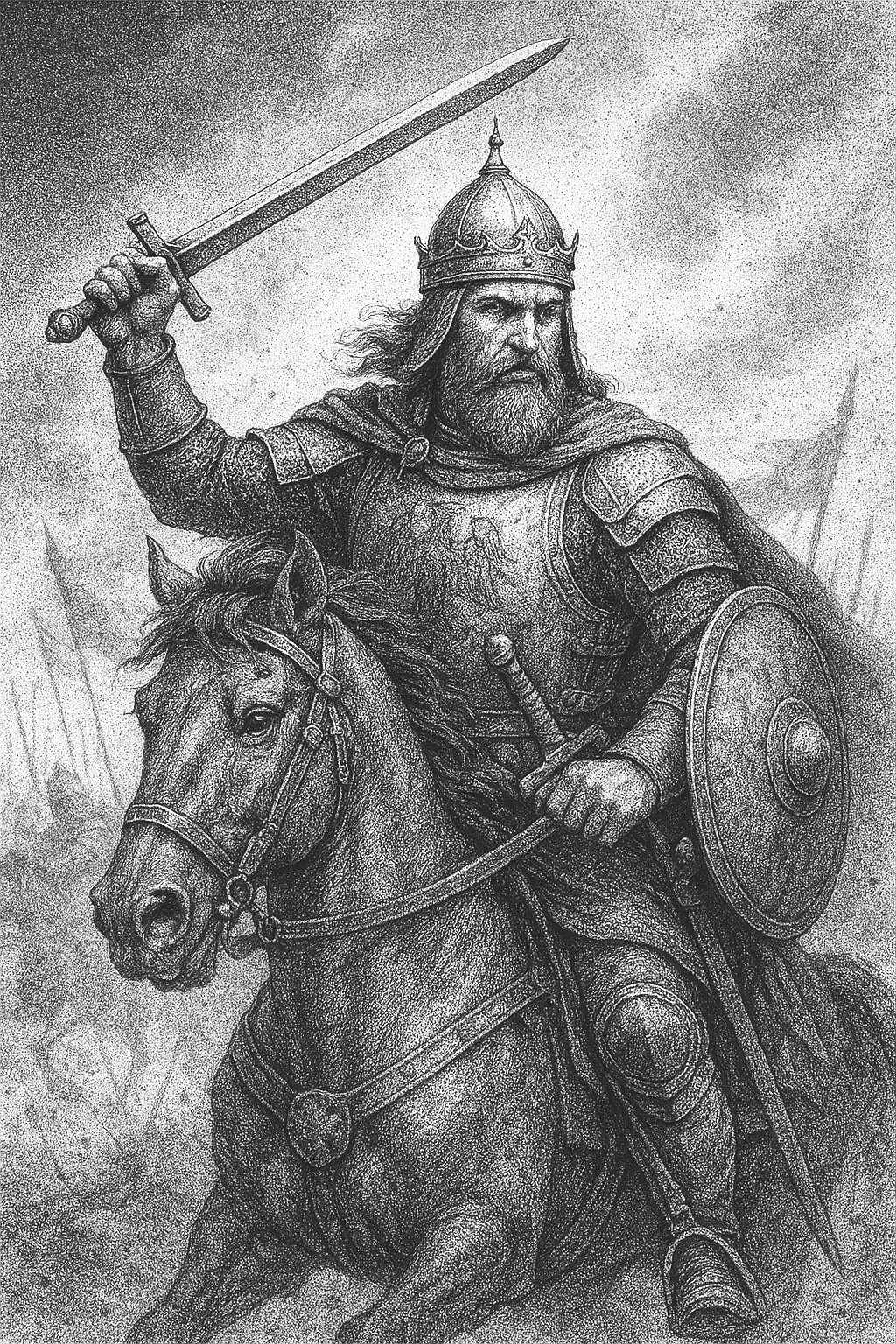
(1308–1355)
Tsar of the Serbs, Greeks, Bulgarians, Albanians, and Whatever Else He Could Grab Before Breakfast
“A crown is just a helmet you wear to your own execution.”
— attributed to Stefan Dušan, probably by someone he throttled
War smells like wet iron and bad decisions, and on July 18, 1349, Stefan Dušan—storm-king, conqueror, serial overachiever—was laughing in the middle of it. Not a polite, royal chuckle, but the kind of laugh you make when the entire Byzantine Empire is collapsing into your lap like an overcooked pastry.
Smoke curled upward from the crushed Greek vanguard. Horses screamed. Crossbow strings twanged. A severed arm still wearing its Orthodox bracelets smacked into the mud beside him. Dušan didn’t flinch; he muttered something like “Well, that’s one less signature I need,” and spurred his horse uphill, cloak snapping like a battle flag at the gates of hell.
This was how he preferred to work: in chaos, with momentum, slightly overcaffeinated, and with the sense that the world owed him several countries and wasn’t delivering fast enough.
The Serbs called him "the Mighty." His enemies called him things best yelled into a pillow. His bureaucrats just tried to survive him.
But every monster has an origin story.
THE BOY WHO STARED DOWN A KING
Stefan Dušan was born in Serbia in 1308, in a world where royal inheritance worked about as smoothly as medieval dentistry. His father, King Stefan Dečanski, was a man so indecisive that his shadow probably shrugged behind him. Court nobles whispered that the kid—tall early, smart too early, ruthless exactly on time—might be the real heir to worry about.
By age twelve, Dušan was already breaking horses, leading companies of men, and developing the signature facial expression he would later use throughout his reign: the “I could conquer you before lunch” gaze.
His father banished him once.
So Dušan came back with an army.
Family therapy in the Balkans was never subtle.
When the dust settled, the son was king, the father was… not, and Serbia had just been handed the kind of ruler who stared at maps the way other men stared at tavern maids.
THE RISE OF A CONQUEST MACHINE
Dušan wanted an empire. Not a polite, reasonable empire. No—he wanted to repaint the Balkans with his name on every border. And for a decade, he did exactly that.
Macedonia? Taken.
Thrace? Taken.
Epirus? Albania? Thessaly?
Taken like coins off a tavern table.
Everywhere he went, he left behind a different flavor of awe: Greeks muttering prayers, Albanians adjusting to new tax rates, Bulgarians trying not to provoke him, and Serbs building him yet another triumphal arch because the last one wasn’t tall enough.
His soldiers adored him.
His nobles tolerated him.
His enemies prayed for earthquakes.
This was the era when the Byzantine Empire was staggering through its own baroque collapse—civil war, coups, double-crossings, and emperors who could barely emperor. It was basically a fire sale, and Dušan showed up with a cart and a grin.
The chroniclers wrote things like:
“He rode with the speed of lightning,”
“His judgment struck like a falling axe,”
“He had the height of a siege tower and the manners of a landslide.”
By 1346, Dušan crowned himself Tsar of the Serbs and Greeks, because why not reach for grandeur when nobody strong enough was around to say no?
He topped it off with Dušan’s Code—a massive legal overhaul full of Byzantine borrowings, ruthless punishments, economic logic, and the occasional “offender shall be flogged until no longer able to offend.” It was half progressive reform and half medieval HR manual written during a psychotic break.
But glory comes with shadows. And Dušan’s shadow was already leaning toward Asia Minor, where Ottoman banners were beginning to flutter like red warnings from the future.
He would have crushed them. He absolutely would have marched to Constantinople, kicked down the world’s most important door, and announced breakfast was canceled until further notice.
If he had lived long enough.
THE MOMENT OF MYTH
The legend-makers like to freeze him at his peak: riding through the battlefield at Velbužd in 1330, where Serbian and Bulgarian forces smashed together with the grace of two runaway wagons filled with knives.
Picture it:
Dust boiling.
Spears rising like a metal forest.
The sun bouncing off mail and helmets like molten gold.
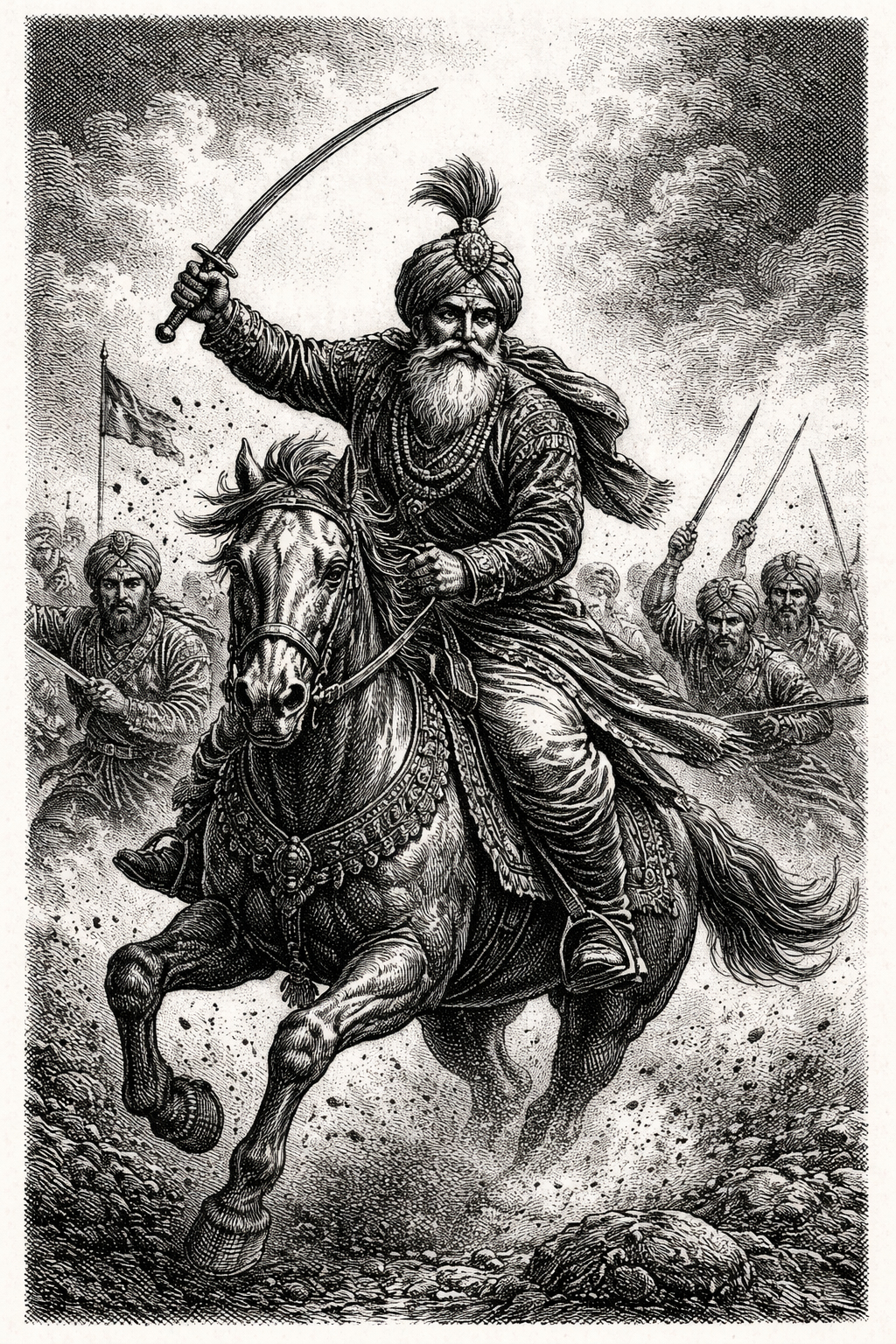
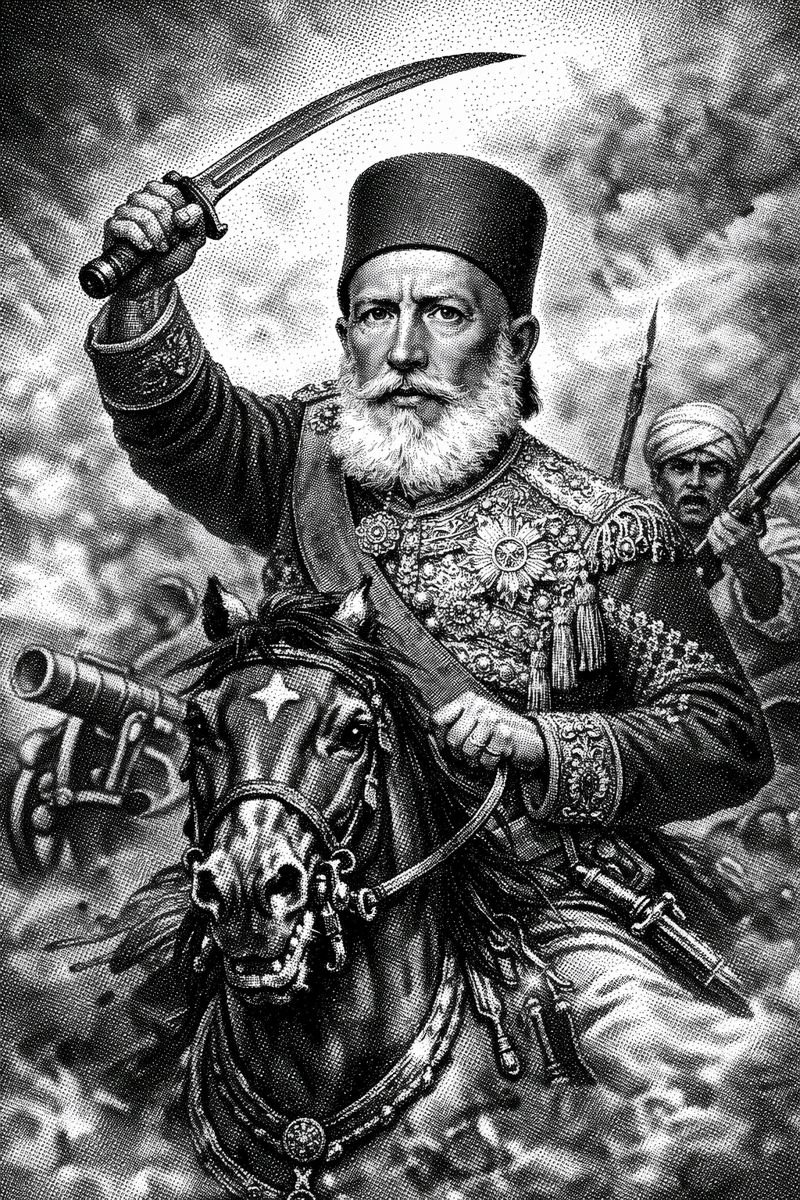
Dušan is in the middle of it—always the middle. Tall, towering, swinging a sword that one monk claimed was “as long as a plow and twice as dangerous.” His cavalry didn’t charge so much as descend, a hammer of horses and armored fury that cracked the Bulgarian flank like a ribcage.
He wasn’t king yet, but he fought like he had an empire somewhere in his pocket and didn’t want anyone else touching it.
This was the battle that convinced half the Balkans that Stefan Dušan was some kind of cosmic punishment sent because God had gotten bored.
It set the tone for everything that came after.
THE EMPIRE THAT GREW TOO FAST
Dušan’s empire stretched from the Danube to the Gulf of Corinth, from the Adriatic to the Aegean. It was a patchwork quilt of angry nobles, conquered cities, loyalists, opportunists, mercenaries, and bishops trying to keep up with the paperwork.
He wore his crown like a weapon.
He rode like a storm.
He ruled like a man racing against something only he could hear.
But a kingdom can grow too fast—like a tree bending under its own ambition. The Ottomans were stirring. The Byzantines were regrouping. Venice was sniffing around. And Dušan, instead of shoring up defenses, wanted More.
Always more.
He raised armies. He built alliances. He positioned catapults toward Constantinople.
And then—because history enjoys a good punchline—he died.
THE STUPID, INFURIATING, IRONIC DEATH OF A CONQUEROR
Not in battle.
Not assassinated.
Not falling off a horse in some drunken celebration.
No—Stefan Dušan the Mighty, breaker of empires, died in 1355 of either poison, stroke, fever, or being betrayed by the plotline itself. Chroniclers disagree. Pick your favorite.
Some say he overate; others say he overworked; one monk sniped that Dušan “died because pride choked him”—as monks often do when someone else gets all the castles.
Whatever the cause, it ended everything.
His son Stefan Uroš V inherited the empire like someone inheriting a tiger with anxiety. Serbia unraveled. Provinces splintered. The Ottomans arrived like a plague with better organization.
The empire cracked.
Then crumbled.
Then became a cautionary tale wrapped in legend.
THE AFTERLIFE OF A TYRANT HERO
In Serbia, Dušan lives on as the Golden Emperor, the man who almost saved the Balkans, almost took Constantinople, almost formed a counterweight to the coming Ottoman tide.
In Greek memory, he’s a barbarian who almost stole their empire.
In Albanian epic songs, he’s a towering conqueror.
In Bulgarian stories, he’s a rival, thief, or necessary evil depending on the singer and the beer supply.
Modern scholars admire his legal reforms, shake their heads at his ambition, and argue about his military choices. He’s a Balkan Alexander without the PR team; a medieval Napoleon without a Waterloo; a monster, hero, genius, tyrant, and overstretched CEO all in one.
Pop culture occasionally grabs him—video games, novels, historical forums full of men with suspiciously strong opinions about medieval cavalry tactics.
But the truth remains:
Stefan Dušan carved his name across the Balkans with the delicacy of a man using a sledgehammer to sign a birthday card.
And the land still remembers.
Warrior Rank #165
SoURCES
John V. A. Fine Jr., The Late Medieval Balkans (University of Michigan Press).
Sima Ćirković, The Serbs (Blackwell Publishing).
George Ostrogorsky, History of the Byzantine State (Rutgers University Press).
Donald M. Nicol, The Last Centuries of Byzantium.
Brother Makarije’s List of People Dušan Scared Before Breakfast (dubious monastery edition).
The Balkan Book of Overreactions, anonymous, 14th century (probably written during a siege).
Codex Dušanus: The Unofficial Appendix, containing laws such as “Thou shalt not annoy the Tsar before coffee.”

Alexander Nevsky was a 13th-century Russian prince famed for defeating invading forces at the Battle on the Ice in 1242. He became a national hero and later a saint, remembered as both warrior and shrewd diplomat.
Rank - 115