Moulay Ismail ibn Sharif
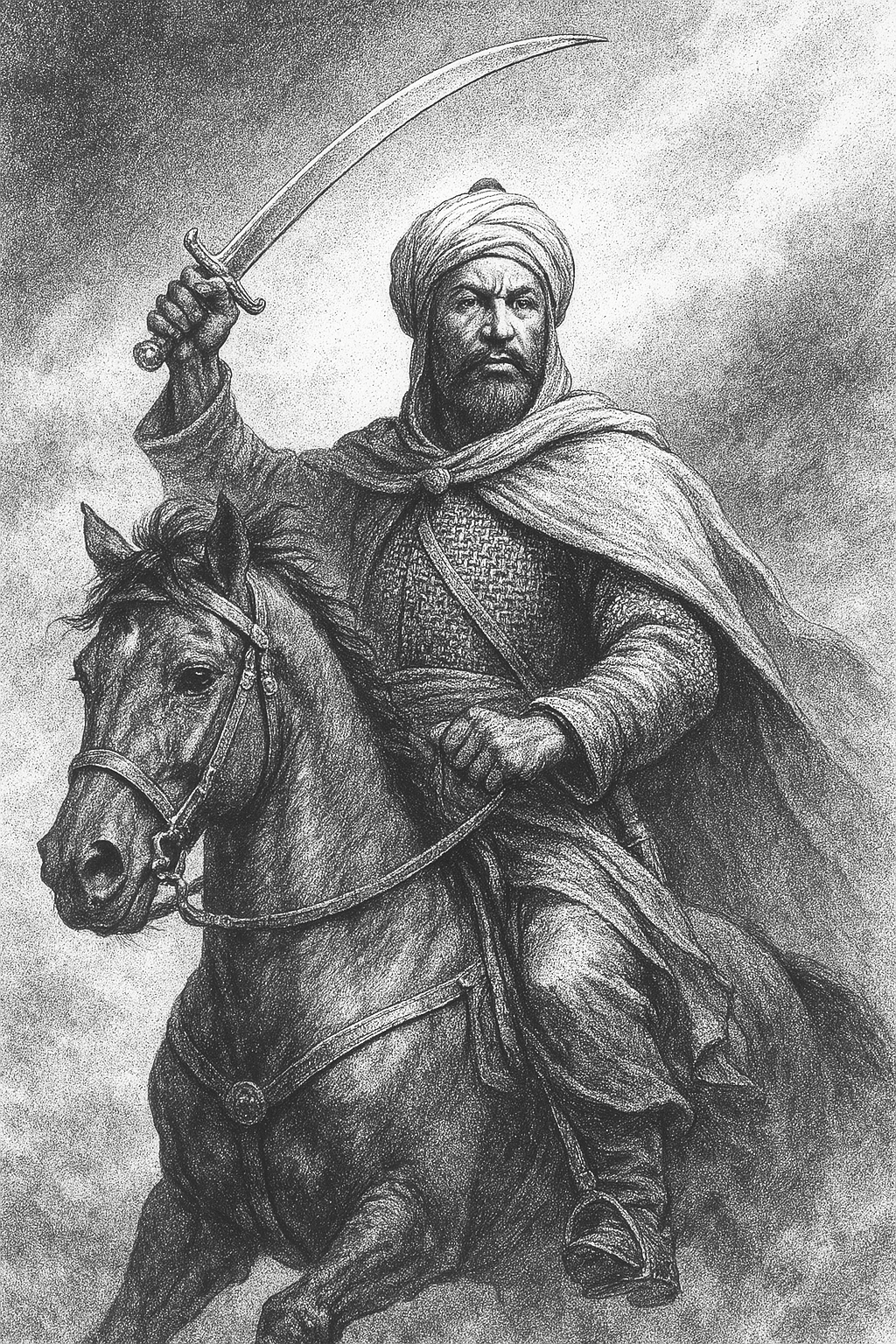
(1634–1727 CE)
Sultan of Morocco, Lord of Meknes, the Iron Tyrant Who Forged a Kingdom from Fear and Fire
“A king must be loved or feared,” Moulay Ismail allegedly said. “Love is expensive.”
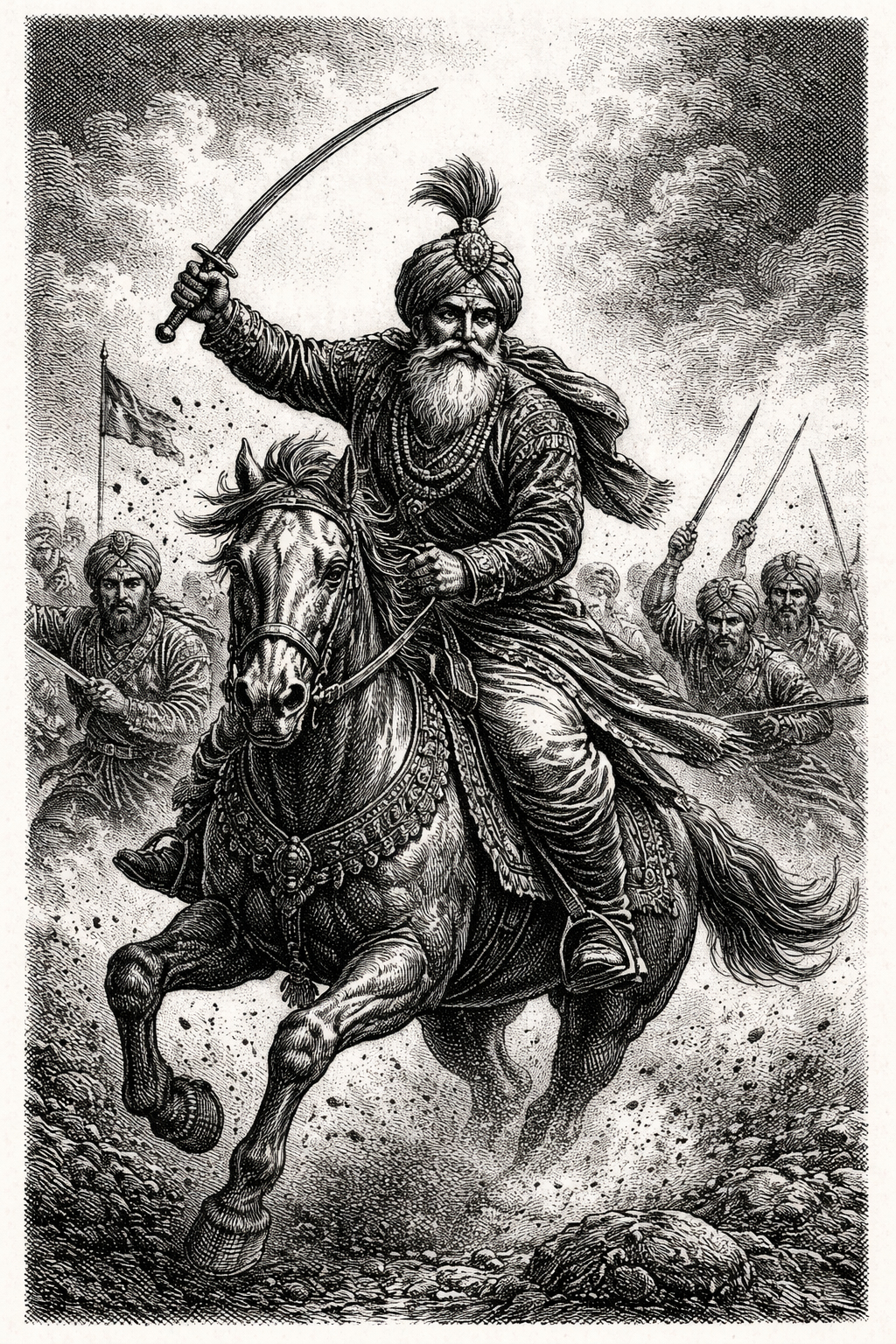
Smoke clung to the palace courtyard the way dread clings to a throat—thick, greasy, slow to leave. Horses stamped in the dust. Iron collars lay cooling in the shade. A freshly beheaded servant still twitched on the tiles, his blood running in the same grooves carved for rainwater. The Sultan of Morocco watched the whole scene with the lazy interest of a man appraising a fruit stand. Somewhere beyond the walls, drums hammered for another execution. Inside, his Black Guard—forty thousand enslaved soldiers bred and trained for obedience—waited like statues made of muscle and contempt.
Nothing here was accidental. Even the breeze arrived terrified.
Moulay Ismail ibn Sharif, the man who had turned Meknes into a fortified fever dream of domes, dungeons, and skull-shadowed corridors, adjusted the reins of his stallion as if this morning’s carnage were simply housekeeping. A minister knelt beside him, trembling, presenting a list of offenders. Ismail glanced at the parchment. Snorted. Dropped it. The paper fluttered onto the dead servant’s chest. A Black Guard officer stepped forward without being asked. Another head hit the ground.
A ripple of screams. Another day beginning.
This was the center of his power—the courtyard where crimes were confessed, punished, denied, fabricated, and forgotten within minutes. The place smelled of iron, sweat, and fear. It was a living autopsy of authority.
Ismail rode out through the smoke like a cavalryman emerging from myth or nightmare. The truth—both uglier and more impressive—was that he crafted the nightmare deliberately. It made rebellions evaporate. It made France twitch. It forged a kingdom welded shut by terror.
Some rulers inherited order and ruined it.
Ismail inherited chaos and weaponized it until it begged for mercy.
The horses paused at the gate as if sensing the day’s blood quota hadn’t yet been met. A slave brushed mud from the stallion’s hooves. Some claimed Ismail executed servants who brushed too slowly. Others said he executed those who brushed too quickly. A few swore he executed one for brushing at all. All of these were “later chronicle embellishments”—but they were believable because the man himself endorsed the rumor mill with steel.
The drums continued. Somewhere another offense had been committed—real or imagined. Another pulse of terror was about to ripple outward.
That was the morning. The afternoon would be worse.
A bloodline born sharp
He was born in 1634 into the Alaouite dynasty, a sharifian line claiming descent from the Prophet. But noble blood meant nothing in a Morocco splintered into tribal fiefdoms, warlords, renegades, and European opportunists. Ismail spent his youth not in powdered luxury but in a country where men lived by the sword and died by the sword’s accountant.
His early rise wasn’t destiny—it was persistence sharpened into obsession. As the younger half-brother of Sultan al-Rashid, he learned the calculus of power: loyalty purchased with silver dissolves by sunrise; loyalty purchased with fear endures until death. Ismail’s tactical instincts—cold, fast, geometry-of-violence precise—were already forming.
He watched tribes switch allegiances like gamblers.
He watched coastal cities make deals with European corsairs.
He watched palace ministers plot with the subtlety of drunk spiders.
And he absorbed it all.
When al-Rashid died in 1672, Ismail seized the throne with the inevitability of plague. Morocco did not receive a monarch; it received a tectonic event.
Psychological X-ray of a man who preferred iron to air
Historians politely describe him as “severe.” That’s like calling a sandstorm “a bit windy.” The record—letters, court chronicles, diplomatic reports from horrified Europeans—shows a man with a psychological metabolism built for violence.
He did not merely punish rebels.
He erased their bloodlines.
He did not merely discipline soldiers.
He broke them, reforged them, and set them on fire if they disappointed him.
He did not merely distrust advisers.
He executed them at the first whiff of insolence or hesitation.
Was it madness? Modern historians disagree. Many portray him as a rational, calculating builder of centralized authority in a fragmented land. Others argue he was a tyrant running a country like a prison camp with better architecture. The truth sits between: a man who found violence efficient and mercy a waste of administrative time.
And yet—under the terror—there was genius.
The Black Guard: an empire built from chains
His most infamous achievement was the creation of the ‘Abid al-Bukhari, known to Europeans as the Black Guard. These were enslaved Black Africans and their descendants, raised in military barracks, drilled into professional killers loyal only to the Sultan. Over decades this force expanded until it became the largest slave army on earth, a machine of discipline that outlasted Ismail by decades.
Tactically, they were terrifying—heavy cavalry and musket infantry deployed with ruthless synchronization. Strategically, they were a masterstroke: the tribes that once toppled dynasties now had a counterweight forged in captivity and fear.
This army crushed rebellions from Tafilalt to Marrakesh. Villages burned. Heads mounted on gates. Letters to European courts dripped with alarmed admiration. The psychological warfare was as important as the steel.
Meknes: the fever dream fortress-city
Ismail’s reign lasted nearly 55 years—long enough to build an entire imperial vision out of brick, marble, and bones. Meknes became his stage, his obsession, his architectural tantrum against mortality.
He demanded tribute from the tribes in stone and labor. He cannibalized Roman ruins from Volubilis. He used prisoners of war, criminals, enslaved Christians—especially Portuguese and Spanish captives dragged from jagged coastal raids—to raise walls fifty feet high and gates plated with iron the color of dried blood.
Some chronicles claimed he executed workers whose bricks displeased him. Others said he buried rebellious masons in the foundations. These stories are likely exaggerations—or rather, they might be, if the man weren’t already executing people by the courtyard load for lesser offenses.
In any case, the city rose. A monument not to beauty, but to domination.
The decisive act: the crushing of the tribes
If one moment cemented his legend, it was his systematic annihilation of Morocco’s fractious tribes. This wasn’t a single battle but a years-long rolling thunderstorm of punitive expeditions. The Udaya, the Riffians, the rebellious southern clans—each faced the full weight of the Black Guard.
The campaigns were brutal and calculated. Entire communities were disarmed, relocated, or enslaved. Horses seized. Grain confiscated. Chiefs executed in public squares while their sons were marched into Ismail’s service. For the first time in generations, Morocco reported not to tribal councils, but to one man with an appetite for control bordering on spiritual hunger.
European observers—accustomed to their own flavors of cruelty—wrote in a tone bordering on awe. The Sultan, they said, never slept in the same bed twice, never forgave a slight, and never permitted a rebellion to survive the sunrise following its discovery.
Fear unified the realm where diplomacy never had.
Diplomacy by threat, letter, and captive
His correspondence with Louis XIV of France reads like a duel of egos conducted by two men allergic to compromise. Ismail proposed marriage to one of Louis’s illegitimate daughters—a political gambit ambitious enough to make Versailles choke on its powdered wigs. The French declined. The Sultan responded with polite barbs and less polite raiding expeditions that captured French sailors by the hundreds.
He used captives as currency—sometimes freeing them to signal strength, sometimes holding them as reminders of what defiance cost. Diplomacy was simply warfare with different paperwork.
Death: anticlimax for a man who killed dramatically
For all the executions he ordered—thousands by conservative estimate, tens of thousands by rumor—Ismail died in 1727 of natural causes.
No blade.
No poison.
No coup.
Just age grinding down the monster. It was the ultimate irony: the man who conquered Morocco with terror was conquered by time, that most boring of assassins.
His death unleashed chaos. Succession wars erupted. The Black Guard, no longer tethered to his will, became kingmakers and king-breakers. Morocco nearly tore itself apart again.
Tyranny kept the country united. Freedom broke it like a bone.
Myth, propaganda, distortion
Later chroniclers inflated his brutality until he resembled a desert Vlad the Impaler. Many stories are exaggerations, though not by much. The rumor that he fathered 800–1,000 children is “attested but disputed”—spawned by palace record-keeping, slave concubines, and the chronicler’s love of big round numbers.
European writers, horrified and fascinated, cast him as an Oriental despot, a caricature dipped in oil and fire. Moroccan tradition remembers him as both tyrant and nation-builder, a man whose cruelty carved unity out of anarchy.
Modern portrayals soften him or sensationalize him. Neither approach captures the real figure: a ruler who believed peace was simply the silence that follows overwhelming violence.
He ruled with iron.
He died quietly.
The country still bears his fingerprints.
History forgets mercy, but it never forgets men like Moulay Ismail.
Warrior Rank #163
Sources
Abun-Nasr, Jamil. A History of the Maghrib in the Islamic Period.
El-Hibri, Tayeb. Reinterpreting Islamic Historiography.
Chouki El Hamel. Black Morocco: A History of Slavery, Race, and Islam.
Nabil Matar. Europe Through Arab Eyes, 1578–1727.
“Memoirs of a Terrified French Envoy Who Regretted His Assignment Immediately” (satirical but spiritually accurate).
The court chronicler who definitely smudged the numbers but not the vibe.

Alexander Nevsky was a 13th-century Russian prince famed for defeating invading forces at the Battle on the Ice in 1242. He became a national hero and later a saint, remembered as both warrior and shrewd diplomat.
Rank - 115